Articles

41 articles på Saint Petersburg Guide.

Saint Petersburg, Russia’s second-largest city with a population of roughly 5.4 million (2023 estimate), consistently ranks among Europe’s most visited destinations. Its historic center, a UNESCO World Heritage site, contains over 2,000 palaces, bridges, and canals. However, traveling here as an English speaker requires preparation beyond typical European city breaks: visa procedures, language barriers, and local customs demand attention. This guide draws on official sources, visitor data, and on‑the‑ground logistics, all factual and up‑to‑date as of early 2024.

Whether you plan a three‑day cultural intensive or a week-long exploration of the “Venice of the North,” this article covers every essential step, from obtaining a visa to using the metro, ordering in a restaurant, and staying safe in a city that sees over 7.5 million tourists annually (St. Petersburg Tourism Committee, 2023). For a broader overview of the city's attractions, see our Essential Visitor Guide to Saint Petersburg.

1. Visa Requirements and Entry Procedures

For most nationalities, including citizens of the United States, Canada, Australia, New Zealand, and almost all EU countries, a Russian tourist visa is mandatory. The process typically takes 10-20 working days, but expedited (3-5 day) services are available through agencies for an extra fee of around 3,000-6,000 RUB (Russian Rubles; roughly £30, £60 / €35, €70).

Key Documents for a Tourist Visa

  • Valid passport, must have at least two blank pages and validity at least six months beyond your intended departure date from Russia.
  • Visa invitation (Voucher), issued by a licensed Russian tour operator or hotel. Most accommodations provide this free upon booking, but verify directly with the establishment. A standard single‑entry tourist visa costs about 1,200 RUB (£12 / €14) for UK citizens applying at the Russian Visa Centre in London (as of 2024).
  • Completed application form, online via the Russian Ministry of Foreign Affairs website (visa.kdmid.ru).
  • One colour passport photo (35 mm × 45 mm).
  • Travel insurance covering Russia, minimum coverage usually 30,000 EUR for Schengen‑area citizens; other nationalities should check with their embassy.
  • Proof of accommodation, hotel booking confirmation or rental contract.

Since 2023, Russia has reintroduced e‑visas for citizens of 55 countries, including China, India, Mexico, and several Middle Eastern nations. The e‑visa allows a single entry for stays up to 16 days and costs approximately 1,500 RUB (£15 / €17). It must be applied for at least 4 calendar days before arrival via the Russian Ministry of Digital Development portal. At the time of writing, e‑visas are not available for US, UK, or EU citizens. For the most current visa information, refer to our detailed Russian Visa Guide for English Speakers.

All articles in this category

Palace Square: The Heart of Saint Petersburg
Culture & Language

Palace Square: The Heart of Saint Petersburg

Palace Square (Dvortsovaya Ploshchad) is the central square of Saint Petersburg, a UNESCO World Heritage site surrounded by the Winter Palace, the General Staff Building, and the Alexander Column. This article covers its history, architecture, key monuments, and practical visitor information.

Read more →
Russian Language Basics for Travelers
Culture & Language

Russian Language Basics for Travelers

Learn essential Russian phrases, pronunciation tips, and cultural nuances for navigating Saint Petersburg. Covers greetings, directions, dining, emergencies, and practical advice for English-speaking visitors.

Read more →
Top Museums in Saint Petersburg Beyond the Hermitage
Culture & Language

Top Museums in Saint Petersburg Beyond the Hermitage

Explore Saint Petersburg's finest museums beyond the State Hermitage, from the Russian Museum and Fabergé Museum to the Kunstkamera and Erarta. This guide covers highlights, ticket prices, locations, and practical tips for visitors.

Read more →
Street Food and Cafes in Saint Petersburg
Food & Dining

Street Food and Cafes in Saint Petersburg

Explore the diverse world of street food and cafes in Saint Petersburg, from traditional blini and pirozhki to contemporary coffee shops and local favorites. Discover real venues, prices, and tips for navigating the city's culinary scene.

Read more →

2. Best Times to Visit and Weather Expectations

Saint Petersburg has a humid continental climate with mild summers and long, cold winters. The most popular tourist season runs from June to August, when average daytime temperatures range 18-24 °C (64-75 °F). During this period, the city experiences the famous “White Nights”, from late May to mid‑July, where twilight lasts until nearly midnight and the sun sets only for a few hours. The White Nights attract huge crowds: hotel occupancy rates in June exceed 90% (St. Petersburg Hotel Association, 2023).

If you prefer fewer tourists and lower prices, May and September offer pleasant weather (10-18 °C) with manageable crowds. The off‑peak months (October, April) are colder, often below freezing, but the city is still magical, especially during New Year celebrations (December 25, January 10) when ice sculptures adorn Palace Square. The average snowfall in winter is about 300 mm (12 inches) per month.

Monthly Temperature Averages (1991-2020 normals)

  • January: −8 °C to −3 °C (18 °F, 27 °F)
  • April: 1 °C to 9 °C (34 °F, 48 °F)
  • July: 14 °C to 23 °C (57 °F, 73 °F)
  • October: 4 °C to 10 °C (39 °F, 50 °F)

3. Getting to Saint Petersburg and Arrival Logistics

By Air: Pulkovo Airport (LED) is the main international gateway, located about 20 km south of the city centre. It handled 18.6 million passengers in 2023 (Pulkovo Press Office). Direct flights operate from multiple European hubs, Aeroflot, Turkish Airlines, Emirates, and flydubai serve Saint Petersburg from London, Istanbul, Dubai, and many other cities. Average round‑trip economy fare from London (LHR/LGW) to LED in June 2024 is £400, £600.

From Pulkovo, the cheapest transfer is the bus №39 or №39Э going to Moskovskaya metro station (30 minutes, 45 RUB or £0.45). A taxi to the centre costs 1,200-1,800 RUB (£12, £18) using official apps: Yandex.Taxi, Uber Russia, or Gett. Avoid unlicensed drivers who approach inside the terminal, always book through an app or the official taxi counter near baggage claim.

By Train: The Moscow, Saint Petersburg high‑speed Sapsan trains travel between Leningradsky Station (Moscow) and Moskovsky Station (Saint Petersburg) in about 4 hours. One‑way ticket prices range 2,500-6,000 RUB (£25, £60) depending on class and booking time. Night trains (the Krasnaya Strela, for example) take 8 hours and include a sleeper carriage, fine for budget travellers.

By Sea: During the navigation season (May, October), passenger ferries from Helsinki and Tallinn arrive at the Marine Terminal on Vasilyevsky Island. Ferry operator St. Peter Line offers 2‑day cruises from Helsinki starting at €249 per person including cabin.

4. Accommodation: Where to Stay for First‑Timers

Saint Petersburg has a wide range of lodging, from backpacker hostels to five‑star historic hotels. The most convenient districts for English‑speaking tourists are:

  • Admiralteysky (Centre), Includes Nevsky Prospekt, Palace Square, the Hermitage Museum. Average hotel price: 5,000-12,000 RUB/night (£50, £120). Boutique options like the W Saint Petersburg (6,500 RUB/night) or the historic Hotel Astoria (12,000 RUB/night) offer English‑speaking staff.
  • Vasileostrovsky (Vasilyevsky Island), Quieter, more residential, with good metro access. Mid‑range hotels such as Sokos Hotel Palace Bridge (6,000 RUB/night) are popular.
  • Petrogradskaya Side, Near the Peter and Paul Fortress and the Zoo. Budget hostels like Soul Kitchen Hostel (800 RUB/night) are common.

For apartment rentals, platforms like Airbnb and Sutochno.ru (a Russian equivalent) list entire flats from 2,500 RUB/night. Important: all foreign guests must register with the local migration authorities within 7 days of arrival, hotels handle this automatically, but private hosts may not. Always confirm upon check‑in that registration is completed. See our guide to Finding Accommodation in Saint Petersburg for more details.

5. Getting Around: Public Transport and Taxis

Saint Petersburg’s public transport system is extensive, efficient, and cheap for tourists. The currency used everywhere is the Russian Ruble (RUB). As of 2024, the exchange rate is approximately 100 RUB = £1.00 / €1.15 / $1.10.

Metro (Subway)

The Saint Petersburg Metro opened in 1955 and currently includes 5 lines and 72 stations. Trains run from 5:30 AM to 12:30 AM. A single token costs 70 RUB (£0.70), you can buy tokens at ticket windows or kiosks near the entrance. A refillable “Podorozhnik” card (available at any metro station) works on metro, buses, trams, and trolleybuses; the fare per ride is only 45 RUB. The maximum trip length on the metro is about 45 minutes from end to end. Note: English maps are available at most central stations (e.g., Nevsky Prospekt, Ploshchad Vosstaniya). Download the official “St. Petersburg Metro” app for route planning.

Buses, Trams, and Trolleybuses

Surface transport operates from roughly 6 AM to midnight. Single fares are 60 RUB (cash) or 40 RUB (Podorozhnik card). The most useful bus for tourists is №7 (runs along Nevsky Prospekt from the Moscow Railway Station to the Admiralty). Trams are less useful for sightseeing because routes avoid the historic centre.

Taxis and Ride‑Sharing

Official taxi companies include Yandex.Taxi (dominant), Citymobil, and Uber Russia (operates under Yandex). A typical 10‑minute ride within the centre costs 200-350 RUB (£2, £3.50). Always use the app, never hail unmarked cars. The apps offer English language interfaces.

Walking and Bicycles

The historic centre is compact: most major landmarks (the Hermitage, the Church of the Saviour on Spilled Blood, St. Isaac’s Cathedral) are within a 30‑minute walk of one another. Bicycle‑sharing services like Velobike have 600 stations citywide; registration requires a Russian phone number (temporary SIM cards available at Pulkovo airport for 500 RUB).

6. Essential Russian Phrases and Communication

While many young people in central Saint Petersburg speak some English (especially in hotels and restaurants), outside the tourism bubble you will encounter limited English. Learning a few basic Russian phrases will greatly improve your experience. English is far less common than in Helsinki or Tallinn, only about 15% of St. Petersburg residents report fluency, according to a 2022 Levada‑Center survey.

Survival Phrases

  • Здравствуйте (Zdravstvuyte), Hello (formal)
  • Спасибо (Spasibo), Thank you
  • Пожалуйста (Pozhaluysta), Please / You’re welcome
  • Извините (Izvinite), Excuse me / Sorry
  • Да / Нет (Da / Net), Yes / No
  • Сколько стоит? (Skolko stoit?), How much does it cost?
  • Где туалет? (Gde tualet?), Where is the toilet?
  • Я не понимаю (Ya ne ponimayu), I don’t understand
  • Вы говорите по‑английски? (Vy govorite po‑angliyski?), Do you speak English?

Carry a pocket phrasebook or use offline translation apps (Google Translate offline Russian pack works well). For more language tips, see our Russian Language Basics for Tourists.

7. Dining: Where to Eat and What to Order

Saint Petersburg’s food scene fuses traditional Russian cuisine with European influences. The city has over 4,500 registered restaurants (St. Petersburg Hospitality Association, 2023). Prices range from 500 RUB (£5) for a cheap lunch (blini with sour cream and tea) to €100 for a dinner at a Michelin‑starred establishment (two Russian restaurants have stars, Twins Garden in Moscow, but none yet in St. Petersburg as of 2024).

Recommended Restaurant Types

  • Koryushka (4,000 RUB/person), Located at the Peter and Paul Fortress, known for fresh fish and traditional Russian oven dishes.
  • Gogol (2,500 RUB/person), Modern Russian cuisine with an English menu, on the Moyka River embankment.
  • Market stalls and cafeterias (Stolovaya), Cheap, no‑frills lunch: a plate of borscht, a main, and a drink for 350-500 RUB. Try “Stolovaya No. 1” on Nevsky Prospekt.
  • International chains, McDonald’s (now rebranded as “Vkusno i Tochka”) remains open; a Big Mac meal costs 389 RUB.

Typical Dishes to Try

  • Borscht (beetroot soup), usually served with sour cream and garlic donuts (pampushki).
  • Pelmeni (dumplings filled with meat), often served with vinegar or sour cream.
  • Blini (thin pancakes), with salmon, caviar, or condensed milk for dessert.
  • Beef Stroganoff, though originating in Moscow, it’s a national staple.

Tipping is customary: 10-15% of the bill, though not always expected in cheap eateries. Many restaurant bills include a “service charge” (often 5-10%), so check before adding extra.

8. Cultural Etiquette and Safety Tips

Cultural Dos and Don’ts

  • Dress respectfully for entry to churches and cathedrals: women should cover their shoulders and wear a headscarf (or bring a scarf to wrap); men should remove hats. Shorts are generally frowned upon inside churches.
  • Remove shoes when entering Russian homes, host will offer slippers.
  • Never shake hands across a doorway, it’s considered bad luck. Always step inside first.
  • Toasts are common during meals: raise your glass, make eye contact, and say “Za zdorovie” (to health). Do not place an empty bottle on the table, it’s a superstition.
  • Public displays of affection between same‑sex couples are not widely accepted, same‑sex marriage is not legally recognised, and LGBTQ+ gatherings may face police scrutiny. Remain discreet in public areas.

Safety for Tourists

Saint Petersburg is generally safe for tourists; the city’s crime rate is lower than in Moscow or London. Pickpocketing occurs in crowded metro stations (especially Ploshchad Vosstaniya and Nevsky Prospekt). Keep wallets in front pockets and bags zipped. Street scams include “lost wallet” distractions and fake charity collectors near tourist sites, ignore them and walk away. The emergency number for police is 102 (reachable in English from any mobile). For medical emergencies, call 103. Private clinics like “European Medical Center” on Suvorovsky Prospekt offer English‑speaking doctors; consultation costs about 5,000 RUB. For additional safety advice, read our Staying Safe in Saint Petersburg article.

9. Money Matters: Currency, Cards, and ATMs

While Russia has moved towards a cashless society in urban areas, tourists should always carry some cash for small purchases. The Russian currency is the Ruble (RUB). Banknotes come in denominations of 50, 100, 200, 500, 1,000, 2,000, and 5,000. Coins include 1, 2, 5, and 10 rubles.

Payment Methods

  • Credit/debit cards (Visa, Mastercard, MIR) are widely accepted in hotels, restaurants, and shops. Since 2022, Visa and Mastercard issued outside Russia may not work at some terminals due to sanctions. International Visa/Mastercard cards often fail at Russian ATMs and payment terminals. Best bet: bring a UnionPay card (issued by many Chinese and some European banks) or a MIR card (issued by Russian banks, you can open a short‑term account at Sberbank branch with a passport). Alternatively, exchange cash at authorised exchange kiosks or banks. Avoid street money‑changers.
  • Cash is essential for metro tokens, small market stalls, and tips. Exchange major currencies (USD, EUR, GBP) at banks, exchange rates at airports are 3-5% worse.
  • ATMs (Bankomats) are ubiquitous, locate ones belonging to Sberbank or VTB for reliable service. Withdrawal limits: usually 50,000 RUB per day.

As of 2024, the Russian government requires tourists to carry official receipts for currency exchange, keep them until departure.

10. Key Attractions and Tickets

No trip to Saint Petersburg is complete without these iconic sites. Booking tickets online in advance (at least two weeks) is strongly recommended, especially during White Nights.

Must‑See Sights

  • The State Hermitage Museum, one of the world’s largest art museums, housed in the Winter Palace. General admission: 800 RUB (£8) for adults, includes the Main Museum complex and the General Staff Building. Queue times can exceed 2 hours in summer; book e‑tickets at tickets.hermitagemuseum.org. Audioguide in English: 500 RUB.
  • Church of the Saviour on Spilled Blood, famous for its 7,500 square metres of mosaics. Entry: 450 RUB. Closed on Wednesdays.
  • Peter and Paul Fortress, includes the cathedral where Romanov tsars are buried. Entry to the fortress grounds is free; cathedral and prison tickets: 750 RUB combined.
  • St. Isaac’s Cathedral, climb the colonnade for panoramic city views. Ticket: 350 RUB (colonnade 300 RUB).
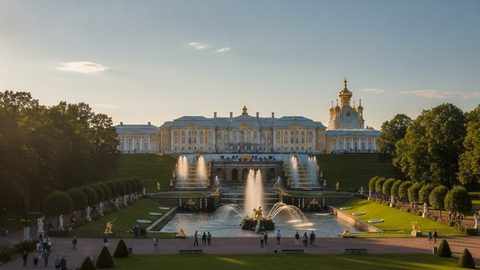
  • Peterhof Palace (45 min by hydrofoil from the Hermitage), Grand Palace and lower park. Park entry: 1,000 RUB; Grand Palace: 1,500 RUB.

For a concentrated itinerary, see our 3‑day Itinerary for Saint Petersburg. For budget travellers, our Free Things to Do in Saint Petersburg lists parks, canals, and street art.

11. Connectivity: Staying Online

Free Wi‑Fi is available in most hotels, cafés, and public parks. For reliable mobile data, buy a local SIM card upon arrival. Major providers: MTS, Beeline, MegaFon, and Tele2. A prepaid SIM with 10 GB of data costs about 600 RUB (£6) and can be purchased at Pulkovo airport kiosks (look for “MTS” or “Beeline” counters). You need a passport to register. Alternatively, download offline maps (Google Maps offline works offline only for navigation; use 2GIS app for offline public transport data). Avoid using roaming from Western carriers, it’s very expensive (e.g., Vodafone charges £6 per MB).

12. Departure: Customs and VAT Refunds

When leaving Russia, customs may inspect your luggage for restricted items (antiques, icons, large amounts of cash). You can export up to 10,000 USD (or equivalent in RUB) without declaration. VAT refund (“Tax Free”) is available for purchases over 10,000 RUB in a single store, provided you fill out a special form at the shop and present the goods at the airport’s Customs desk before check‑in. Refund percentage: about 15% of the purchase price (minus a processing fee). Not all stores participate, look for “Tax Free” signs.

For a full list of departure procedures, refer to our Departure Checklist for Saint Petersburg.

Frequently Asked Questions

Do I need a visa as a cruise ship passenger?

If you arrive on a cruise and stay in Saint Petersburg for up to 72 hours, you may be exempt from a visa if you purchase a shore excursion package from a licensed tour operator. The Turkish‑Russia “72‑hour visa‑free” regulation only applies to cruise passengers; independent travellers must have a full visa.

Can I use Uber or Lyft?

Uber operates in Russia under the Yandex.Taxi brand. Lyft is not available. Download the Yandex.Taxi app before your trip.

Is tap water safe to drink?

Tap water is heavily chlorinated and generally not recommended for drinking. Buy bottled water (about 30 RUB per 0.5 L at any kiosk).

For more answers, read our Top 10 Questions About Saint Petersburg.

Read the full guide →