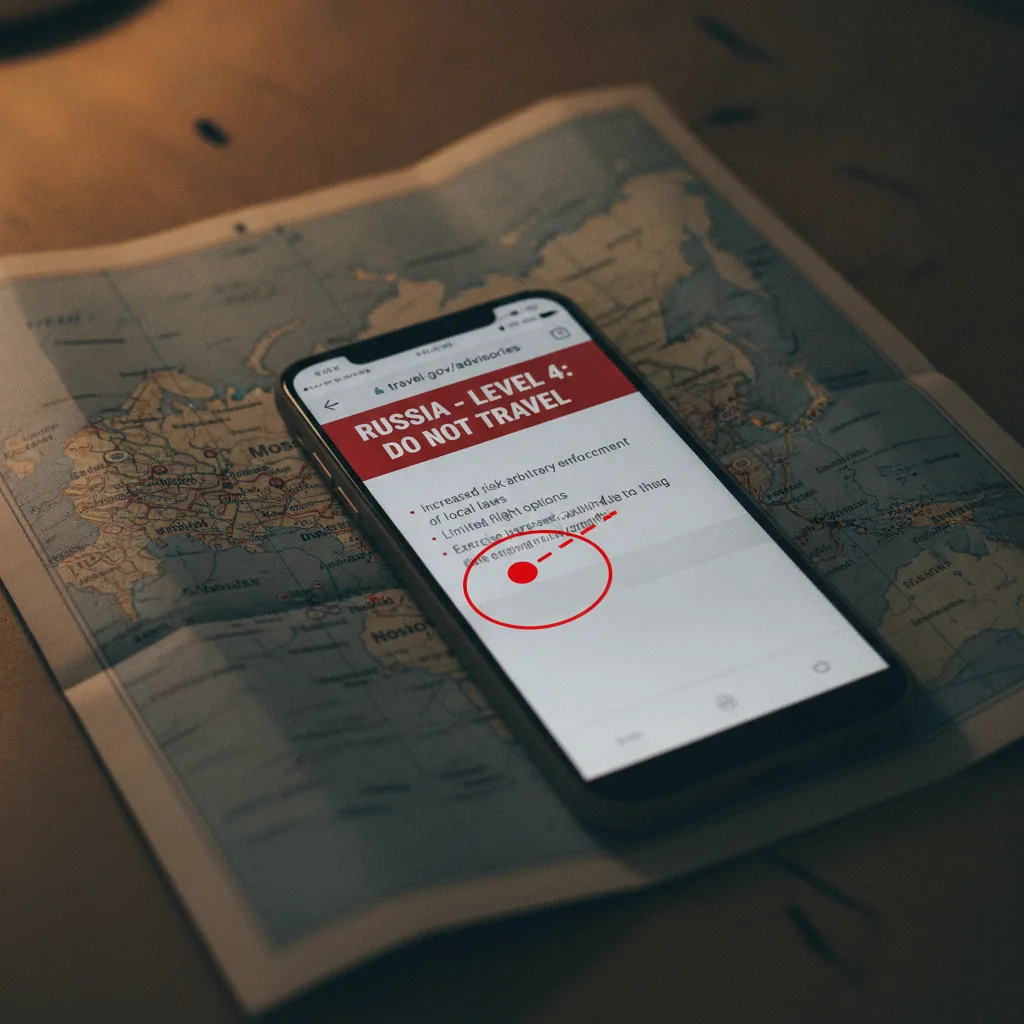
Planning a trip to Russia, and particularly to Saint Petersburg, requires more than booking flights and packing a suitcase. Since February 2022, travel advisories issued by governments around the world have changed frequently, often with significant implications for insurance, visa applications, and border crossings. Understanding how to locate, read, and act on these advisories is essential for any traveller.
This article explains how to check your government's travel advisory for Russia step by step, covering the five largest English-language issuing authorities: the United Kingdom, the United States, Canada, Australia, and the European Union. It also provides practical advice on what to do once you have read the advisory, including how it affects your entry requirements, flight routes, and payment realities on the ground.
Why Travel Advisories Matter for Russia
Travel advisories are official statements issued by a country's foreign ministry or department of state. They are not legally binding in themselves, but they serve three crucial functions:
- Insurance validity: Most travel insurance policies become void if you travel to a country or region that your government advises against all travel. Some policies also exclude cover if the advisory is “against all but essential travel.”
- Visa processing: Some embassies and visa centres take advisories into account when processing applications. A high-level advisory may slow processing or require additional documentation.
- Consular support: If you encounter legal, medical, or security problems in Russia, your embassy's ability to assist you may be limited if the advisory warns against travel. In extreme cases, consular staff may be withdrawn entirely.
As of early 2025, the majority of Western governments maintain a “do not travel” advisory for Russia due to the ongoing war in Ukraine, restrictions on airspace, and the risk of arbitrary detention. However, the exact wording and regional exceptions vary considerably.
How to Find Your Government's Advisory
Every government publishes its travel advice on a single official website. Below is a country-by-country breakdown with direct links and search tips.
United Kingdom: Foreign, Commonwealth & Development Office (FCDO)
The UK’s FCDO travel advice page for Russia is located at gov.uk/foreign-travel-advice/russia. This page is updated whenever the situation changes. The FCDO currently advises against all travel to Russia. The page includes a map showing oblast-level advice, a section on entry requirements, safety and security, and contact details for the British Embassy in Moscow and the Consulate General in Saint Petersburg.
- Key section to read: “Safety and security”, this lists specific risks, including drone attacks on cities, arbitrary detention, and closure of airspace.
- PDF version: A printer-friendly PDF is available at the top of the page.
- Email alerts: You can subscribe to receive updates by email when the page changes.
United States: U.S. Department of State
The U.S. Department of State publishes its travel advisory for Russia at travel.state.gov. The advisory is issued as Level 4: Do Not Travel. The page includes a detailed “Country Summary” and a link to the Embassy's security alert page.
- Key section to read: “Health & Other Risks” and “Travel to a High-Risk Area”, these explain the dangers of dual nationality, the lack of consular access in some regions, and the risk of wrongful detention.
- Smart Traveler Enrollment Program (STEP): U.S. citizens are strongly encouraged to enroll at step.state.gov so the embassy can contact them in an emergency.
- Country-specific information: The page also links to the “Russia Country Information” sheet, which has practical details on currency, customs, and local laws.
Canada: Global Affairs Canada
Canada’s travel advice for Russia is at travel.gc.ca/destinations/russia. Global Affairs Canada advises Canadians to avoid all travel to Russia. The page is structured with expandable tabs for each topic.
- Key section to read: “Safety and security” and “Entry/exit requirements”, note that Canada suspended direct flights and visa services at certain points, and the page reflects the latest status.
- Regional advisories: A map shows oblast-level advisories. Most of western Russia, including Saint Petersburg and Moscow, is under the highest warning level.
- Consular services: The page lists contact information for the Embassy in Moscow and the Consulate in Saint Petersburg. Service levels may be reduced.
Australia: Department of Foreign Affairs and Trade (DFAT)
Australia’s Smartraveller page for Russia is at smartraveller.gov.au/destinations/europe/russia. DFAT advises “Do not travel” to Russia overall, with a “Reconsider your need to travel” level for a few remote regions.
- Key section to read: “Safety” and “Local laws”, Australia specifically warns about the risk of being questioned by authorities for social media posts and the lack of consular support if arrested.
- Travel insurance: The page includes a prominent note that many insurers will not cover travel to Russia. It advises checking your policy before departure.
- Subscribe for updates: You can subscribe to email alerts for Russia-specific updates via the Smartraveller dashboard.
European Union Member States
EU citizens should check the travel advice of their own country's foreign ministry. Many EU states, including Germany, France, Italy, Spain, the Netherlands, and Poland, currently advise against all travel to Russia. A useful central resource is the European Commission's “Re-open EU” portal (reopen.europa.eu), which aggregates travel measures for each EU country, though for Russia the information is limited because Russia is not an EU member.
- Germany (AA): auswaertiges-amt.de, Level: travel warning (Reisewarnung) for the entire country.
- France (France Diplomatie): diplomatie.gouv.fr, Level: “formellement déconseillé” (formally advised against).
- Italy (Viaggiare Sicuri): viaggiaresicuri.it, Level: “sconsigliato” (not recommended).
- Netherlands (Ministerie van Buitenlandse Zaken): nederlandwereldwijd.nl, Level: “rood” (red, do not travel).
If you hold a passport from an EU country, always check your own government's website, because consular support is only guaranteed for citizens of that country.
What to Look For in an Advisory
Travel advisories contain more than a simple colour code. To make an informed decision, read the full text. Pay special attention to the following elements:
Risk Levels and Geographic Specificity
Most advisories subdivide Russia into regions. For example, the UK FCDO and U.S. State Department may treat the following zones differently:
- Western Russia (including Saint Petersburg, Moscow, and the surrounding oblasts): Usually “do not travel” due to the risk of drone strikes, arbitrary detention, and reduced consular capacity.
- Northern Caucasus (Chechnya, Dagestan, etc.): Often a separate, even higher warning due to terrorism and kidnapping.
- Crimea and eastern Ukraine border regions: Almost universally “do not travel” with explicit warnings about landmines, active combat, and no consular access.
Make sure you note whether your destination, Saint Petersburg, falls into the same category as Moscow. In most advisories, it does.
Airspace and Flight Restrictions
Advisories usually include a sentence about airspace. For example, the U.S. advisory states: “The U.S. Federal Aviation Administration (FAA) prohibits U.S. civil aviation from flying over the entire territory of Russia.” This means no direct flights from the U.S. to Russia. Likewise, EU regulators have closed EU airspace to Russian airlines, and Russian airlines have closed Russian airspace to EU and UK carriers. This affects flight routes available to travellers.
Entry and Exit Conditions
Check the “Entry/Exit Requirements” section. As of early 2025, most advisories note that:
- All foreign nationals must have a valid visa or e-visa to enter Russia (with very few exceptions).
- Russian authorities have introduced stricter controls at land borders with EU countries, particularly Finland and Estonia.
- Overstaying a visa, even by one day, can result in a ban of up to five years.
- Some advisories warn that dual nationals (Russian citizens also holding another passport) may face difficulties leaving Russia if called up for military service.
Health and Medical Care
Due to sanctions and reduced flight connectivity, medical evacuation from Russia is extremely expensive and difficult. The U.S. advisory notes that “medical care is not up to Western standards” in many areas, and that some medications are unavailable. Bring a full supply of any prescription drugs, along with a doctor’s note and a customs declaration.
Financial and Payment Restrictions
Since March 2022, international payment cards (Visa, Mastercard, American Express) issued outside Russia have ceased to work at ATMs and merchant terminals inside Russia. The advisory pages often mention this. For practical advice on how to pay for hotels, restaurants, and tours, see our article on payment realities in Saint Petersburg.
How to Interpret Ambiguous Wording
Governments sometimes use nuanced language to distinguish between different types of risk. Here is a quick guide:
- “All travel” vs. “all but essential travel”: “All travel” means no tourist or leisure trips. “All but essential travel” permits travel for work, family emergencies, or humanitarian reasons, but insurers may still deny claims.
- “Reconsider travel” (Level 3) vs. “Do not travel” (Level 4): Level 3 (U.S.) or “reconsider your need to travel” (Australia) indicates high risk but not total prohibition. Some policies may still cover you. Level 4 generally voids insurance.
- “Travel warning” vs. “travel advisory”: The UK uses “travel advice,” the U.S. uses “travel advisory,” and Canada uses “travel advice and advisories.” The terms are interchangeable.
- Subnational advisories: If your government differentiates between Saint Petersburg and the rest of Russia, note the specific zone number or colour on the map.
What to Do After Reading the Advisory
Once you have read the latest advisory, take the following practical steps:
1. Check Your Insurance Policy
Contact your travel insurer directly. Ask: “Does your policy cover travel to Russia given my government’s current advisory level?” Get the answer in writing (email is fine). If the answer is no, consider a specialist insurer that offers high-risk travel coverage. Prices for such policies for Russia start at around €120, €250 for a two-week trip as of 2025, compared to €30, €60 for a standard policy.
2. Register with Your Embassy
Enroll in your government’s voluntary registration service. This allows the embassy to contact you in an emergency (e.g., evacuation, natural disaster, or security incident). The U.S. uses STEP, the UK uses the “British in Russia” registration form (available via the FCDO page), and Canada uses the Registration of Canadians Abroad service. Registration does not guarantee assistance, but it improves communication.
3. Prepare Alternative Payment Methods
Since Western cards do not work, you will need to carry cash (Euros or U.S. dollars), obtain Russian rubles via exchange offices, or use a prepaid Russian card such as the “Mir” system if you can obtain one after arrival. The UnionPay network from China works at some Russian ATMs, but availability is inconsistent. For full details, read our guide on payment realities in Saint Petersburg.
4. Review Your Visa Type and Entry Route
If you plan to enter Russia via a land border (e.g., from Finland, Estonia, Latvia, or Norway), check the latest border crossing conditions. As of early 2025, Finland has closed all land border crossings for Russian citizens, but EU citizens can still cross at certain points with a valid visa. The situation can change with little notice. For visa requirements specific to your nationality, see our article on entry requirements for Russia.
5. Monitor the Advisory Until Departure
Advisories are updated frequently, sometimes weekly. Set a reminder to check your government’s page every seven days before your trip. Sign up for email alerts if available. If the advisory level changes to a higher warning, your insurance may become invalid, and you may need to cancel your trip.
Regional Alerts and Local Sources
In addition to your home government’s advisory, check the official channels of Russian authorities. For Saint Petersburg, the Committee for Tourism Development maintains a website (visit-petersburg.ru) with official information on safety and events. However, these sources are not independent and should be cross-referenced with your own government’s advice.
For on-the-ground updates, follow the social media accounts of your embassy in Moscow or the consulate in Saint Petersburg. For example, the U.S. Consulate General in Saint Petersburg posts security alerts on its Facebook and Twitter accounts. The British Consulate General in Saint Petersburg publishes travel updates on the main FCDO page.
If you are already in Russia and the advisory changes signifying increased risk, contact your embassy immediately. They may provide advice on safe departure routes or, in extreme cases, organise assisted departure. Note that assisted departure is not evacuation and may require you to sign a promissory note to repay the cost of travel.
Special Considerations for Business Travellers and Dual Nationals
Business travellers and dual nationals face additional complexities.
- Business travellers: If you are travelling for work, your company’s insurance policy may have its own travel risk management protocols. Ensure the company’s duty of care policy aligns with the advisory. Some firms require employees to sign a waiver acknowledging the risk before approving travel.
- Dual nationals: If you hold Russian citizenship alongside another passport, Russian authorities consider you a Russian citizen first. This means you may be subject to military conscription (if male and aged 18-30), and your home country’s consular protections may be severely limited. Several governments advise dual nationals not to travel to Russia at all. Check the advisory section on dual nationality carefully.
Putting It All Together: A Checklist
Before finalising your trip to Saint Petersburg, complete the following checklist:
- Read the full advisory text on your government’s official site, not a summary.
- Note the exact risk level for Saint Petersburg and confirm it is the same as Moscow.
- Contact your insurance provider and confirm in writing that you are covered.
- Register with your embassy via STEP or equivalent.
- Arrange cash and alternative payment methods.
- Check your visa validity and entry route.
- Set a recurring reminder to check the advisory weekly until departure.
- Print out the advisory page or save a PDF offline for reference while traveling.
With these steps completed, you can travel to Saint Petersburg with a clearer understanding of the risks and the resources available to you. For further context on planning your trip, read The Complete Guide to Saint Petersburg.