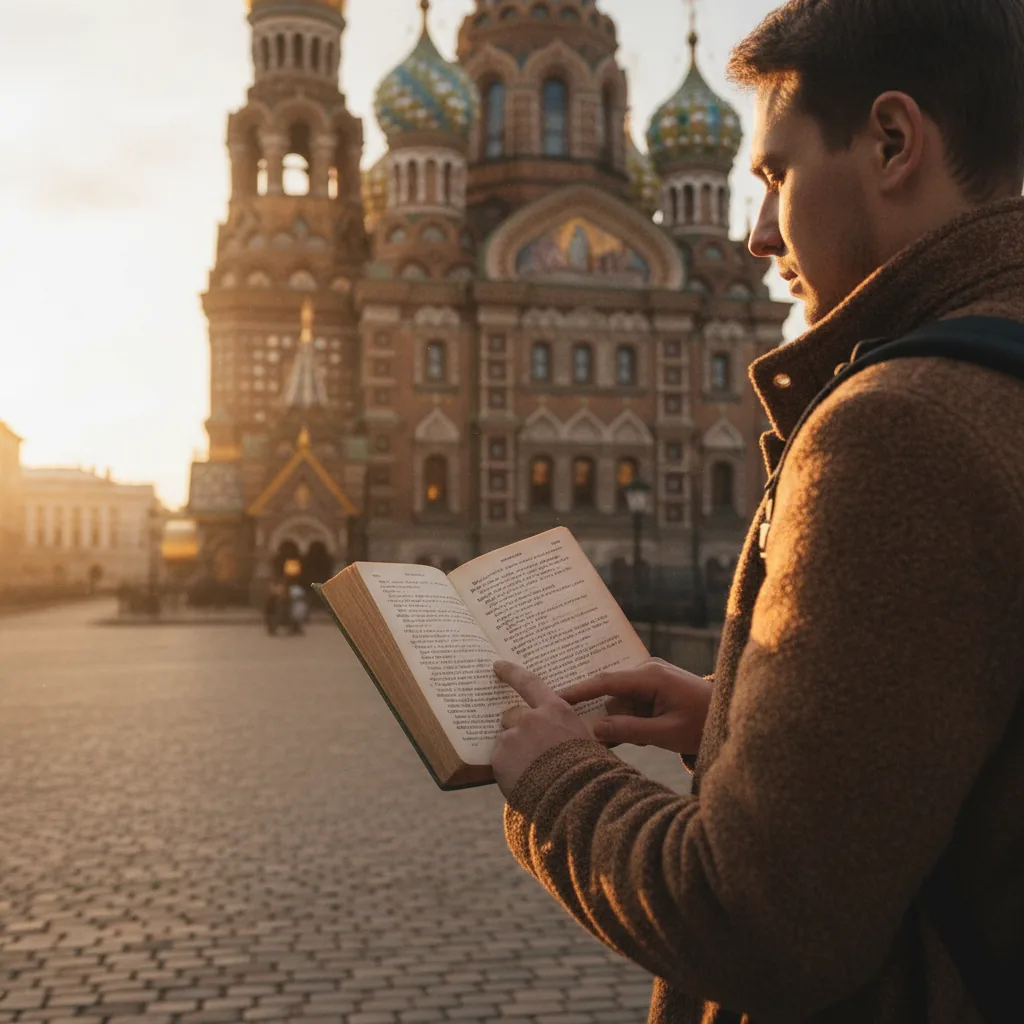
Saint Petersburg welcomes millions of visitors each year, many of whom arrive with little to no knowledge of Russian. While younger locals and service staff in tourist zones often speak basic English, a working command of a few dozen Russian phrases dramatically improves the travel experience. This guide covers the core language tools you need for navigating the city, from ordering coffee on Nevsky Prospekt to asking for help at a metro station. We focus on practical, real-world usage rather than grammar drills, and include pronunciation notes based on the standard Moscow-Saint Petersburg accent.
Why Bother with Russian?
English signage in Saint Petersburg is inconsistent. The Metro Guide notes that only a handful of stations have English translations on maps, and many bus stops display routes exclusively in Cyrillic. Taxi drivers, babushkas at kiosks, and attendants in smaller museums rarely speak English. Even in central districts like Nevsky Prospekt or Vasilyevsky Island, a simple "Zdravstvuyte" (hello) earns a noticeably warmer response than an immediate switch to English.
Furthermore, the Cyrillic alphabet is not as intimidating as it looks. Once you learn the 33 letters, about 15 of which are familiar or easy to guess, you can read street names, restaurant menus, and metro station signs. The effort takes roughly two to three hours of focused study and pays off immediately upon arrival at Pulkovo Airport.
The Cyrillic Alphabet in 20 Minutes
Below is the Russian alphabet with approximate English equivalents. Focus on the letters that look like English but sound different, these cause the most confusion.
- А а, like 'a' in "father"
- Б б, like 'b' in "bat"
- В в, like 'v' in "van"
- Г г, like 'g' in "go"
- Д д, like 'd' in "dog"
- Е е, like 'ye' in "yes"
- Ё ё, like 'yo' in "york"
- Ж ж, like 's' in "pleasure"
- З з, like 'z' in "zebra"
- И и, like 'ee' in "see"
- Й й, like 'y' in "boy"
- К к, like 'k' in "kite"
- Л л, like 'l' in "love"
- М м, like 'm' in "mother"
- Н н, like 'n' in "note"
- О о, like 'o' in "more" (when stressed)
- П п, like 'p' in "pet"
- Р р, rolled 'r'
- С с, like 's' in "sun"
- Т т, like 't' in "top"
- У у, like 'oo' in "boot"
- Ф ф, like 'f' in "fox"
- Х х, like 'ch' in "Bach"
- Ц ц, like 'ts' in "cats"
- Ч ч, like 'ch' in "cheese"
- Ш ш, like 'sh' in "shut"
- Щ щ, like 'shch' (soft 'sh' + 'ch')
- Ъ ъ, hard sign (no sound, separates letters)
- Ы ы, like 'i' in "ill" but deeper
- Ь ь, soft sign (palatalizes previous consonant)
- Э э, like 'e' in "met"
- Ю ю, like 'you'
- Я я, like 'ya' in "yard"
Practice by reading familiar words: "Метро" (metro), "Ресторан" (restaurant), "Аэропорт" (airport). You will recognise most of them within a day.
Essential Greetings and Politeness
Russian has a formal/informal distinction (vy vs ty). When addressing strangers, older people, or officials, always use the formal form. Use informal only with friends or children.
| Phrase | Pronunciation | Context |
|---|---|---|
| Здравствуйте | ZDRAST-vooy-tye | Formal hello (any time of day) |
| Привет | pree-VYET | Informal hi |
| До свидания | da svee-DA-niya | Goodbye (formal) |
| Пока | pa-KA | Bye (informal) |
| Спасибо | spa-SEE-ba | Thank you |
| Большое спасибо | bal-SHO-ye spa-SEE-ba | Thank you very much |
| Пожалуйста | pa-ZHA-lus-ta | Please / You're welcome |
| Извините | ee-zvee-NEE-tye | Excuse me / Sorry |
| Да / Нет | da / nyet | Yes / No |
In restaurants and shops, always say "Zdravstvuyte" upon entering. When you receive change or a receipt, a clear "Spasibo" is expected. Failure to greet can be perceived as rude.
Navigating the City: Directions and Transport
Saint Petersburg's public transport system is extensive. The Metro Guide covers the five lines and 72 stations. You will need to ask for directions at least occasionally. Key phrases include:
- Где находится…? (Gdye na-KHO-deet-sya…?), Where is…?
- Метро (me-TRO), Metro station
- Автобусная остановка (av-TO-boos-na-ya os-ta-NOV-ka), Bus stop
- Троллейбус (trol-LEY-bus), Trolleybus
- Остановка (os-ta-NOV-ka), Stop (for any vehicle)
- Прямо (PRYA-ma), Straight ahead
- Налево (na-LE-va), Left
- Направо (na-PRA-va), Right
- Рядом (RYA-dam), Nearby
- Далеко (da-le-KO), Far
Example: "Gdye nakhoditsya metro 'Nevsky Prospekt'?" (Where is the Nevsky Prospekt metro station?). Most locals will point or gesture, but if they give a verbal answer, listen for "pryama" (straight) or "na prava" (to the right).
For Taxi Services, you will likely use a ride-hailing app like Yandex Go or Uber Russia. The app interface is in Russian, but you can set it to English in the settings. If you must flag a taxi on the street, say: "Vy svobodny?" (Are you free?) and state your destination: "Mne nuzhno v …" (I need to go to …). Always agree on the fare beforehand or insist on the meter. A typical short ride within the centre costs 200-400 RUB (about €2-4).
Dining Out: Menus and Ordering
Restaurant staff in central Saint Petersburg often speak some English, but menus are predominantly in Russian. Many establishments near The Hermitage and on Nevsky Prospekt now include English translations, but smaller cafes on side streets do not. Useful phrases:
- Меню, пожалуйста (me-NYU, pa-ZHA-lus-ta), Menu, please
- Что вы порекомендуете? (Shto vy pa-re-ka-MEN-du-ye-tye?), What do you recommend?
- Я вегетарианец / вегетарианка (ya ve-ge-ta-ree-A-nets / ve-ge-ta-ree-AN-ka), I am vegetarian (male/female)
- Без мяса (bez MYA-sa), Without meat
- Счёт, пожалуйста (schyot, pa-ZHA-lus-ta), The bill, please
- Можно картой? (MOZH-na KAR-toy?), Can I pay by card?
Note that Payment Realities in Russia have shifted since 2022. Visa and Mastercard issued outside Russia no longer work domestically. Many restaurants and shops accept UnionPay, or you can use the Russian Mir card system. You can top up a Mir card at Sberbank ATMs using cash. Always carry 2000-3000 RUB in cash for smaller establishments.
When ordering coffee at a chain like Coffee House or Starbucks (now called Stars Coffee), say: "Odin americano, pozhaluysta" (One americano, please). A standard americano costs around 150-250 RUB. For tea, request "chay" (chai), be clear whether you want black (chyorny) or green (zelyony).
Numbers and Money
Understanding numbers is critical for prices, addresses, and transport. Russian numbers change form depending on grammatical case, but for basic transactions, the nominative forms work fine.
- Один (a-DEEN)
- Два (dva)
- Три (tree)
- Четыре (che-TY-rye)
- Пять (pyat')
- Шесть (shest')
- Семь (syem')
- Восемь (VO-syem')
- Девять (DYE-vyat')
- Десять (DYE-syat')
- Одиннадцать (a-DEEN-na-tsat')
- Двенадцать (dve-NA-tsat')
- Тринадцать (tree-NA-tsat')
- Четырнадцать (che-TYR-na-tsat')
- Пятнадцать (pyat-NA-tsat')
- Шестнадцать (shest-NA-tsat')
- Семнадцать (syem-NA-tsat')
- Восемнадцать (va-syem-NA-tsat')
- Девятнадцать (de-vyat-NA-tsat')
- Двадцать (DVA-tsat')
For prices: "Skolko stoit?" (How much does it cost?). The answer will be in rubles (rubley). A bottle of water in a kiosk costs about 50-80 RUB. A metro ride is 70 RUB (2025 single ticket).
Emergencies and Help
While Saint Petersburg is generally safe for tourists, you should know how to ask for help. Memorise these phrases before you need them:
- Помогите! (pa-ma-GEE-tye!), Help!
- Вызовите скорую! (VY-za-vee-tye SKO-ru-yu!), Call an ambulance!
- Вызовите полицию! (VY-za-vee-tye pa-LEE-tsi-yu!), Call the police!
- Я потерял(а) паспорт (ya pa-te-RYAL / pa-te-RYA-la PAS-port), I lost my passport (male/female)
- Где больница? (Gdye bal-NEE-tsa?), Where is the hospital?
- Мне нужен врач (Mnye NU-zhen vrach), I need a doctor
Emergency numbers: 112 (general emergency, operators may speak English), 103 (ambulance), 102 (police). When calling 112, state "English, please" if you need an English-speaking operator. The Government Travel Advisories page provides up-to-date contact details for your embassy in Saint Petersburg. The British Consulate is at 5 Ploshchad Proletarskoy Diktatury, and the US Consulate General (now closed for routine services) can be reached via the embassy in Moscow. Always register with your embassy upon arrival.
Cultural Etiquette and Non-Verbal Communication
Russians value directness but also formal politeness. A few behavioural notes:
- Smiling, Russians do not smile at strangers in public. A smile is reserved for friends and specific situations. Smiling at a passerby may be interpreted as mocking or suspicious.
- Personal space, On public transport, especially during peak hours (8:00-9:30 and 17:00-19:00), you will be packed tightly. Do not take it personally. The Buses and Trolleys article notes that routes 7 and 22 are among the most crowded.
- Gifts, If invited to a Russian home, bring a small gift: flowers (odd number only, even numbers are for funerals), chocolates, or alcohol. Do not give yellow flowers; they are associated with separation.
- Shoes, Remove shoes when entering a home. House slippers are usually provided.
- Toasting, At a meal, wait for a toast before drinking. Common toasts: "Za zdorovye!" (To health) or "Za vstrechu!" (To our meeting).
Practical Resources for Learning More
Before your trip, invest a few hours with a language app. Duolingo offers a solid Russian course that covers the alphabet and basic phrases. The free app Memrise has user-generated decks focused on travel vocabulary. For pronunciation, YouTube channels like "Russian with Max" or "Be Fluent in Russian" provide clear audio examples.
Once in Saint Petersburg, consider buying a phrasebook. The Lonely Planet Russian Phrasebook is available at the Dom Knigi bookstore at 28 Nevsky Prospekt (priced around 800 RUB). Alternatively, download an offline dictionary app such as Google Translate (supports camera translation of Cyrillic text) or Yandex Translate, which works well offline after downloading the Russian language pack.
For self-guided walks, the Walking Centre article suggests several routes that pass through areas with minimal English signage, a perfect opportunity to practice reading street names and menus.
Putting It All Together: A Sample Day
Imagine you are staying at a Budget Hotel near Moskovsky Vokzal. You walk to the metro, buy a single-trip token at the ticket window: "Odin token, pozhaluysta" (70 RUB). You board the red line towards Prospekt Veteranov. At Tekhnologichesky Institut, you transfer to the blue line and exit at Nevsky Prospekt. You ask a passerby: "Gdye nakhoditsya Kazansky sobor?" (Where is Kazan Cathedral?). They point and say "Pryama pyat' minut" (Straight, five minutes). You reply "Spasibo" and walk.
For lunch, you enter a small cafe on Kazanskaya Ulitsa. You say "Zdravstvuyte" and point at the menu: "Eto chto?" (What is this?). The waitress explains in Russian, and you order "Borshch i pelmeni" (borscht and pelmeni). Total: 650 RUB. You pay cash. You leave with a "Do svidaniya".
In the evening, you visit the State Hermitage Museum. The audio guide is available in English for 500 RUB. You spend three hours exploring the Winter Palace. Before leaving, you buy a souvenir at the museum shop: a small amber keychain for 400 RUB. You say "Spasibo, dosvidaniya" to the cashier.
This sequence, greeting, asking directions, ordering food, paying, and thanking, covers 90% of the interactions you will need. With 20-30 phrases memorised, your trip will be smoother and more rewarding.