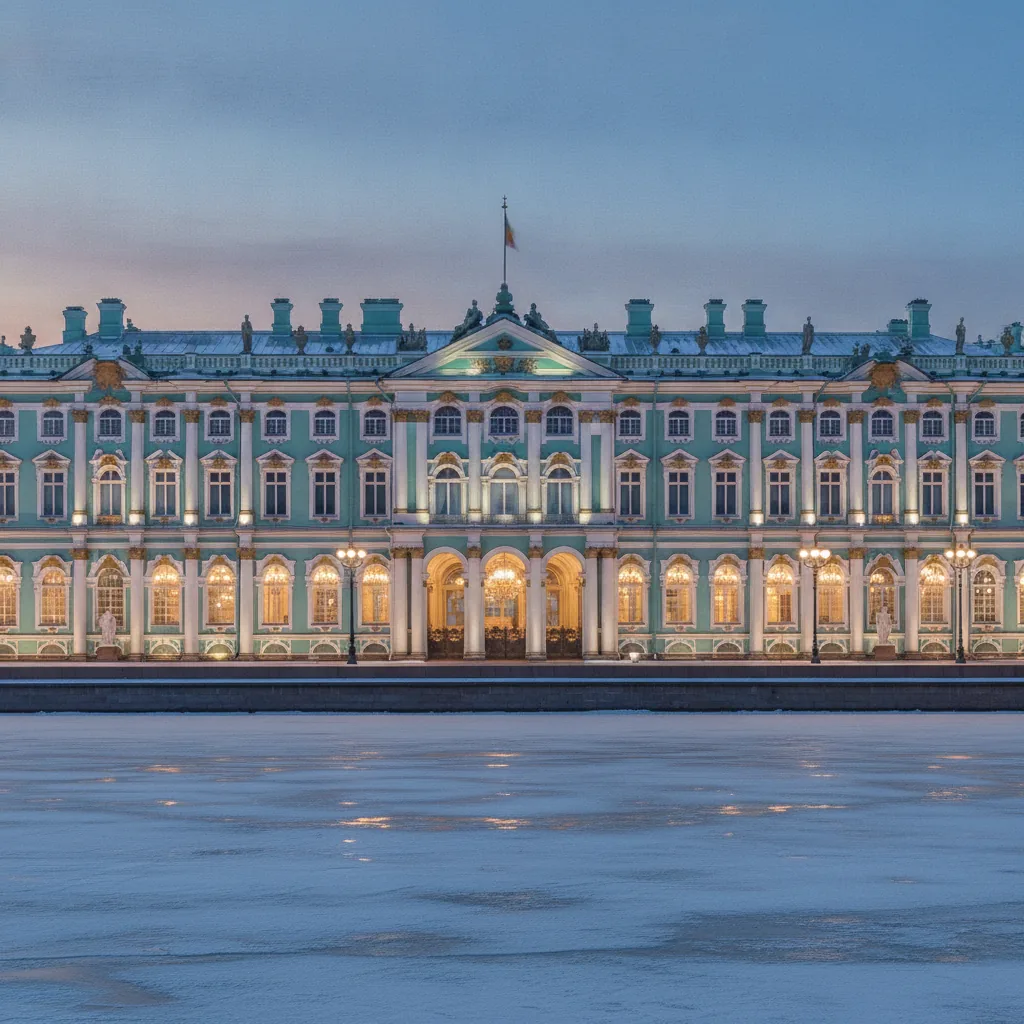
The State Hermitage Museum, housed in the magnificent Winter Palace and several adjoining buildings along the Palace Embankment, is one of the world's greatest art museums. With over three million items in its collection, only a fraction is on permanent display, yet that fraction spans millennia of human creativity. Whether you are a first-time visitor or a seasoned art lover, planning your visit carefully is essential to make the most of your time. This article provides a factual, evidence-based overview of what to see, how to buy tickets, and how to navigate the Hermitage complex efficiently.
Understanding the Hermitage Complex
The Hermitage is not a single building but a sprawling architectural ensemble on the left bank of the Neva River. The core structures include:
- The Winter Palace (1754-1762), the former imperial residence of the Russian tsars, designed by Bartolomeo Rastrelli in the Elizabethan Baroque style.
- The Small Hermitage (1764-1775), originally a private retreat for Catherine the Great, now housing the Pavilion Hall and the Peacock Clock.
- The Old Hermitage (1771-1787), built to house the growing art collection, connected to the Small Hermitage by a hanging garden.
- The New Hermitage (1839-1851), the first purpose-built museum building in Russia, with the famous portico of ten Atlantes.
- The Hermitage Theatre (1783-1787), a court theatre designed by Giacomo Quarenghi, still used for performances.
The museum complex also includes the General Staff Building on Palace Square, which houses the museum's collection of 19th- and 20th-century European art, including works by Monet, Renoir, Van Gogh, and Matisse. The Main Museum Complex (Winter Palace and adjacent buildings) contains the bulk of the collection, from Ancient Egyptian artefacts to Italian Renaissance masterpieces.
What to See: The Must-See Highlights
Given the sheer size of the Hermitage (about 1,000 rooms and 66,000 square metres of exhibition space), you cannot see everything in one day. Focus on these key areas:
The State Rooms of the Winter Palace
The grand enfilade of state rooms along the Neva River, including the Jordan Staircase, the Nicholas Hall, the Armorial Hall, the 1812 War Gallery, and the St. George Hall (Great Throne Room). These rooms are masterpieces of Baroque and Neoclassical interior design, with gilded mouldings, crystal chandeliers, and parquet floors. The Jordan Staircase, with its double flight of white marble steps and ceiling painting The Olympus by Giovanni Battista Tiepolo, is the ceremonial entrance used by diplomats and courtiers.
The Art Collections
- Italian Renaissance, Rooms 207-229 (first floor of the Old Hermitage). Leonardo da Vinci's Madonna Litta and Benois Madonna, Raphael's Madonna Conestabile and the Raphael Loggias (a replica of the Vatican Loggia), Titian's Danaë and St. Sebastian.
- Dutch and Flemish Golden Age, Rooms 245-259 (first floor of the New Hermitage). Rembrandt's Danaë, The Return of the Prodigal Son, and Portrait of an Old Man in Red; Rubens's The Descent from the Cross and The Union of Earth and Water.
- French Art of the 18th, 20th Centuries, The General Staff Building (second floor). Works by Claude Monet, Pierre-Auguste Renoir, Edgar Degas, Paul Cézanne, Vincent van Gogh, Henri Matisse, and Pablo Picasso. The Matisse collection is particularly strong, with The Dance (second version) and Music.
- Spanish Painting, Rooms 239-244 (first floor of the New Hermitage). Works by El Greco, Diego Velázquez, and Bartolomé Esteban Murillo.
The Pavilion Hall and the Peacock Clock
The Pavilion Hall (Room 204) in the Small Hermitage is a stunning white-and-gold interior with crystal chandeliers, marble fountains, and the famous Peacock Clock (1770s). This elaborate automaton, made by British clockmaker James Cox, features a peacock, a rooster, and an owl that move and make sounds when wound. The clock is still wound manually once a week and is one of the museum's most popular exhibits.
The Ancient World Collections
- Ancient Egypt, Room 100 (ground floor of the Winter Palace). Mummies, sarcophagi, papyri, and statues, including a fine statue of the goddess Sekhmet.
- Classical Antiquity, Rooms 101-131 (ground floor of the New Hermitage). Greek vases, Roman marble sculptures, and the famous Tauride Venus.
- Prehistoric Art, Rooms 34-37 (ground floor of the Winter Palace). The Gold Room (Room 38) contains Scythian gold artefacts, including the famous Pectoral from Tolstaya Mogila (4th century BC).
Ticket Prices and How to Buy
As of 2025, ticket prices are as follows (prices in Russian roubles, approximate exchange rate 1 USD = 90 RUB):
- General admission (Main Museum Complex), 800 RUB for adults, 400 RUB for students (with valid ID), free for children under 16.
- General Staff Building, 500 RUB for adults, 250 RUB for students.
- Combined ticket (both sites), 1,200 RUB for adults, 600 RUB for students.
- Audioguide, 500 RUB (available in Russian, English, French, German, Italian, Spanish, Chinese, and Japanese).
- Guided tour (1.5 hours), 3,000 RUB per person (in English, must be booked in advance).
Tickets can be purchased online via the official Hermitage website (hermitagemuseum.org) or at the ticket office in the Main Entrance (from 10:30 to 17:00). Online tickets are recommended to avoid queues, especially during peak season (May, September). Print your e-ticket or save the QR code on your phone. The museum also offers free admission on the first Thursday of each month for all visitors, but expect very long queues.
Opening Hours and Best Times to Visit
The Main Museum Complex and General Staff Building are open:
- Tuesday, Thursday, Saturday, Sunday, 10:30 to 18:00 (last entry 17:00).
- Wednesday, Friday, 10:30 to 21:00 (last entry 20:00).
- Monday, closed.
The museum is also closed on 1 January and 9 May (Victory Day). The best times to visit are early morning (10:30-12:00) on weekdays, or late evening on Wednesday and Friday (18:00-21:00) when the crowds thin. Avoid weekends and public holidays. The queue at the Main Entrance can be up to 2 hours in summer; online ticket holders have a separate, shorter line.
How to Get There: Location and Transport
The Hermitage is located at Palace Square, 2, in the very centre of Saint Petersburg. The nearest metro station is Admiralteyskaya (line 5, purple), about a 10-minute walk. Other nearby stations include Nevsky Prospekt (line 2, blue) and Gostiny Dvor (line 3, green), both about a 15-minute walk along Nevsky Prospekt. For detailed information on using the metro, see our Metro Guide.
If you prefer buses or trolleybuses, routes 7, 10, 24, and 191 stop at Dvortsovaya Ploshchad (Palace Square). Taxis are widely available; use Yandex Taxi or Uber for fixed prices (approximately 200-400 RUB from the city centre). For more on taxis, see our Taxi Services article. Walking from most central hotels is feasible; the area around Palace Square is pedestrian-friendly. See our Walking the Centre guide for suggested routes.
Practical Tips for Your Visit
Security and Entrance
All visitors must pass through metal detectors and bag checks. Large backpacks and suitcases must be left in the cloakroom (free of charge). Photography is allowed in most rooms without flash; tripods and selfie sticks are prohibited. The museum has strict rules about touching exhibits, guards are vigilant.
Facilities
- Cloakroom, located in the basement of the Winter Palace, near the Main Entrance. Free.
- Toilets, on the ground floor and first floor of the Winter Palace, and in the General Staff Building.
- Cafés and restaurants, the Café Hermitage (on the ground floor of the Winter Palace) serves snacks, sandwiches, and drinks. The Restaurant Hermitage (first floor of the General Staff Building) offers a full menu with Russian and European dishes. Prices are moderate: coffee 200-300 RUB, a sandwich 400-600 RUB.
- Gift shops, at the Main Entrance and in the General Staff Building. They sell books, postcards, reproductions, and souvenirs.
Accessibility
The Main Museum Complex has limited accessibility for wheelchair users. There are ramps at the Main Entrance, but many rooms are on upper floors without elevators (only the New Hermitage has a passenger lift). The General Staff Building is fully accessible. Wheelchairs can be borrowed free of charge at the cloakroom (subject to availability).
What to Wear
Comfortable walking shoes are essential, you will walk several kilometres. The museum is heated in winter and air-conditioned in summer, but temperature can vary between rooms. Dress in layers. No dress code is enforced, but shoulders and knees should be covered as a sign of respect (not strictly required, but advisable).
Planning Your Route: Suggested Itineraries
Given the size of the museum, here are three suggested itineraries based on time available:
2-Hour Express Tour
- Enter via the Main Entrance, climb the Jordan Staircase.
- Walk through the State Rooms (Jordan Staircase, Nicholas Hall, Armorial Hall, 1812 War Gallery, St. George Hall).
- Visit the Pavilion Hall to see the Peacock Clock.
- See the Leonardo da Vinci rooms (Room 207-209).
- Exit through the Main Entrance.
Half-Day Tour (3-4 Hours)
- Follow the 2-hour route above.
- Add the Rembrandt and Rubens rooms (Room 245-259).
- Visit the Ancient Egyptian collection (Room 100).
- Walk through the New Hermitage to see the Atlantes and the Roman sculpture.
- Optional: visit the General Staff Building (if combined ticket) for Impressionist and Post-Impressionist art.
Full-Day Tour (6-8 Hours)
- Start at 10:30, follow the half-day route.
- Have lunch at the Restaurant Hermitage.
- Spend the afternoon in the General Staff Building (French art, Matisse, Picasso).
- Return to the Main Complex for the Gold Room (Scythian gold) and the Classical Antiquity collection.
- Finish with a walk through the Winter Palace's private apartments (Room 160-198).
When to Visit: Seasonal Considerations
The Hermitage is open year-round, but the experience varies by season:
- Summer (June, August), peak tourist season. Queues are longest (up to 2 hours), and the museum is crowded. Book online tickets and arrive early. The White Nights (mid-June to mid-July) offer extended evening hours on Wednesdays and Fridays until 21:00.
- Autumn (September, October), fewer crowds, pleasant weather, and the museum is less busy. September still has many tourists; October is quieter.
- Winter (November, March), low season. The museum is relatively empty, especially on weekday mornings. The city is cold (average -5°C to -10°C), but the interiors are warm. Check the Bridge Schedule if you plan to cross the Neva at night.
- Spring (April, May), the museum is quiet, but the weather is unpredictable. May has public holidays (1 May, 9 May) when the museum is closed or has reduced hours.
Additional Tips for Foreign Visitors
If you are visiting from abroad, ensure you have the correct documentation. See our Entry Requirements for visa information. Most foreign visitors need a visa; check the Government Travel Advisories for your country before booking. It is also wise to have Travel Insurance that covers medical expenses and trip cancellation.
For payment, note that many Russian businesses, including the Hermitage ticket office, accept cash (Russian roubles) and card (Visa, Mastercard, and local Mir cards). However, due to international sanctions, some foreign cards may not work. Carry enough cash for tickets and souvenirs. See our Payment Realities article for details.
To reach Saint Petersburg, see our Flight Routes guide for airlines and airports. The city's main airport is Pulkovo (LED), with direct flights from many European and Asian cities. From the airport, take bus 39 or taxi to the centre.
For accommodation, consider staying in the city centre to be close to the Hermitage. See our guides to Budget Hotels, Mid-Range Hotels, and Luxury Hotels for recommendations. The best areas for proximity to the Hermitage are the Admiralteysky and Tsentralny districts; see Best Areas to Stay.
Final Practical Reminders
- Book online tickets at least a week in advance during summer.
- Arrive 15-20 minutes early to clear security.
- Download the official Hermitage app (free) for an interactive map and offline audio guide.
- Wear comfortable shoes, the museum has long corridors and many stairs.
- Stay hydrated, bring a water bottle (you can refill at water fountains near toilets).
- Respect the no-photography signs in some rooms (especially the Gold Room).
The Hermitage and Winter Palace are not just a museum; they are a journey through the history of art, architecture, and Russian imperial power. With careful planning, you can experience its wonders without feeling overwhelmed. For a broader overview of the city, read our Complete Guide to Saint Petersburg.