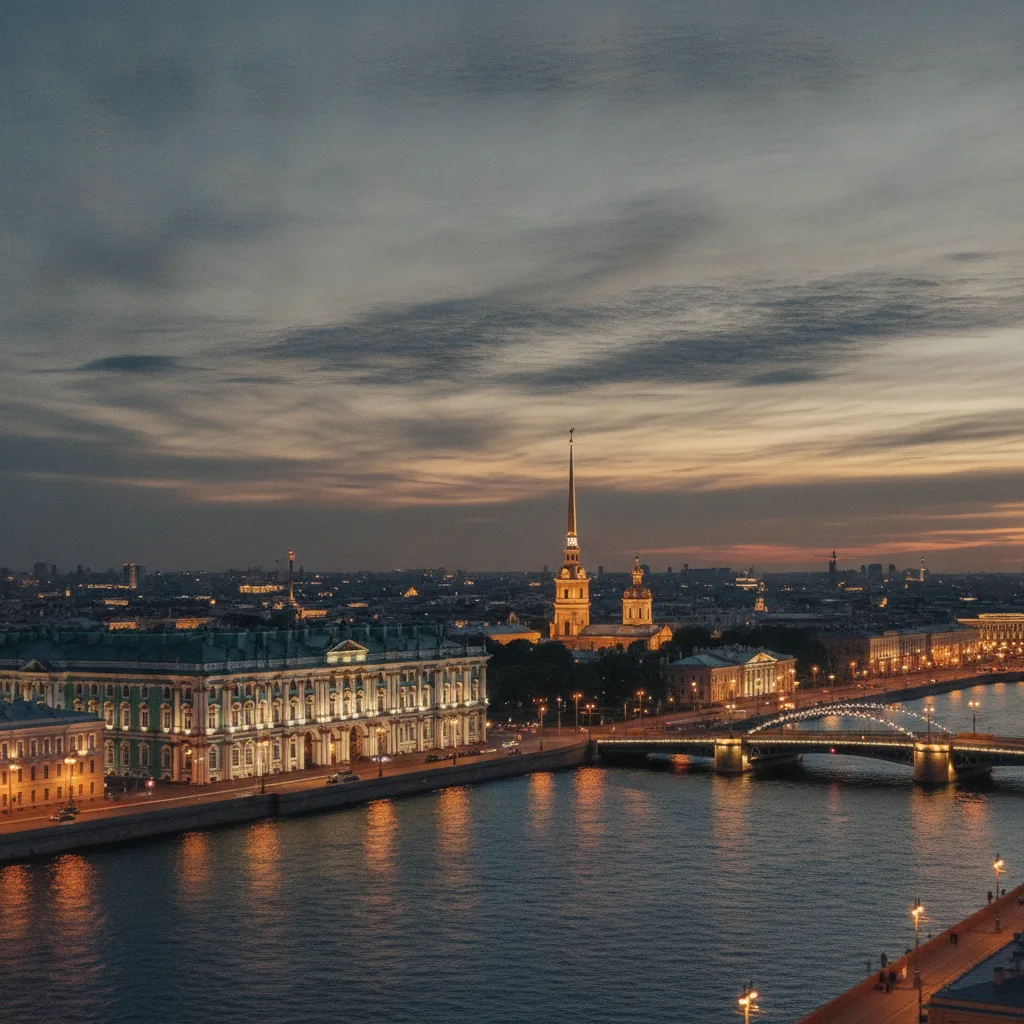
Saint Petersburg, Russia's cultural capital, attracts millions of visitors each year with its imperial palaces, world-class museums, and atmospheric canals. Yet for first-time travelers, the sheer volume of practical information, visa types, payment methods, metro lines, and seasonal events, can be daunting. Rather than reading every article from start to finish, we have isolated the key sections to read to prepare efficiently. This article selects and explains the most critical parts of the Saint Petersburg Guide, drawing on official sources and real-world experience to save you time and prevent common mistakes.
We have structured the guide into seven clear areas: entry requirements, payment realities, transport basics, central neighborhoods, the Hermitage, Catherine Palace, and the White Nights phenomenon. Each section explains why that content matters, what specific details you need, and how to find more depth in our linked articles. By focusing on these key sections, you will arrive in Saint Petersburg informed, confident, and ready to explore.
Entry Requirements: What You Must Read Before Booking
The most common trip-killer is ignorance of Russia's visa rules. Our entry requirements article covers every detail, but two subsections deserve your full attention: the visa invitation (voucher) and the mandatory registration rule. Without understanding these, you risk being denied boarding or facing fines.
The Visa Invitation (Voucher)
Russia requires a visa invitation, often called a voucher, from a Russian-registered host. Hotels and tour agencies provide this automatically if you book with them. If you arrange lodging via Airbnb or stay with friends, you must obtain an invitation through a licensed agency such as Express to Russia or Real Russia. The cost ranges from 15 to 30 EUR for a standard voucher. Ignoring this step will result in visa rejection.
Mandatory Registration
Within three business days of arrival (excluding weekends and holidays), your hotel or host must register your presence with the Ministry of Internal Affairs. This is not optional. If you switch hotels, the new hotel handles the new registration. Travelers who skip this may encounter problems when leaving the country. The entry requirements article includes a step-by-step checklist to avoid this pitfall.
Visa-Free Stays (72-Hour Rule)
Many guidebooks mention the 72-hour visa-free stay for ferry and cruise passengers. However, this rule comes with strict conditions: you must arrive on a designated ferry line (for example, from St. Peter Line) or an approved cruise ship, and you can only stay in the city (not travel to Moscow). The entry requirements article clarifies which operators qualify and what documents the border officer will check. If you arrive by plane, this rule does not apply, you need a full visa.
For official updates, always consult your local Russian consulate or the government travel advisories article for your country's latest recommendations.
Payment Realities: Why Cash and Cards Are Both Essential
Russia is often described as moving toward a cashless society, but Western cards face severe restrictions. Our payment realities article is one of the most important resources you will read. Focus on three key sections: the Visa and Mastercard ban, the UnionPay alternative, and the cash culture.
Visa and Mastercard Ban
Since March 2022, Visa and Mastercard issued outside Russia do not work anywhere inside the country, not at ATMs, not in shops, not at restaurants. This affects nearly all tourists from Europe, the United States, Canada, and Australia. You cannot rely on your usual debit or credit card. The article explains this clearly and warns against trying to use these cards.
UnionPay as an Alternative
UnionPay cards from Chinese banks and some international partners (such as Raiffeisen Bank International in some European countries) may work. However, even UnionPay acceptance is unpredictable. The article lists which banks issue cards that still function in Russia and suggests obtaining one before departure. Do not assume your UnionPay card will work, test it at home first.
Cash: The Reliable Fallback
The article stresses that Russian rubles in cash remain the most dependable payment method. You can exchange major currencies (EUR, USD, GBP) at exchange counters in the city, but avoid airport exchange booths offering poor rates. Recommended exchange points include BKS Bank and Unistream kiosks on Nevsky Prospekt. Bring enough cash for at least three days of expenses, then replenish as needed. Smaller shops and market stalls often take cash only. The payment realities article provides a table of sample costs: a metro ride (70 RUB), a coffee (200-300 RUB), a sit-down dinner (1500-2500 RUB).
Transport Basics: Navigating the Metro and Beyond
Saint Petersburg's transport system is efficient and affordable, but confusing if you do not understand the fare system and key lines. Our metro guide article and buses and trolleys article cover everything. The most important sections are the map orientation, the single-ticket vs. multi-trip card decision, and the bridge schedule.
Metro Map: The Critical Lines
The metro has five lines (M1, M5), but you will likely spend most time on the red line (M1, line 1) connecting Deviatkino in the north to Prospekt Veteranov in the south, and the blue line (M2, line 2) running from Parnas to Kupchino. The key stations for tourists are Nevsky Prospekt (M2), Gostiny Dvor (M3), Ploshchad Vosstaniya (M1 and M2 transfer), and Admiralteyskaya (M5). The article includes a simplified map and explains the transfer points. Memorize those three stations and you will rarely get lost.
Fare System: The Podorozhnik Card
The metro no longer accepts cash at turnstiles, you must use a contactless card, a Podorozhnik card, or the official mobile app (Metro Saint Petersburg). The Podorozhnik card costs 60 RUB for the card itself (refundable) and can be topped up at ticket offices or automated machines. Each trip costs 49 RUB with the card (as of 2025), compared to 70 RUB for a single contactless payment using a foreign card (if accepted). The metro guide article includes a step-by-step guide to buying and topping up the card, including the location of machines at Moskovskaya and Ploshchad Lenina stations.
Bridge Schedule: Timing Your Movement
During the navigation season (April to November), the Neva River's drawbridges open nightly to let ships pass. If you stay on Vasilyevsky Island or in the historic center and need to cross the river after midnight, you may get stranded until morning. Our bridge schedule article lists the exact opening times for each bridge. For example, the Palace Bridge (Dvortsovy Most) opens from 1:10 AM to 2:50 AM and again from 3:10 AM to 4:50 AM. The Troitsky Bridge opens from 1:20 AM to 4:50 AM with a gap. Print the schedule or keep it on your phone.
For shorter distances, walking remains the best option, especially in the center. Our walking centre article outlines a 3-hour self-guided walking tour that covers the main sights without needing transport.
Best Areas: Where to Stay for Your Priorities
Choosing the right neighborhood can transform your experience. Our best areas article divides the city into five districts. The sections to read are the descriptions of Nevsky Prospekt corridor, Vasilyevsky Island, and Petrogradskaya Side.
Nevsky Prospekt Corridor (Tsentralny District)
This is the tourist heart: Nevsky Prospekt runs from the Alexander Nevsky Lavra to the Admiralty. Staying here puts you within walking distance of the Hermitage, the Russian Museum, and the main shopping streets. The area has the highest concentration of mid-range hotels and luxury hotels, such as the Four Seasons Hotel Lion Palace (from 50,000 RUB per night) and the Belmond Grand Hotel Europe (from 40,000 RUB). Noise can be high, especially on weekends.
Vasilyevsky Island (Vasileostrovsky District)
This island offers a quieter, more local vibe with wider streets and fewer crowds. The Spit of Vasilyevsky Island provides stunning views of the Neva. Accommodation is generally cheaper: budget hotels like Sokos Hotel Palace Bridge (from 8,000 RUB) offer comfort without luxury prices. The trade-off is longer walks to major museums, about 25 minutes on foot to the Hermitage.
Petrogradskaya Side (Petrogradsky District)
Home to the Peter and Paul Fortress and the Aurora cruiser, this historic area is popular with families and those interested in military history. It has fewer large hotels but more family-run guesthouses. The Heliotrope boutique hotel (from 6,000 RUB) is a good mid-range option. The area is also close to the Gorkovskaya metro station (M2), making the rest of the city reachable in 10-15 minutes.
The Hermitage: What to Really See (and Skip)
The State Hermitage Museum is one of the largest art museums in the world, with over 3 million items. Without a strategy, you will wander aimlessly for hours. Our Hermitage article focuses on three essential subsections: the ticket purchase system, the must-see halls, and the time recommendations.
Ticket Purchase: Buy Online or Skip the Queue
Paper tickets sold at the main entrance can involve queues of 1-2 hours. The article advises buying an e-ticket from the official Hermitage website (hermitagemuseum.org) starting at 500 RUB for adults (as of 2025). Print the QR code or save it offline. Third-party resellers sometimes charge double the price. If you are a student (under 18 or with an ISIC card), entry is free, but you still need a free ticket from the website. The article also notes that the museum is closed on Mondays.
Must-See Halls: The Gold and the Art
The article lists the top five rooms: the Jordan Staircase (Main Staircase), the Pavilion Hall with the Peacock Clock, the Rembrandt Room (including Danaë and The Return of the Prodigal Son), the Knight's Hall, and the Malachite Room. It recommends a route that starts from the Jordan Staircase, goes through the state rooms of the Winter Palace, then to the collections.
Time Recommendations
Most visitors spend 3-4 hours and see about 10% of the collection. If you have only half a day, follow the 3-hour route outlined in the article. Those with a full day can add the modern art wing (the General Staff Building) and the Fabergé Museum nearby. The article warns against trying to see everything, it will exhaust you.
Catherine Palace and Peterhof: Two Day Trips, One Strategy
Many travelers attempt to visit Catherine Palace and Peterhof in the same day. This is a mistake. Our Catherine Palace article and Peterhof article each contain a section that explains why separate days are better and how to plan each trip.
Catherine Palace: The Amber Room and the Queue
The Amber Room is the main attraction, but the palace is small and controlled entry times mean long waits. The article emphasizes that you must book a timed entry slot online (starting at 1,500 RUB in summer). The palace is located in Pushkin, about 30 km south of the city. A taxi from the center costs about 1,500-2,000 RUB one way. The article recommends arriving at 9:30 AM (the palace opens at 10:00 AM) to avoid the bus tours that arrive after 11:00 AM.
Peterhof: The Grand Cascade and the Fountains
Peterhof's Grand Cascade is a spectacle, but the grounds are massive. The article highlights three must-see areas: the Grand Cascade (free view from the upper terrace, but entry to the lower park costs 1,000 RUB), the Monplaisir Palace, and the Alexandra Park. It explains the boat trip (from the Senate Square pier, about 1,500 RUB round-trip) which is more scenic than the train and bus combination. The boat takes 40 minutes each way and runs from May to October.
The One-Day Trap
The Peterhof article specifically warns against combining Peterhof and Catherine Palace in the same day. Each requires at least four hours of travel and exploration. Trying to do both will leave you rushing through the Amber Room and seeing only a fraction of the Peterhof fountains. Separate them by at least one rest day.
White Nights: Timing, Sights, and Crowds
The White Nights phenomenon (June, July) is a magical time when the sun barely sets, creating near-24-hour daylight. Our White Nights article is critical for anyone planning a trip during this period. Focus on the light schedule, the Scarlet Sails festival, and the crowd strategies.
Light Schedule
The article provides exact times for civil twilight (when it never gets fully dark). From June 11 to July 2, the sun sets after 10:00 PM and rises before 3:30 AM. Even at midnight, there is enough light to read a newspaper outdoors. This affects sleep: bring a good sleep mask and blackout curtains (most hotels provide them). The article also notes that many museums extend their hours, such as the Hermitage staying open until 9:00 PM or later.
Scarlet Sails Festival
This iconic event occurs on the third Saturday of June (typically the 23rd or 24th). The article describes the schedule: the concert on the Spit of Vasilyevsky Island starts at 11:00 PM, and the fireworks and pirate ship parade begin around 1:00 AM. Over 1 million people attend, so plan to arrive by 8:00 PM to secure a spot. The metro runs all night. The article recommends watching from a bridge (such as Palace Bridge) rather than the Spit itself for a better view of the ship.
Crowd Strategy
White Nights attract huge crowds. The article advises booking accommodation six months in advance. Prices for mid-range hotels can double. Restaurants on Nevsky Prospekt fill up by 7:00 PM. The article suggests dining in quieter areas like Ligovsky Prospekt or on Vasilyevsky Island, and making reservations two weeks ahead. The complete guide to Saint Petersburg includes a full White Nights calendar.