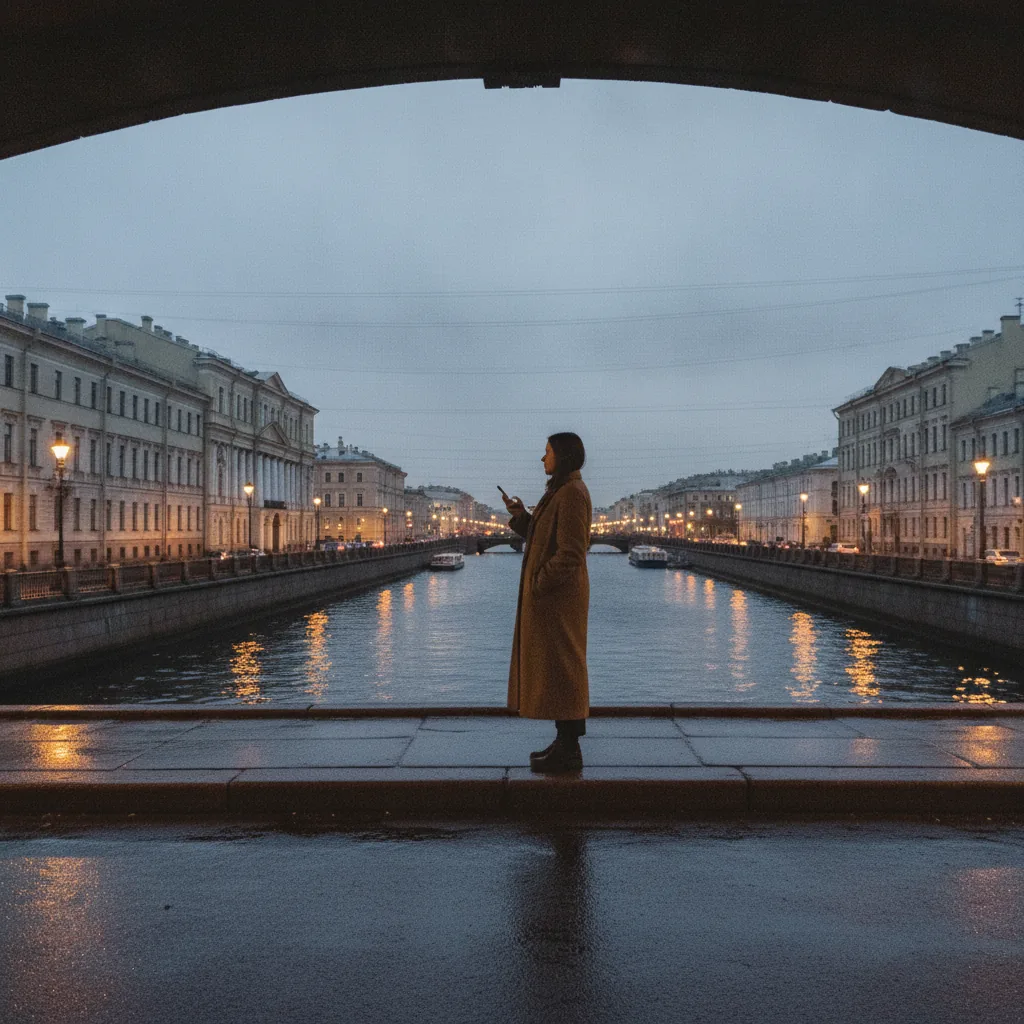
The White Nights (Белые ночи, Belyye nochi) are Saint Petersburg’s most famous natural phenomenon. From late May through mid-July, the sun dips just enough below the horizon to create a prolonged twilight that never turns fully dark. For visitors and locals alike, this period transforms the city into a round-the-clock spectacle, but what actually happens on the ground, on the water, and inside the museums can be very different from the postcard romanticism. This article provides a factual, evidence-based account of the White Nights season: the astronomy, the cultural programming, the logistical reality, and the practical details you need to navigate the city during this intense period.
The Astronomical Basis: Why the Sun Never Fully Sets
Saint Petersburg sits at 59.9° North latitude, far enough north that from approximately 20 May to 20 July, the sun does not descend more than 6 degrees below the horizon. The darkest period, known as nautical twilight, still provides enough light for outdoor activities without artificial lighting. The peak of the White Nights occurs around the summer solstice on 21 June, when the sun sets after 22:00 and rises before 04:00, leaving about 3.5 hours of astronomical dusk that never reaches true night.
This is not a unique phenomenon; similar light conditions occur in Helsinki, Stockholm, Reykjavik, and parts of Alaska and northern Canada. However, Saint Petersburg is the largest city at this latitude with such a well-preserved 18th- and 19th-century architectural core. The combination of neoclassical façades, wide Neva embankments, and 342 bridges (according to the City Bridge Trust, 2023 data) creates a stage where the lingering twilight reflects off the granite and water.
Practical implications for visitors:
- Sunlight penetrates hotel curtains: bring a sleep mask.
- Restaurants and cafés operate later hours, with many staying open until 01:00-02:00 during June.
- Public transport runs extended schedules: the metro closes at around 00:30 but buses and trolleys run night routes on key corridors.
The Festival Programme: What Actually Runs During White Nights
The White Nights are not a single event but a season with multiple curated programmes. The most famous is the Stars of the White Nights Festival at the Mariinsky Theatre. In 2024, the festival runs from 15 May to 17 July, featuring over 200 performances: ballet, opera, orchestral concerts, and chamber music. Ticket prices range from 1,500 RUB for balcony seats to 15,000 RUB for stalls on opening nights (Mariinsky box office, 2024 pricing). Bookings should be made at least six weeks in advance; the Mariinsky website and official ticket kiosks in the theatre foyer are the only safe channels. Scalpers outside the theatre sell counterfeit tickets, a known issue flagged by the theatre’s administration in their 2023 security report.
Scarlet Sails (Alye Parusa)
The single largest public event is Scarlet Sails, held on the Saturday closest to the summer solstice (22 June in 2024). It is a high-school graduation celebration that draws an estimated 1.5 million people to the Neva riverbanks and Palace Square. The programme includes a concert from 22:00 to 01:00, a fireworks display at 01:10, and the passage of a tall ship with scarlet sails, the Tre Kronor (a 50-metre brig) in 2024, along the Neva from the Annunciation Bridge to the Trinity Bridge.
Key logistical facts:
- Entry to Palace Square requires a ticket for school graduates and their chaperones; the general public watches from the Admiralty Embankment, Dvortsovy Most, and the waterfront along Vasilyevsky Island.
- Metro stations Nevsky Prospekt, Admiralteyskaya, and Spasskaya close from 20:00 until 03:00 for crowd control, use taxi or ride-hailing apps but expect surge pricing (200-400% above normal).
- Portable toilets and food stalls appear along Nevsky Prospekt from midday; cash is preferred at stalls (see payment realities for details).
Navigating the Bridges: Opening Schedule and Midnight Boat Trips
One of the most iconic White Nights experiences is watching the bridge openings. From late April through November, the Neva’s drawbridges open nightly to let cargo ships pass from Lake Ladoga to the Gulf of Finland. During White Nights, this happens in sufficient light for clear viewing. The two most photographed bridges are the Palace Bridge (Dvortsovy Most) and the Trinity Bridge (Troitsky Most), which open between 01:10 and 04:50.
Exact schedule (2024, provided by Mostotrest operational reports):
- Dvortsovy Most: 01:10-02:50 and 03:10-04:55.
- Troitsky Most: 01:20-04:50.
- Annunciation Bridge: 01:25-02:45.
- Liteyny Most: 01:40-04:30.
City authorities publish the schedule on the Mostotrest website and via the Bridges of St. Petersburg mobile app (iOS/Android). Important: if you are staying on one side of the Neva and plan to cross after midnight, you will be stranded until the bridges close again around 05:00. The only alternative is the metro, which closes around 00:30, or a taxi via the Western High-Speed Diameter (WHSD) toll road, which uses tunnels under the river. A taxi ride from Vasilyevsky Island to the central district between 02:00 and 04:30 costs 800-1,200 RUB (Yandex Go, June 2023 average).
Detailed bridge schedule and alternative routes are available on our dedicated page.
Midnight Boat Cruises
Commercial boat trips running from 23:00 to 02:00 are a staple of the season. Most depart from the Fontanka River near the Lomonosov Bridge or from the Neva Embankment opposite the Hermitage. Operators include Neva Vokrug Sveta, Volkana, and St. Petersburg Boat Tours. Prices in 2024 range from 1,200 RUB per person for a basic 1.5-hour trip without drinks to 3,500 RUB for a 2-hour cruise with champagne and a guide.
What you actually see: the bridge openings from the water, the illuminated facades of the Winter Palace, the Peter and Paul Fortress, and the Rostral Columns. Cruises operate rain or shine, and deck space is first-come-first-served. Reserve via the operator’s website or your hotel concierge; street touts near the Hermitage often offer unlicensed trips with missing safety equipment (life jackets, first aid).
Museum Hours and Crowds: What to Expect
During the White Nights, the State Hermitage Museum extends its opening hours on Thursdays until 21:00 (last entry at 19:30). The Peterhof Grand Palace opens from 10:00 to 18:00 (last admission 17:00), but the lower park is open until 20:00 in June. The Catherine Palace in Pushkin (Tsarskoe Selo) follows a similar schedule, with queues forming from 08:00 for the Amber Room. Hermitage tickets can be purchased online at a 30-40% discount compared to the desk price (700 RUB online vs 1,000 RUB at the door, as of 2024).
The reality: the Hermitage’s peak daily attendance in June 2023 was 42,000 visitors (Hermitage annual report, 2023). On solstice days, the queue for the main entrance can exceed 90 minutes even with a pre-booked ticket. The Palace Square entrances funnel visitors through a single security checkpoint. The museum recommends visiting after 16:00 on weekdays for shorter waits.
Catherine Palace ticket booking and crowd avoidance tips are covered separately, but key points: book at least two weeks ahead, choose the 12:00 or 13:00 time slot, and expect a group tour of the Amber Room (no solo wandering).
Accommodation: Where to Stay and What to Pay
Hotel prices in Saint Petersburg during White Nights are roughly 60-100% higher than in February or October, according to average rate data from Booking.com and Expedia (2023). In June 2023, a standard double room at a mid-range hotel like the Park Inn by Radisson Nevsky (Nevsky Prospekt, close to Ploshchad Vosstaniya) cost 8,500-12,000 RUB per night. Budget options such as SleeperS Hostel on Ligovsky Prospekt had dorm beds for 1,200-1,800 RUB.
- Budget hotels and hostels during White Nights
- Mid-range hotels: best value for location
- Luxury hotels: the Four Seasons, W, and Grand Hotel Europe
Book before the end of April for June stays. After mid-May, availability drops sharply for central properties within a 2 km radius of the Neva. The Vasilyevsky Island and Petrogradskaya Side districts offer slightly lower rates and good views but require careful planning around bridge schedules (see above). Our guide to the best neighbourhoods provides a district-by-district breakdown with average prices.
Street Life, Crime, and Safety
The White Nights bring a carnival atmosphere, but also challenges. Pickpocketing spikes in crowded areas: Palace Square, the Hermitage queue, Nevsky Prospekt, and on crowded metro trains. In 2022, the Saint Petersburg police reported 312 incidents of pickpocketing in June, a 40% increase over the monthly average (City Police Annual Report, 2022). Keep wallets in front pockets or a money belt, be cautious in metro carriages near exits, and avoid displaying expensive cameras or phones on the street at night.
Drinking in public places is prohibited under the city code (Article 8.1 of the Law on Administrative Offences of St. Petersburg), but enforcement is lenient during festivals, expect a verbal warning rather than a fine unless you are disorderly. Drunken brawls are uncommon but do occur near the Fontanka embankments after 02:00. Stick to well-lit areas and main thoroughfares after midnight.
Up-to-date government travel advisories should be checked before departure, particularly regarding visa validity and entry requirements. As of 2024, citizens of 64 countries (including EU, UK, USA, and China) require a visa for stays over 7 days. The eVisa system for short-term tourism (up to 16 days) remains available for 52 nations, with a processing time of 4 calendar days. Full entry requirements are maintained by the site.
Transport: Getting Around Without Losing Your Mind
The metro is the backbone of summer transport in Saint Petersburg. During White Nights, five central stations, Ploshchad Vosstaniya, Nevsky Prospekt, Gostiny Dvor, Sennaya Ploshchad, and Admiralteyskaya, see peak-hour crowding from 17:00 to 20:00. The complete metro guide covers lines, fares (70 RUB per ride in 2024), and maps.
Buses and trolleys operating at night include lines 3, 7, 11, 21, and 46, which connect the city centre with the outskirts. They run every 20-30 minutes from 00:30 to 05:30. The Marshrutka (minibus) system is less reliable after midnight; drivers often end routes early. Night bus routes and timetables are listed on the official SPb Transport website.
Taxis: Yandex Go dominates the market. A typical ride from the airport (LED Pulkovo) to the city centre costs 1,200-1,800 RUB in June. Surge pricing after midnight on event nights can double or triple the fare. Cash is accepted by most drivers, but the app requires a card or digital wallet (MIr, Visa, Mastercard issued in Russia). See detailed information on taxi services.
For those willing to walk, the central area bounded by the Neva, the Fontanka, and Nevsky Prospekt is compact, about 4 km across. Our walking centre guide suggests three self-guided routes: Nevsky Prospekt to the Spit of Vasilyevsky Island (2.3 km, 25 minutes), the Hermitage along the Neva to the Summer Garden (3.1 km, 35 minutes), and the canals from Sennaya Square to the Mariinsky Theatre (1.8 km, 20 minutes).
Weather and Packing: The Reality of June in Saint Petersburg
Despite the romantic name, White Nights do not guarantee warm weather. The mean temperature in June is 16.7°C (62°F) with record lows of 4°C and highs of 33°C. Rain falls on average 12 days in June, often as drizzle or short showers. The wind off the Gulf of Finland can drop the apparent temperature by 5-8°C in the evening.
Packing list for a White Nights visit:
- Light jacket or windbreaker (evening use)
- Comfortable walking shoes (cobblestones are treacherous on the Spit)
- Sleep mask and earplugs
- Sunscreen (UV index reaches 5-6 at solstice)
- Reusable water bottle (tap water is safe in central St. Petersburg, per Vodokanal reports)
- Umbrella or packable raincoat
Mosquitoes are present from late May, especially near the Neva delta and in Peterhof parks. DEET-based repellent is effective; the city does not have endemic mosquito-borne diseases, but bites are bothersome.
The Bottom Line: Is It Worth the Hype?
The White Nights are a genuine geographic phenomenon with a tangible impact on the city’s rhythm. The extended daylight allows for longer sightseeing days, late-night pedestrian traffic on Nevsky Prospekt, and a unique visual experience of the city’s architecture bathed in pale twilight. However, the crowds, inflated prices, and logistical constraints, particularly the bridge schedule, require advance planning. For travellers who prepare accordingly, it is an unforgettable season. For those who arrive without reservations or an understanding of the night transport situation, it can be a stressful, expensive visit.
To summarise the key actionable points:
- Book accommodation and museum tickets by the end of April.
- Familiarise yourself with the bridge schedule if staying on Vasilyevsky Island or Petrogradskaya Side.
- Use public transport early and night buses after midnight; avoid driving or taxiing during bridge hours.
- Keep cash for small purchases, as card acceptance is not universal at street stalls.
- Monitor the weather forecast and pack layers accordingly.
Related articles
The Complete Guide to Saint Petersburg
Payment Realities in St. Petersburg: Cash, Cards, and Digital Wallets
Bridge Schedule: When the Neva Drawbridges Open
Metro Guide: Navigating the St. Petersburg Subway
Hermitage: Visiting the State Hermitage Museum
Taxi Services in St. Petersburg