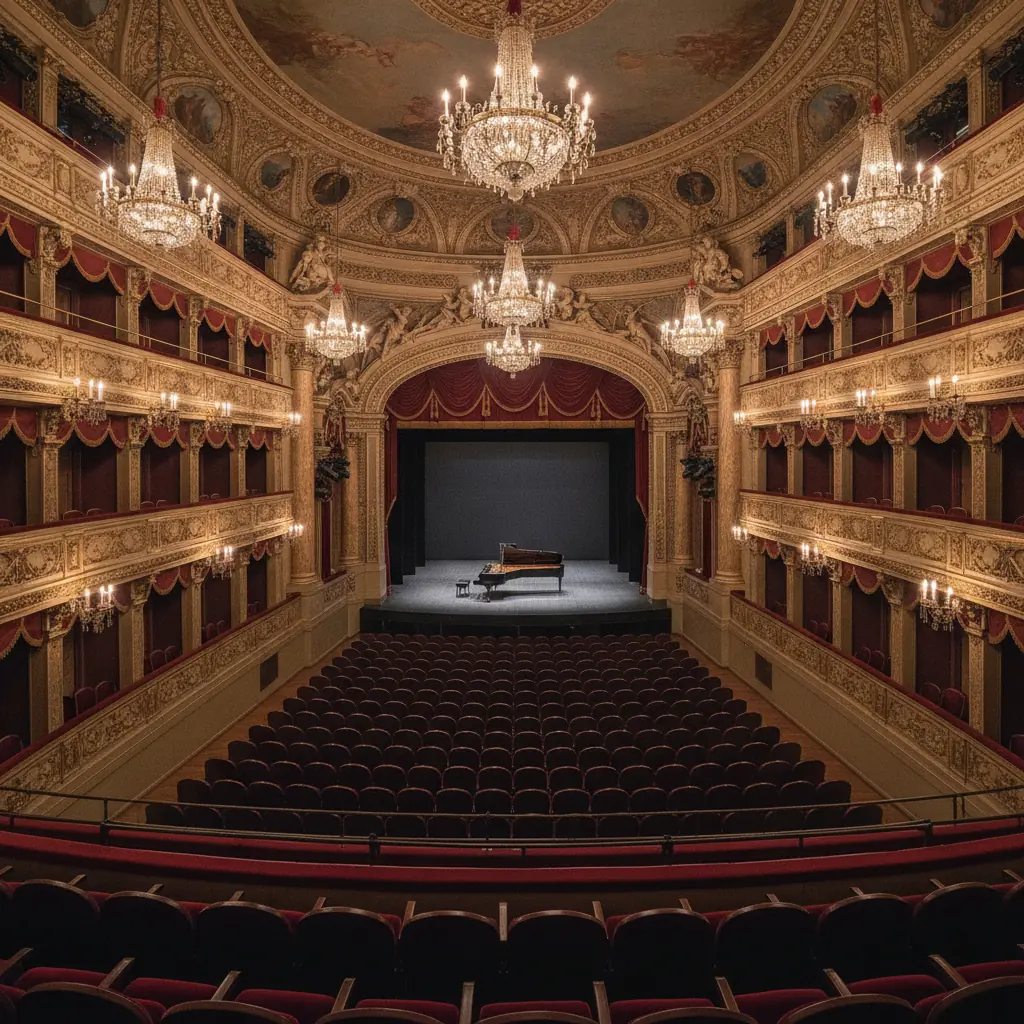
The Mariinsky Theatre is the most celebrated opera and ballet house in Saint Petersburg, with a history that reaches back to the mid‑19th century. It is the home of the Mariinsky Ballet, the Mariinsky Opera, and the Mariinsky Orchestra, and its stages host around 800 performances each year. For any visitor interested in Russian performing arts, attending a production here is a central part of experiencing the city’s cultural life. This article covers the three main performance spaces, typical repertoire, ticket pricing and availability, booking procedures, and practical advice for attending a show.
The Three Stages of the Mariinsky Theatre
The Mariinsky Theatre is not a single venue: it operates three principal stages in Saint Petersburg. Each stage has a distinct character, capacity, and repertoire focus, and knowing which one you are booking for will help you plan your visit. The main historic building is the Mariinsky Theatre (Historical Stage) on Theatre Square, built in 1860. Its auditorium seats about 1,600 people and is famous for its blue‑and‑gold décor, crystal chandelier, and the ceiling fresco by Giovanni Busato. This stage is used for major ballet and opera productions, especially the classics: Swan Lake, The Nutcracker, Eugene Onegin, and La Traviata.
The second stage, the Mariinsky Theatre (New Stage), also called Mariinsky‑2, opened in 2013 on the opposite side of the Kryukov Canal, linked to the historic building by a glass walkway. Designed by Canadian architect Jack Diamond, the new stage is a modern, glass‑walled building with a 2,000‑seat main hall and a smaller 200‑seat chamber hall. Its technical facilities are state‑of‑the‑art, and it is used for large‑scale operas, contemporary ballets, symphonic concerts, and productions that require advanced stage machinery. The acoustics are highly regarded, and the sightlines are excellent from nearly every seat.
The third venue is the Mariinsky Concert Hall, located a short walk from Theatre Square at ulitsa Pisareva 20 (next to the historic stage). Built on the site of the former theatre’s warehouse, it opened in 2006 and has a 1,160‑seat auditorium designed specifically for concert performances. Its hall is built with a horseshoe shape and removable orchestral shell, allowing flexibility for symphonic concerts, recitals, and chamber music. The Mariinsky Concert Hall is the home of the Mariinsky Orchestra under Valery Gergiev and often hosts concert performances of operas and ballet suites.
Typical Repertoire and Performance Schedule
The Mariinsky Theatre presents a wide rotating repertoire of ballet, opera, and classical music. The ballet repertoire includes the full 19th‑century canon, Giselle, La Bayadère, Coppélia, Don Quixote, The Sleeping Beauty, and Raymonda, as well as 20th‑ and 21st‑century works by choreographers such as George Balanchine, William Forsythe, and contemporary Russian choreographers. The opera programme ranges from Russian classics like Boris Godunov, Khovanshchina, The Queen of Spades, and Ruslan and Lyudmila to standard Italian, French, and German works: La Traviata, Aida, Carmen, Die Zauberflöte, and Tosca.
The Mariinsky Orchestra performs regularly in the Concert Hall, with programmes that include symphonies by Beethoven, Brahms, Tchaikovsky, Shostakovich, and Prokofiev. There are also special seasonal events: the White Nights Festival (late May to mid‑July) is the most famous, with a dense programme of ballet, opera, and orchestral concerts, often featuring international guest artists. During the Stars of the White Nights festival, performances run nightly, and tickets for headline productions sell out months in advance. Other annual events include the International Ballet Festival in autumn and the Mariinsky International Piano Festival in winter.
To see the current schedule, the official website mariinsky.ru/en lists performances up to six months ahead. The schedule is published in monthly blocks: typically, the next month’s programme becomes available around the 20th of the preceding month. For example, tickets for January performances usually go on sale in mid‑December.
Ticket Prices and Categories
Ticket prices at the Mariinsky Theatre vary dramatically depending on the stage, the production, the seat location, and the day of the week. For a standard ballet or opera at the Historic Stage, prices in the 2024-2025 season range from approximately 1,500 RUB (about €15 or $17) for upper balcony seats to 8,000-12,000 RUB (€80, €125) for orchestra stalls and boxes. For exceptionally popular productions, especially during the White Nights Festival, top‑tier seats can reach 25,000-40,000 RUB (€250, €400).
At the New Stage, prices are generally similar, with balcony seats from 2,000 RUB and orchestra seats from 4,000-10,000 RUB. The Concert Hall is more affordable: orchestra seats for a symphony concert usually range from 1,500 to 5,000 RUB. Standing‑room tickets are sometimes available for the Historic Stage (around 400-800 RUB) but are not always sold to non‑Russian ID holders in practice; check on the website when booking.
The Mariinsky Theatre operates a dynamic pricing system for the New Stage and some Concert Hall events: the earlier you book, the lower the price. For the same seat, a ticket bought two months before the performance may cost 30-50% less than one bought a week before. This makes advance booking important if you want the best prices. There is also a student discount (50% off for full‑time students under 25, subject to availability) and a senior discount for Russian citizens over 60, but these are generally restricted to tickets purchased in person at the box office with the relevant ID.
How to Book Tickets
Tickets can be purchased through four main channels: the official website, the official mobile app, the box office at any of the three stages, and authorised ticket agencies. The safest and most reliable method is the official website (mariinsky.ru/en). You must create a free account with your email and a password. The site accepts international credit and debit cards (Visa, Mastercard, American Express) as well as MIR cards. However, due to current geopolitical circumstances, some non‑Russian cards may be declined. If that happens, the theatre recommends using a virtual prepaid card issued by a Russian bank or paying through a third‑party service such as CloudPayments or YooMoney. International visitors may find it easiest to use a VPN set to Russia while booking, though this is not officially required.
If you prefer to buy in person, the central box office at the Historic Stage (Teatralnaya ploshchad 1) is open daily from 11:00 to 19:00, with a lunch break 14:00-15:00. The New Stage box office (ulitsa Dekabristov 34) and the Concert Hall box office (ulitsa Pisareva 20) have similar hours. All three accept cash and cards. Queues can be long on performance days, especially for popular productions.
Be aware of unofficial resale websites that charge inflated prices. The Mariinsky Theatre sells tickets only through its own channels and a small number of authorised partners (such as Kassir.ru and Ticketland.ru). Avoid third‑party aggregators that appear high in search results: they often mark up prices by 100-300% and may not deliver genuine e‑tickets.
Practical Tips for Attending a Performance
Arriving at the theatre involves more than just turning up with a ticket. Here are the key practical points:
- Dress code: There is no strict dress code, but the general etiquette is smart casual. For premieres and gala performances, many locals wear evening dress (suits for men, cocktail dresses for women). Shorts, flip‑flops, and sportswear are discouraged.
- Cloakroom: All outerwear and large bags must be checked into the cloakroom (garderob). This is free but expect a small queue. Keep your phone and wallet with you.
- Mobile phones: Switch off mobile phones or put them on silent mode. Photography and video recording are strictly prohibited during the performance; ushers will ask you to put your phone away. Flash photography is never allowed.
- Latecomers: Doors close at the start of each act. If you arrive late, you will be allowed in only during the intermission. The ushers will direct you to the nearest available seat until the act ends.
- Intermissions: Most full‑length ballets and operas have one or two intermissions of 20-30 minutes. The theatre’s buffets (bufet) serve snacks, sandwiches, pastries, tea, coffee, champagne, and wine. Prices are moderate: a glass of sparkling wine costs around 400-600 RUB. Queue early if you want to be served quickly.
- Duration: A typical ballet lasts 2.5-3 hours, an opera 2.5-4 hours, including intermissions. Check the running time on your ticket or the website.
- Wheelchair access: The Historic Stage has limited wheelchair access (via a ramp at the side entrance); the New Stage and Concert Hall are fully accessible with lifts and designated seating. Book accessible seats by calling the box office (+7 812 326‑4141) at least 48 hours before the performance.
Getting to the Mariinsky Theatre
The Mariinsky Theatre is located in the historic centre of Saint Petersburg, about a 15‑minute walk from the Nevsky Prospekt area. The nearest metro station is Sadovaya (on the orange line), a 10‑minute walk. Spasskaya (the same station on the purple line) is also close. From the metro, walk south along ulitsa Rimskogo‑Korsakova, then turn left onto Teatralnaya ploshchad. The walk takes about 12 minutes. Alternatively, Sennaya Ploshchad station (blue line) is 12‑15 minutes on foot. For more detailed public transport information, see our metro guide and the buses and trolleys page.
If you are staying in the central districts such as Admiralteysky or Tsentralny, walking is often the most pleasant option, especially during the White Nights when the evening is still bright. Taxis are widely available through apps like Yandex.Taxi and Uber (which works via the Yandex platform in Russia). A ride from Nevsky Prospekt should cost 250-500 RUB. For taxi safety, read our taxi services page. If you are driving, note that parking around Theatre Square is limited; the nearest paid car park is on ulitsa Dekabristov, opposite the New Stage.
One unique logistical note for evening performances: from April to November, the drawbridges open during the night to let ships pass. If you are staying on Vasilievsky Island or the Petrograd Side, check the bridge schedule to ensure you can return to your accommodation after the performance. The theatre’s main performances usually end around 21:30-22:30, which is before the first bridge openings (typically 01:25-02:30 for the Palace Bridge), so you should be fine except during the early‑morning closing hours.
Accommodation and Dining Near the Theatre
Many visitors choose to stay within walking distance of the Mariinsky Theatre. The surrounding area includes the Kolomna and Admiralteysky districts, which offer a mix of luxury hotels, mid‑range hotels, and budget hotels. Notable options include the Sokos Hotel Palace Bridge (a 5‑minute walk, from 8,000 RUB/night) and the Moscow Hotel (a 10‑minute walk, from 4,500 RUB/night). For a more affordable stay, hostels like Friends Hostel on Gorokhovaya ulitsa are about 15 minutes on foot.
Dinner before the show can be booked at several restaurants on and around Theatre Square. The Mariinsky Theatre Buffet itself is open to ticket holders and offers a set menu for around 1,200-2,000 RUB. Outside the theatre, Restaurant Marius (on Teatralnaya ploshchad) serves French‑inspired Russian dishes; a two‑course dinner costs about 2,500-4,000 RUB. For a quicker meal, Bulka bakery on ulitsa Dekabristov has good coffee and pastries (300-600 RUB).
Accessibility and Special Needs
The Mariinsky Theatre is committed to accessibility, but the three stages differ. The New Stage and Concert Hall are fully wheelchair‑accessible, with lifts to all levels, accessible restrooms, and designated seats in the stalls. The Historic Stage has a step‑free entrance via a side door on ulitsa Glinki, but the seating in the orchestra stalls is not fully wheelchair‑adapted: you may need to transfer to a fixed seat. Contact the theatre’s accessibility department ([email protected]) in advance. Audio‑description and sign‑language interpretation are available for selected performances, typically one or two per month, and are listed on the website.
Conclusion and Further Reading
Attending a performance at the Mariinsky Theatre is an unforgettable part of a visit to Saint Petersburg. Whether you book months ahead for the White Nights Festival or find a last‑minute ticket to a concert at the New Stage, planning your route, knowing the pricing system, and understanding the venue etiquette will help you enjoy the experience fully. For more on Saint Petersburg’s cultural offerings, see our articles on the Hermitage Museum, Peterhof Palace, and Catherine Palace. A comprehensive overview of the city is available in our Complete Guide to Saint Petersburg.