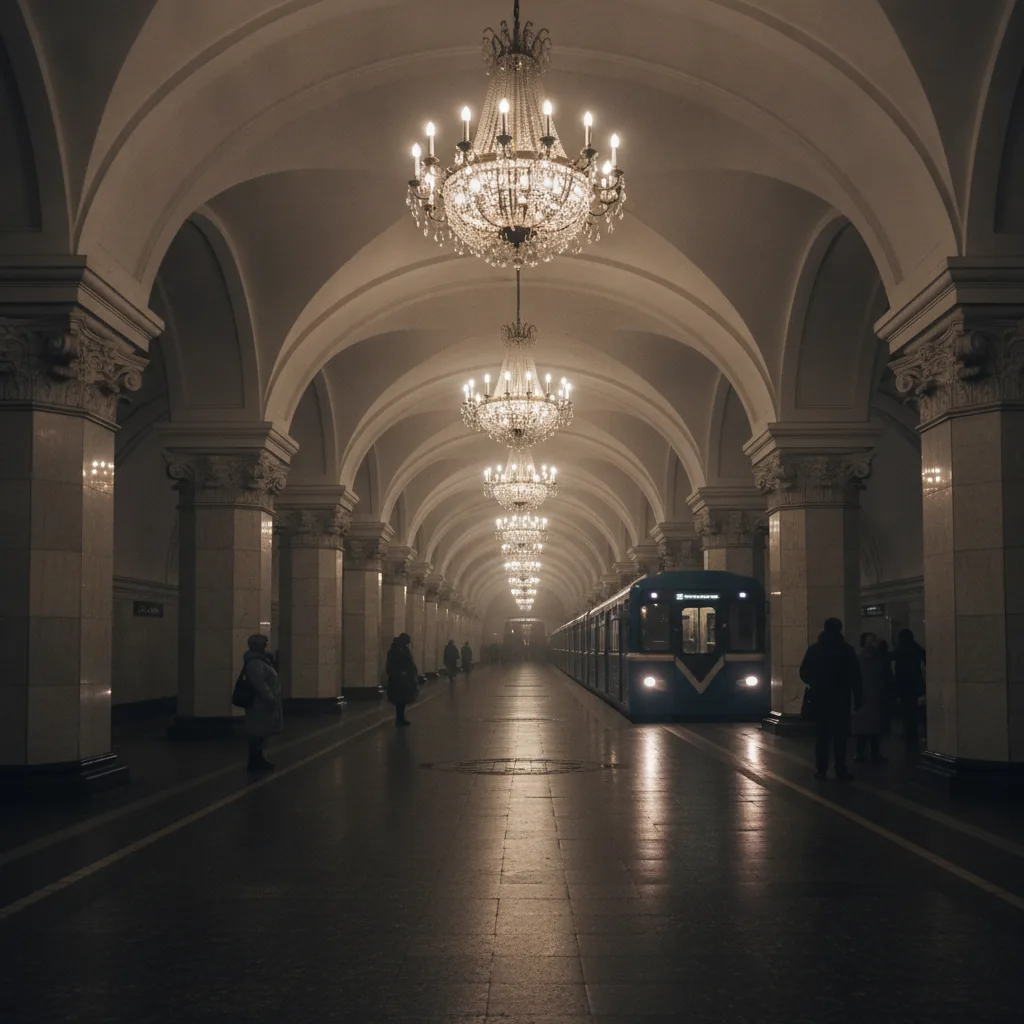
The Saint Petersburg Metro (Петербургский метрополитен) is the city’s primary rapid transit system and one of the deepest in the world. Opened in 1955, it now carries around 2 million passengers daily across five lines and 67 stations. For visitors, the metro is both a practical travel tool and an attraction in itself: many stations are lavishly decorated with marble, mosaics, and chandeliers, often compared to underground palaces. This guide covers the lines, key stops, and practical tips to help you navigate the system efficiently.
Before using the metro, make sure you have suitable payment methods and understand local travel advisories. For comprehensive planning, read our Complete Guide to Saint Petersburg and check entry requirements for Russia.
Metro Lines at a Glance
The Saint Petersburg Metro consists of five numbered and colour-coded lines. The first line (Kirovsko-Vyborgskaya) opened in 1955, while the fifth (Frunzensko-Primorskaya) has been extended most recently in 2019. The total track length is approximately 124.8 km (77.5 miles).
- Line 1 (Red): Kirovsko-Vyborgskaya, runs from Devyatkino in the north to Prospekt Veteranov in the south. Key stations: Ploshchad Vosstaniya (transfer to Moskovsky Railway Station), Avtovo (ornate station), Narvskaya.
- Line 2 (Blue): Moskovsko-Petrogradskaya, from Parnas to Kupchino. Connects Moskovskaya (bus to Pulkovo Airport), Nevsky Prospekt (heart of the city), Sportivnaya (near Krestovsky Island).
- Line 3 (Green): Nevsko-Vasileostrovskaya, from Begovaya to Rybatskoye. Passes Gostiny Dvor (department store), Alexandra Nevskogo Square (transfer to Line 4).
- Line 4 (Orange): Pravoberezhnaya, from Spasskaya to Ulitsa Dybenko. Key stations: Spasskaya (deep station), Ploshchad Alexandra Nevskogo.
- Line 5 (Purple): Frunzensko-Primorskaya, from Komendantsky Prospekt to Shushary. Includes Zvenigorodskaya (transfer to Line 1), Obvodny Kanal, and the new Prospekt Slavy (opened 2019).
All lines intersect in the city centre, with transfers possible at several stations. A single ticket (single journey) costs 70 RUB (as of 2025), and you can buy tokens or use contactless cards. See our payment realities article for details on accepted cards and mobile payments.
Historical and Architectural Highlights
The Saint Petersburg Metro is famous for its deep stations, some built up to 86 metres below ground. During the Cold War, the deep tunnels also served as bomb shelters. The Soviet-era stations, especially on Line 1, feature ornate marble columns, bronze sculptures, and intricate mosaics depicting Soviet life and history.
Must-See Stations
- Avtovo, line 1, opened 1955. Known for its colonnade of gold-plated columns, marble floors, and a massive mosaic “Defence of Leningrad” at the end of the platform. No escalator due to its shallow depth (12 m).
- Ploshchad Vosstaniya, line 1/line 3 transfer. The station features a large bronze sign of the Order of Victory and a red star. The vestibule is in a busy square next to Moskovsky Station.
- Nevsky Prospekt, line 2, exit onto Nevsky Prospekt and near the Kazan Cathedral. The station itself is relatively simple, but its location is prime.
- Spasskaya, line 4, opened 2009. One of the deepest at 86 m. The escalator ride takes about 3 minutes. The design uses dark marble and blue lighting, resembling an underground palace.
Key Stations for Tourists
Most tourist attractions are within walking distance of a few central stations. Here is a station-by-station guide for typical sightseeing routes.
Nevsky Prospekt (Line 2)
Exit directly onto Nevsky Prospekt, the main avenue. From here you can walk to: Kazan Cathedral (5 min), Singer House (Dom Knigi), Gostiny Dvor department store, the Russian Museum (10 min), and the Hermitage Museum (15 min). The station is located under the intersection of Nevsky and Mikhailovskaya streets.
Gostiny Dvor (Line 3)
This station serves the Gostiny Dvor shopping arcade and the nearby Lomonosov Porcelain store. It also connects to the Canal Griboyedov embankment and the Church of the Savior on Spilled Blood (10 min walk along the canal).
Admiralteyskaya (Line 5)
This is the closest station to the Hermitage (about 300 metres from the main entrance). However, it is not directly connected to other lines; you must exit to the surface and walk. The station is also near the Alexander Garden and Admiralty building.
Moskovskaya (Line 2)
The main transport hub for Pulkovo Airport. From Moskovskaya, take bus 39 or 39A (40 RUB, 20-30 min) to the airport terminals. The station itself is decorated with marble and has a large clock above the exit.
Ploshchad Vosstaniya (Line 1 & 3)
Next to Moskovsky Railway Station (trains to Moscow, Novgorod, Pskov). The station square has a monument to the October Revolution. Transfer to Line 3 (green) to reach Vasilievsky Island.
Practical Tips for Tourists
Using the metro as a visitor requires preparation. Here are the essential points.
Getting a Ticket
- Tokens (жетоны), physical metal tokens sold at ticket windows and vending machines. Price: 70 RUB per token (2025). Valid for one trip regardless of distance.
- Contactless card (Podorozhnik), rechargeable transport card that can be used for metro, buses, and trams. Initial cost: 60 RUB (card) + top-up. You can buy it at any ticket office, and it works for up to 90 days.
- Bank card / smartphone, most turnstiles accept contactless Mastercard, Visa, and Mir cards (including Apple Pay/Google Pay). Foreign-issued cards may not always work due to sanctions. Check our payment realities guide for current advice.
Navigating the System
- Prepare your route in advance. Download the official Yandex Metro app or use 2GIS offline maps. English signage exists in most central stations but is limited in outer stations.
- Use the right escalator etiquette. Stand on the right, walk on the left. The escalators are long and steep, hold the handrail.
- Buy a multi-trip pass if you make more than 4-5 journeys. A 10-trip pass (available on Podorozhnik) costs 420 RUB, saving about 280 RUB compared to 10 single tokens.
- Watch for door closing. Metro doors close quickly, do not try to board after the beeping alarm.
Safety and Advisories
Overall, the Saint Petersburg Metro is safe, but take standard precautions: keep valuables secured, avoid empty carriages late at night, and be aware of pickpockets in crowded stations (especially Ploshchad Vosstaniya, Nevsky Prospekt). For the latest official safety information, consult government travel advisories. It is also recommended to have travel insurance that covers medical evacuation in case of any incident.
Metro Hours and Frequency
The metro opens daily at 05:30 and closes at 00:00 (except for some stations that close earlier for maintenance). From midnight to 05:30, the system is closed. The first trains depart from terminal stations around 05:45-06:00. Last trains from the centre leave around 23:50. During peak hours (08:00-10:00 and 17:00-19:00), trains run every 2-3 minutes; during off-peak, every 5-7 minutes. Late evening after 22:00, frequency drops to every 7-10 minutes.
Important: on holidays (New Year, May 9, etc.), the metro may operate extended hours until 01:00. Check the official metro website or ask at station information desks.
Connecting to Other Transport
The metro integrates with all other city transport. From the metro you can reach:
- Pulkovo Airport (LED), via Moskovskaya station (bus 39/39A), see our flight routes guide for airline info.
- Moskovsky Railway Station, via Ploshchad Vosstaniya (trains to Moscow, Helsinki, etc.).
- Finlyandsky Railway Station, via Ploshchad Lenina (Line 1).
- Vitebsky Railway Station, via Pushkinskaya (Line 1) or Zvenigorodskaya (Line 5).
For buses and trams, use the same Podorozhnik card or buy a single ticket from the driver (cash only, 60 RUB). Note: from January 2025, all city transport accepts contactless payments except marshutkas (minibuses).
Frequently Asked Questions
Is the metro accessible for wheelchairs?
Only a few stations have elevators: Kupchino, Prospekt Slavy, Shushary, and newer stations on Line 5. The vast majority require stairs or escalators. Most stations do not have tactile guides for the visually impaired. The metro is not recommended for people with limited mobility unless you stick to the accessible stations.
Can I take photos inside the stations?
Yes, non-commercial photography is allowed without flash. Tripods and professional video equipment require permission from the metro management (often refused). Avoid photographing security personnel or ticket booths.
Where can I find English maps?
English metro maps are available at information desks in central stations (Nevsky Prospekt, Ploshchad Vosstaniya, Gostiny Dvor). You can also download the Yandex Metro app (available in English). The official metro website (www.metro.spb.ru) has an English version with a route planner.
What should I do if I lose my card or token?
Go to the station manager’s office (usually at the end of the platform or near the exit). Lost items are often brought there. There is no central lost-and-found system for the entire metro; you must visit the station where you lost it.
Conclusion
The Saint Petersburg Metro is an efficient, affordable, and architecturally stunning way to travel. With 5 lines covering 67 stations, you can reach all major sights. Prepare in advance with the right payment method, plan your routes, and allow time to admire the station design. For full trip planning, revisit our Complete Guide and flight routes guide. Safe travels.