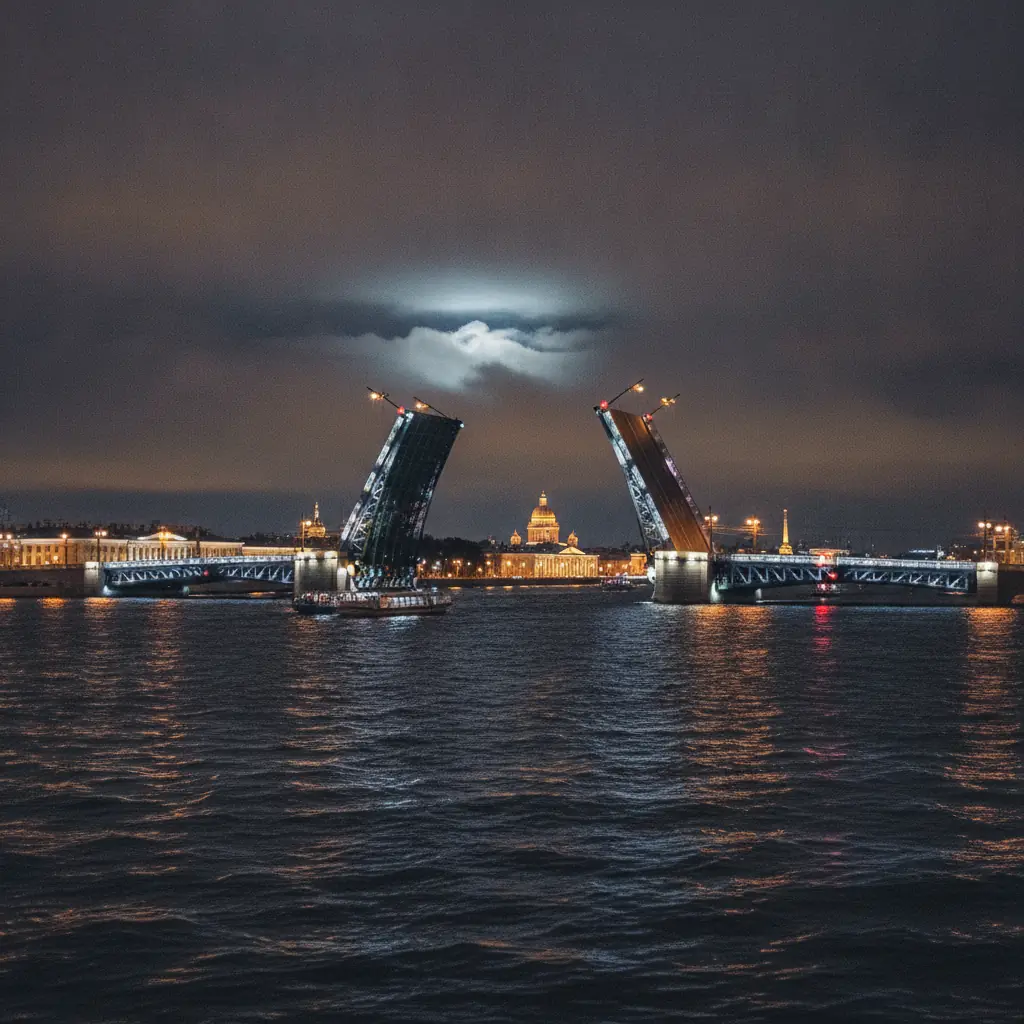
Saint Petersburg is a city built on water. The Neva River and its dozens of canals create a landscape of exceptional beauty, but also a practical challenge: when the bridges go up for navigation, many routes across the city close. This is the bridge-raising season, a phenomenon that runs roughly from early April to late November each year. For visitors unfamiliar with the schedule, a missed bridge can mean hours of detour, or being stuck on one side of the river until dawn.
This article explains exactly when and why bridges are raised, which bridges are affected, how to plan your travel around the schedule, and what alternatives you have. Whether you are crossing the Neva for The State Hermitage or staying late at a concert during the White Nights festival, understanding the bridge-raising schedule is essential for a smooth trip.
Why Bridges Are Raised in Saint Petersburg
The Neva River is a major navigable waterway connecting Lake Ladoga to the Baltic Sea. Saint Petersburg sits at the river's delta, where the Neva splits into multiple branches. The city has more than 340 bridges, including 12 that cross the main Neva channel. During the navigation season, which typically runs from early April (after ice breakup) to late November (before freeze-up), the drawbridges are raised nightly to allow cargo ships, cruise liners, and barges to pass from the Baltic Sea to inland waterways.
The schedule is not arbitrary, it is set by the St. Petersburg State Budgetary Institution “Mostotrest” (the city's bridge management authority) in coordination with the Volga-Baltic Waterway Administration. Each bridge has a fixed nightly window for raising, usually between 1:00 AM and 5:00 AM. The exact times are published annually and can shift slightly due to river conditions, maintenance, or special events.
When Does Bridge-Raising Season Occur?
The season officially starts with the closing of Blagoveshchensky Bridge for navigation (a ceremonial event in early April) and ends when the bridges stop opening in late November. However, the busiest period for raising is from mid-May to mid-July, when the river is ice-free and the White Nights attract the highest tourist numbers.
- Early April, early May: Ice breakup; navigation begins. Only a few bridges raise (mainly Blagoveshchensky and Dvortsovy).
- Mid-May, mid-July: Full schedule. All 12 drawbridges operate nightly. This is the period when missing a bridge can strand you on Vasilyevsky Island or the Petrograd Side.
- Late July, late August: Summer peak. Slight adjustments possible for special events like the Scarlet Sails festival (late June) or St. Petersburg City Day (late May).
- September, October: Reducing hours. Fewer vessels; some bridges shorten their opening windows.
- November, early December: Final openings, then winter closure.
Exact dates for each year are posted on Mostotrest's official website and on the bridges schedule page of this guide. Always check the current season before planning late-night travel.
Which Bridges Are Raised and When
The 12 drawbridges across the Neva and Bolshaya Neva have specific, non-overlapping opening windows to allow ships to move sequentially. The most important ones for travellers are:
- Blagoveshchensky Bridge (formerly named after Lieutenant Schmidt), opens 1:25 AM, 2:45 AM. Connects Vasilyevsky Island (southern tip) to the mainland (Admiralteysky District).
- Dvortsovy (Palace) Bridge, opens 1:10 AM, 2:40 AM. The iconic bridge next to the Winter Palace, connecting the city centre to Vasilyevsky Island.
- Troitsky (Trinity) Bridge, opens 1:20 AM, 2:50 AM. Connects the Petrograd Side to the city centre.
- Liteyny Bridge, opens 1:40 AM, 3:10 AM. Connects Liteyny Prospekt to the Vyborg Side.
- Bolsheokhtinsky, opens 2:00 AM, 5:00 AM (in two slots). Connects the city centre to the Okhta districts.
- Finlyndsky (Finland) Railway Bridge, opens 2:40 AM, 4:10 AM. Railway bridge for trains, but lifts occasionally.
- Volodarsky Bridge, opens 2:45 AM, 4:15 AM. Southern bridge connecting the right and left banks.
Note: Times listed are approximate for the typical summer season. They can change by 10-20 minutes depending on ship traffic. The bridge schedule is updated yearly.
How Bridge Raising Affects Travel by Car, Bus, and Foot
During the night time slots, vehicle and pedestrian traffic across that particular bridge is completely stopped for 1.5 to 2.5 hours. This creates a physical barrier in the city. The Neva River splits Saint Petersburg into two main parts: the historical centre (south side) and the northern districts (including Petrograd Side, Vyborg Side, and the right bank). Vasilyevsky Island is effectively an “island”, surrounded by the Neva and the Malaya Neva, and becomes inaccessible for all wheeled traffic during bridge operations.
For Drivers and Taxis
If you are using a car or a taxi service between approximately 1:00 AM and 5:00 AM, your route may be blocked. The only way to cross the Neva during that window is to use one of the floating bridges (which do not raise) or a tunnel. The city has only one automobile tunnel: the Zayachy Island Tunnel (also called the Peter & Paul Fortress tunnel), which connects the Petrograd Side to the city centre but is small and often congested. The other option is the Ring Road (KAD) bridges far from the centre, an additional 15-30 km detour.
Practical advice: If you are staying on Vasilyevsky Island and have a late-night flight or train, you must leave before 1:00 AM (or after 5:00 AM) or you will be trapped until dawn. Many hotels in the best areas such as the luxury hotels on the mainland have staff that remind guests of bridge schedules.
For Pedestrians
Pedestrians are not allowed to walk across the raised bridge sections in the middle, but they can cross the bridge up to the opening span. However, once the bridge starts to raise, the entire bridge is closed to all traffic. The only pedestrian crossing possible during a raised bridge is via the Metro (if it is open) or by using a ferry service that runs across the river in summer (more details below).
For Buses and Trolleys
City buses and trolleybuses do not cross raised bridges. Routes are often split into two segments that terminate on either side of the bridge during the night. For example, bus route 7 (running from Vasilyevsky Island to the centre) ends at the Vasileostrovskaya Metro station around 12:30 AM; after that, you must use the Metro or a night bus that detours via the Ring Road.
How the Metro Fills the Gap
The Saint Petersburg Metro is the most reliable transport during bridge-raising hours, within the limits of its own schedule. The metro operates from approximately 5:30 AM to midnight (exact opening/closing times vary by station). Two of its five lines run under the Neva river through tunnels and are unaffected by bridge raising:
- Line 1 (Red), Kirovsko-Vyborgskaya: Crosses the Neva via the tunnel between Ploshchad Lenina and Chernyshevskaya stations.
- Line 2 (Blue), Moskovsko-Petrogradskaya: Crosses the Neva between Nevsky Prospekt and Gorkovskaya stations (under the river near the Troitsky Bridge).
- Line 3 (Green), Nevsko-Vasileostrovskaya: Crosses the Neva between Admiralteyskaya and Vasileostrovskaya stations (under the river between the Dvortsovy and Blagoveshchensky bridges).
- Line 5 (Purple), Frunzensko-Primorskaya: Crosses the Neva between Krestovsky Ostrov and Chkalovskaya stations (further north).
Thus, if you need to travel from the southern city centre to Vasilyevsky Island or the Petrograd Side after midnight, you must use the Metro before it closes. After ~12:15 AM, metro stations begin to close one by one (exit gates locked at 12:30 AM), and the last trains pass through central stations around 12:50 AM. The metro guide has detailed station closing times.
If you miss the last metro, your options are: wait until 5:30 AM, take a night bus that makes a long detour, or stay on the side of the river you are on until morning. Some hotels near the bridge zones, such as mid-range hotels on Vasilyevsky Island, offer late-night shuttles to the mainland before the bridges go up, but advance booking is essential.
Alternative Routes and Night-Time Options
Besides the metro, there are a few other ways to cross the Neva during bridge-raising hours:
Floating Bridges (Raft Bridges)
One floating pedestrian bridge exists: the 1st Yelagin Bridge (Yelagin Island) and the 2nd Yelagin Bridge are floatable but are only used for park access. The only true floating bridge that remains open during the navigation season is the bridge over the Malaya Neva to the Football (Gazprom) Stadium, but it is far from the centre and not practical for most travellers.
Ferries and Water Taxis
During the summer, several companies run water taxis and small passenger ferries across the Neva. These operate until about 11 PM, 12 AM (well before bridge-raising begins). However, a few private speedboat services operate after midnight, they are expensive (around 2000-4000 RUB per trip) and not officially scheduled. The city also runs the Aquabus system (route lines along the canals), but it stops around 9 PM. For free crossing, a walking route along the embankment from the Summer Garden to the Peter & Paul Fortress is beautiful but ends at the Troitsky Bridge, which raises.
Night Bus Services
City night buses operate after 1:00 AM on several routes, but they do not cross the central drawbridges. Instead, they use the Volodarsky Bridge (which opens later, 2:45 AM) or the Big Obukhovsky Bridge (a fixed bridge on the Ring Road, open 24/7 but located far from the centre, 15 km south). For example, night bus 1M runs from the south to the north via the Ring Road trip, but the journey from the centre to Vasilyevsky Island via that route takes about 1.5 hours and requires a transfer.
Practical Tips for Visitors During Bridge Season
- Check the schedule before planning evening activities. If you are attending a performance at the Hermitage Theatre or a late dinner on Vasilyevsky Island, note the opening time of the nearest bridge. Leave the island before 12:30 AM, or plan to stay overnight.
- Stay on the correct side of the river. Choose accommodation based on your itinerary. If your main sightseeing is on the mainland (Hermitage, St. Isaac's Cathedral, Kazan Cathedral), stay on the mainland. If you have a night flight from Pulkovo, avoid staying on Vasilyevsky Island unless you leave before 1 AM or have a car that can use the Ring Road.
- Use mobile apps for real-time updates. Apps like “Bridges SPB” (available on iOS and Android) show current bridge status, opening times, and alternative routes. The city also has a Telegram bot @mostotrest_bot (in Russian) that sends alerts.
- Book a hotel with late-night shuttle service. Some four-star hotels on Vasilyevsky Island (such as the Novotel St. Petersburg Centre or the Kempinski Moika 22) arrange taxi shuttles to the centre before bridge closing. Ask at check-in.
- If you get stranded, wait it out. Most people stuck on the wrong side of the Neva simply wait at a 24-hour café or in the hotel lobby. Several restaurants near the Dvortsovy Bridge (e.g., Terrasse on the rooftop of the Singer building) stay open until 2 AM. On Vasilyevsky Island, the Ermitage Café at 18 Universitetskaya Embankment is open until 1 AM.
- Consider the White Nights period. The bridge-raising schedule is most active during the White Nights (June 1, July 15). Many tourists come specifically to see the bridges open at night, a spectacular sight, but they must also plan their return route carefully. If you want to watch the bridges open, the best spot is the Palace Embankment near the Dvortsovy Bridge. After the bridge opens (around 1:10 AM), you can cross the bridge only when it closes (around 2:40 AM), so you'll be on the Vasilyevsky side. Factor that into your plan.
Impact on Special Events and Festivals
Two major events in Saint Petersburg directly interact with the bridge-raising schedule:
- Scarlet Sails (Alye Parusa), held in late June (usually the third Saturday). The main bridge (Dvortsovy) opens early at around 1:30 AM to let the ship with red sails enter. The event ends around 2 AM, and then the bridges return to normal schedule. Thousands of people are on the embankments. It is almost impossible to cross the Neva from Vasilyevsky Island after that. Plan to stay on the mainland side after the fireworks.
- City Day (May 27), a festival with concerts. Bridges might open slightly later or earlier. Always check the updated schedule on the bridge schedule page.
- Bridge Spasskaya Tower Festival (mid-August), a military music festival that sometimes uses the bridges as a stage. Certain bridges may be closed to vehicles earlier than the standard schedule.
During any major event, the city publishes a special traffic and bridge plan. If you are visiting during these dates, read the complete guide to Saint Petersburg for event-specific advice.
Historical and Cultural Context
Saint Petersburg's 20 drawbridges are not just infrastructure, they are a cultural symbol. For nearly 300 years, the Neva has been the city's main artery, and the bridges' nightly opening has become a tourist attraction in its own right. The sight of the Dvortsovy Bridge splitting at its centre, rising against the backdrop of the Winter Palace and the Peter and Paul Fortress, is one of the iconic images of the city. The tradition of gathering on the embankments to watch the bridges rise is a summer ritual for locals and visitors alike. For many, the night-time “bridge open” signals the start of the White Nights season, a time of endless daylight and endless celebration.
However, that cultural beauty has a practical consequence: the city becomes geographically fragmented every night for three to four hours. Unlike other cities with drawbridges (such as London or Amsterdam), Saint Petersburg has no concentrated alternative crossing in the centre. The tunnels are few, the ferries are scarce after midnight, and the metro closes before the bridges go up. Therefore, respect the schedule.
Remember that the bridge-raising season is also tied to Russia's travel advisories, some insurance policies do not cover delays caused by bridge raising, so check your travel insurance terms. Additionally, with the current payment realities, many taxi services require cash for night trips, as card payments might be unreliable after midnight.
Summary: Key Points to Remember
- Bridge raising occurs from early April to late November, nightly from ~1:10 AM to ~5:00 AM.
- Central bridges (Dvortsovy, Troitsky, Blagoveshchensky) close for ~1.5 hours each.
- Vasilyevsky Island is isolated from the mainland during these hours, enter or leave before 12:30 AM or after 5:00 AM.
- The Metro runs until ~12:50 AM. After that, only night buses via the Ring Road (long detour) are available.
- Check the bridge schedule for exact times before planning late-night outings.
- Special events like Scarlet Sails alter bridge times, stay updated.
- If you get stuck, wait in a 24-hour café or hotel lobby until morning.
By understanding the bridge-raising season, you can turn a potential travel headache into a memorable part of your trip. Watching the Dvortsovy Bridge rise under the midnight sun is a unique experience, just plan your way home first.