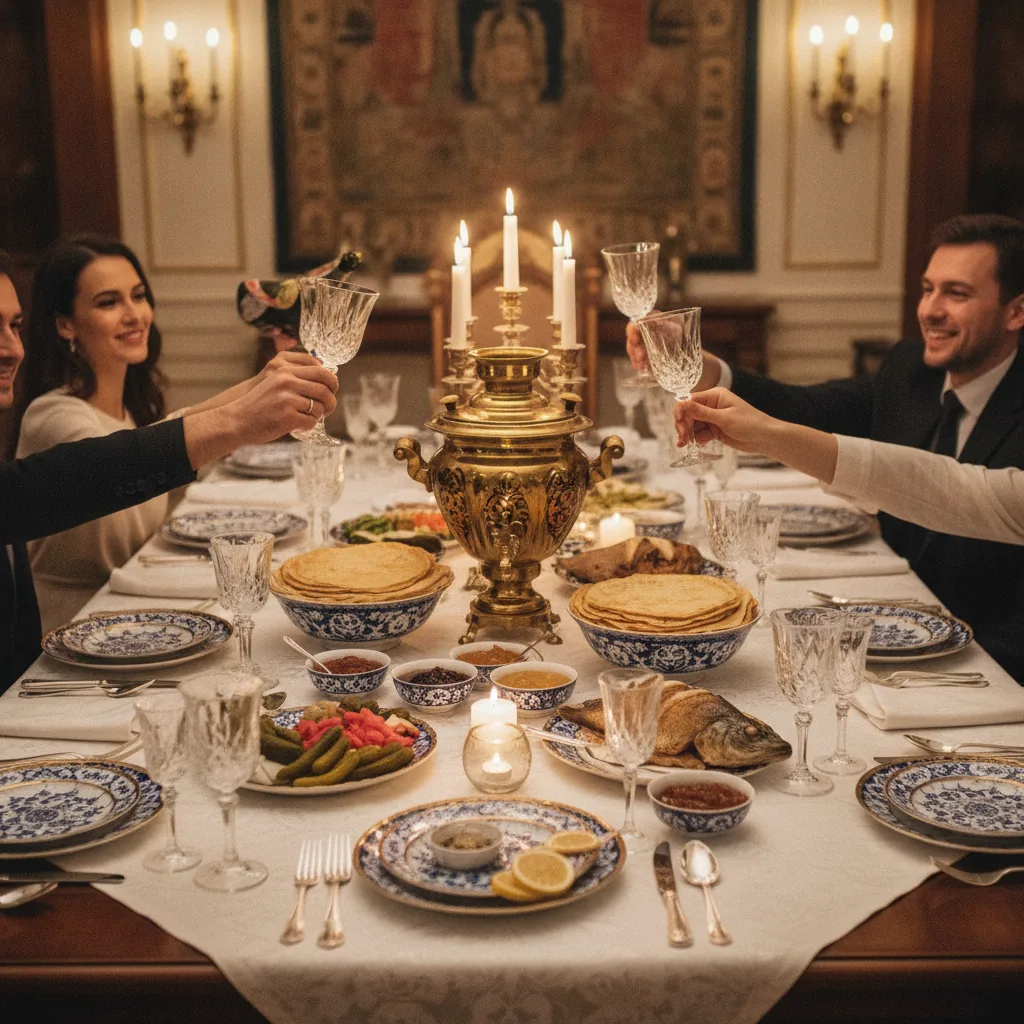
Dining in Russia, particularly in a city like Saint Petersburg, is about more than just food, it is a social ritual with its own unspoken rules, toasts, and expectations. Whether you are invited to a private home or dining at one of the city's historic restaurants, understanding local customs can make the difference between an awkward meal and a warmly remembered evening. This guide covers the essential rules of dining etiquette for visitors, from seating protocols to tipping, with specific references to venues and practices you will encounter in Saint Petersburg.
Invitations and Arrival Customs
If a Russian colleague or new friend invites you to their home for dinner, it is a gesture of trust and generosity. Never refuse such an invitation lightly, doing so can be seen as a personal rejection. When you accept, arrive on time but not early. Being early might catch your host unprepared, as they will likely be finishing last-minute preparations. Ten to fifteen minutes past the agreed time is considered punctual.
Always bring a small gift for the host. Common choices include a bottle of good alcohol (vodka, cognac, or wine) and a box of chocolates or a cake. Flowers are also appreciated, but remember: give an odd number of blooms. Even-numbered bouquets are reserved for funerals. Avoid yellow flowers, which can symbolize separation, and do not give cheap supermarket flowers. A decent bouquet from a florist near Nevsky Prospekt, such as Flowers of Nevsky at 48 Nevsky Prospekt, will cost around 1,500-2,500 RUB (€15-25).
When entering a Russian home, remove your shoes at the door. Most hosts will offer you indoor slippers, accept them. If you are dining at a restaurant, the same gift rules apply if you are the guest of someone who has organized the meal, though it is less strict.
Seating and Table Layout
In a private home, the host typically decides seating. The guest of honor is seated at the head of the table, or to the host's right. Do not sit down until invited, wait for the host to indicate your place. In restaurants, men usually hold chairs for women, but this custom is fading among younger generations. As a visitor, you can simply follow the lead of your companions.
The table itself is often laden with multiple courses served in succession, not all at once. A typical formal Russian dinner in Saint Petersburg starts with cold appetizers (zakuski): pickled mushrooms, salo (cured pork fat), herring under a fur coat, and assorted salads. After an hour or so, hot appetizers arrive, blini with caviar or pelmeni, followed by the main course (meat or fish with potatoes or buckwheat), and finally dessert. Vodka is often present throughout, but wine and non-alcoholic drinks are also common.
Table Setting Nuts and Bolts
In upscale Saint Petersburg restaurants like Palkin (46 Nevsky Prospekt) or Mansarda (5 Pochtamtskaya Ulitsa), the table will be set European-style: forks to the left of the plate, knives and spoons to the right, glasses above. Bread is placed to your left; water to your right. Use utensils from the outside in. In less formal places, cutlery may be simpler, but the same rules basically apply.
- Napkin: Place it on your lap immediately after sitting. When you leave the table temporarily, leave it on your chair. At the meal's end, place it loosely to the left of your plate, not crumpled.
- Bread: Tear off pieces by hand, never bite directly from a slice. Use a butter knife to spread butter only on the piece you are about to eat.
- Soup: Russian soup (borshch, shchi, or solianka) is eaten with a tablespoon, never tip the bowl to get the last drops. Sip quietly from the side of the spoon.
The Art of Toasting
Toasts are a cornerstone of Russian dining etiquette. Ignoring them, or worse, drinking without a toast, can be seen as disrespectful. The first toast is almost always proposed by the host, who stands, raises their glass, and says something like “Za vashe zdorovye” (To your health). Everyone else then stands, chimes in, and drinks after the toast is finished, not before. Eye contact during the toast is customary, especially when the toast is personal.
Common toasts include:
- “Za vstrechu”, To our meeting
- “Za lyubov”, To love
- “Za druzey”, To friends
- “Za roditelyei”, To parents
Never clink glasses with an empty glass. If you do not drink alcohol, it is acceptable to participate with a non-alcoholic beverage, but do not draw attention to your choice. Simply raise your glass and take a sip. Avoid making toasts that are too long or overly sentimental, keep them concise and heartfelt. In a group, wait until someone proposes a toast before drinking; drinking solo at the table is considered rude.
When vodka is served, it is traditional to knock back the shot in one gulp (if you are comfortable) and then eat a bite of something savory, pickled cucumber, herring, or black bread. Savoring vodka slowly is rare; Russians drink it fast and follow with food. A typical shot of Russian vodka at a Saint Petersburg restaurant costs around 200-400 RUB (€2-4).
Dining in Restaurants: Practical Rules
Saint Petersburg's restaurant scene ranges from Soviet-era canteens to Michelin-worthy establishments. At any level, the same basic etiquette applies. When you enter, wait to be seated, especially in fine-dining venues like Birch (3/4 Malaya Morskaya Ulitsa) or Probka (17/7 Degtyarnaya Ulitsa). Do not wave or shout for service. A polite gesture of raising a hand or catching the server's eye is sufficient.
Menus are typically presented in Russian and English at tourist-oriented restaurants. If you are dining with locals, let them order first. It is acceptable to ask for recommendations. If you are unsure about a dish, do not be afraid to ask, servers are accustomed to explaining ingredients, especially for items like kholodets (aspic) or syrniki (cottage cheese pancakes).
Paying the Bill
In Russia, splitting the bill (oplata otdelno) is not the norm for group meals. Typically, one person pays for the entire table, or the host pays if they invited you. If you are in a group of friends or colleagues, it is common to go to the register together and pay for what each person ordered, but this can be tricky if the restaurant does not have a separate check system. To avoid confusion, clarify before the meal begins or offer to pay your share in cash.
Tipping is expected in Saint Petersburg restaurants, though the amount varies. A 10% tip is standard for good service. Some restaurants include a service charge (often 10-15%) in the bill, check before leaving extra. If service is poor, you can leave nothing without serious offense, though leaving at least a small amount (50-100 RUB) is polite. Tipping is done in cash to the waiter directly, or by adding the amount to your card payment if the terminal allows it. For more on payment methods, see our guide on Payment Realities in Saint Petersburg.
When paying by card, note that many mid-range and upscale restaurants accept Visa, Mastercard, and Russian Mir cards, but smaller cafés and street stalls often take cash only. Always carry some rubles, ATMs are widespread, especially around the walking centre of the city.
Common Taboos and What to Avoid
Several behaviors can inadvertently offend your Russian dining companions. Avoid the following:
- Elbows on the table, This is considered sloppy. Keep hands visible, wrists on the table edge, but elbows off.
- Chewing with your mouth open, Unacceptable anywhere, but Russians are particularly sensitive to audible eating.
- Blowing your nose at the table, Excuse yourself and go to the restroom. Similarly, picking teeth with a toothpick in public is frowned upon.
- Leaving food on your plate, While not a major sin, leaving a lot of food unfinished can imply you did not like it. Russians take pride in preparing generous portions, so try to eat what you take.
- Refusing a toast, As noted, always participate. If you absolutely cannot drink, still raise your glass and take a symbolic sip.
- Talking about sensitive topics, Avoid politics (especially the war in Ukraine), religion, and personal finances at the dining table. Focus on local culture, art, and the beauty of Saint Petersburg, see The Complete Guide to Saint Petersburg for conversation starters.
Special Dietary Needs and Allergies
If you have dietary restrictions, communicate them clearly and politely. In Saint Petersburg, many restaurants cater to vegetarians and vegans, especially in the city centre. Chains like Clean Plates Society (14 Zhukovskogo Ulitsa) and Market Place (multiple locations) offer plant-based options. However, traditional Russian cuisine leans heavily on meat, fish, dairy, and wheat. Common allergens like gluten and lactose appear in many dishes (blini, pelmeni, syrniki). Do not assume a dish is safe, ask specifically.
For religious dietary needs (e.g., kosher, halal), options are limited but exist. Saint Petersburg has a few halal-certified restaurants such as Baku (35 Sadovaya Ulitsa, Azerbaijani cuisine) and Ali Baba (on Varshavskaya Ulitsa). Kosher dining is very rare; you may find a small selection at the Grand Choral Synagogue (2 Lermontovsky Prospekt) or through the Jewish community center. Plan ahead and consider mid-range hotels with kitchenettes if you need to prepare your own meals.
Drinks and Alcohol Etiquette
Alcohol flows freely at Russian tables, but there are rules. Never pour your own drink first, offer to fill others' glasses first, then your own. When someone pours for you, hold your glass steady; do not lift it. If you are a guest, the host will typically keep your glass full. If you want to stop drinking, leave your glass full or cover it with your hand when offered another pour, a gentle refusal without words.
Beer is now widely accepted at meals, but traditionally, vodka accompanies savory dishes, wine accompanies lighter courses, and beer is seen as a working-class drink. At formal dinners, mixing alcohol types is frowned upon. Stick to one type of spirit throughout the meal. Non-alcoholic drink options include kvas (a fermented rye beverage, low alcohol), mors (berry juice), and kompot (stewed fruit drink). These are available at most restaurants and are often homemade in private homes.
Dining at Formal Events and Business Meals
If you are invited to a formal event, a wedding, anniversary, or business dinner, expect a multi-hour affair. Business meals in Saint Petersburg often begin with a short period of small talk before the host signals it is time to order. Never discuss business during the appetizer course. Wait until the main course or until the host introduces the topic. Business cards are exchanged at the start of the meal, not during eating. Present your card with both hands or the right hand, text facing the recipient.
At such events, dress appropriately. Men should wear a jacket and tie (dark suit for evening events). Women should opt for elegant, modest attire, no flashy jewelry. Casual wear is only acceptable at informal gatherings. If unsure, ask your host beforehand.
Toasts at formal dinners are more structured. The host will propose the first toast, followed by the guest of honor. There may be a toastmaster who directs the flow. Do not interrupt a toast in progress. When the toastmaster says “Gorko!” (bitter) at a wedding, guests clink glasses and shout “Gorko!” repeatedly, this is a cue for the couple to kiss. As a visitor, simply join the cheer.
Practical Tips for Visitors
To make your dining experiences in Saint Petersburg smoother, keep these additional pointers in mind:
- Reservations: Book in advance for popular restaurants, especially during the White Nights season (June, July) when the city is packed with tourists. Use apps like Yandex.Eda or Booking.com to reserve. Many fine-dining spots require credit card details to hold a table.
- Smoking: Smoking is banned indoors in public places, including restaurants, bars, and cafés. Some venues have heated outdoor terraces where smoking is allowed. Do not smoke at the table without checking.
- Language: Learn a few key phrases: “Spasibo” (thank you), “Pozhaluysta” (please/you’re welcome), and “Budte dobry” (be so kind, a polite way to get attention). Even broken Russian is appreciated.
- Transport after dinner: If you dine late, the Saint Petersburg Metro closes around 1:00 AM. Taxis are widely available via Yandex.Taxi (average fare across the centre: 300-600 RUB). Avoid hailing unofficial cabs at restaurant doors, use the app. For detailed advice, see Taxi Services in Saint Petersburg.
Finally, be aware that many restaurants add a “bread and butter” charge (150-300 RUB per person) without asking. If you do not want it, request it be removed before the meal starts. Similarly, tap water is rarely served unless specifically asked; bottled still or sparkling water is the norm.
When Visiting a Dacha or Private Home
If you are invited to a dacha (country house) near Saint Petersburg, for example, in the Repino or Komarovo area, dining rules become even more relaxed but also more traditions-bound. Expect a feast in a garden setting. The host will likely serve a barbecue (shashlyk) or a pot of ukha (fish soup). Always bring a gift: a bottle of vodka, dessert, or something from the city. Compliment the host's garden or home. When leaving, thank the host profusely and invite them to visit you in your home country, a gesture of goodwill.
Do not refuse second helpings. In Russian culture, insisting a guest eats more is a sign of hospitality. Accepting more food shows you appreciate the host's efforts. If you are full, say “Ochen vkusno, no ya syt” (Very tasty, but I am full). Do not push your plate away, keep it in front of you until everyone has finished.
Final Words
Dining etiquette in Russia, especially in a cultured city like Saint Petersburg, is a blend of formality and warmth. By following the guidelines above, you will show respect for local traditions and make your hosts feel honored. Whether you are sharing a shot of vodka at a dacha, sipping borshch at a café on Nevsky Prospekt, or attending a business dinner at a historic restaurant, these small gestures will help you connect with locals and enjoy your meals fully. For more on navigating the city, see our guides on Russian Visa Requirements and Best Areas to Stay in Saint Petersburg.