The Admiralteysky District Is Where Most Visitors Sleep in Saint Petersburg
The Admiralteysky District is Saint Petersburg's imperial Golden Triangle, where grand hotels and quiet embankments put the Hermitage and Mariinsky within a short walk.
- Flag
-

- ISO code
- RU
- Currency
- RUB
- Timezone
- Europe/Moscow
On prices: figures on this page were researched in September 2026 and are given as bands, not quotes. Russian admission and transport prices move often. Note also that foreign Visa and Mastercard do not work in Russia: what you actually pay with is cash or a locally issued card.
The Admiralteysky District is Where Most Visitors Sleep in Saint Petersburg
Before the Crowds Hit the Granite
The common assumption about Saint Petersburg is that the imperial heart is one overwhelming sight after another, a museum floor with no exit. But at seven in the morning on the Moika riverfront, before the first cruise ship disgorges its passengers, the Admiralteysky District is quiet enough to hear the water lap against the granite. This is the corner of the city where the grandest hotels and the most walkable residential lanes sit side by side. The question of where to stay answers itself for anyone who wants to be inside the imperial postcard without being trampled by it.
The district occupies the western wedge of the historic centre, bounded by the Neva to the north and the Fontanka to the east. It holds St. Isaac's Cathedral, the Admiralty building with its gilded spire, Senate Square, the Bronze Horseman, and the western half of Nevsky Prospekt from the Admiralty down to the Fontanka crossing. More than half the city's international brand hotels cluster here, along thoroughfares that have not changed their names since the 19th century. The advantage is not subtle. Walk to the Hermitage in twelve minutes, to the Mariinsky Theatre in fifteen, and to the cathedral colonnade in four. No metro ride, no taxi app.
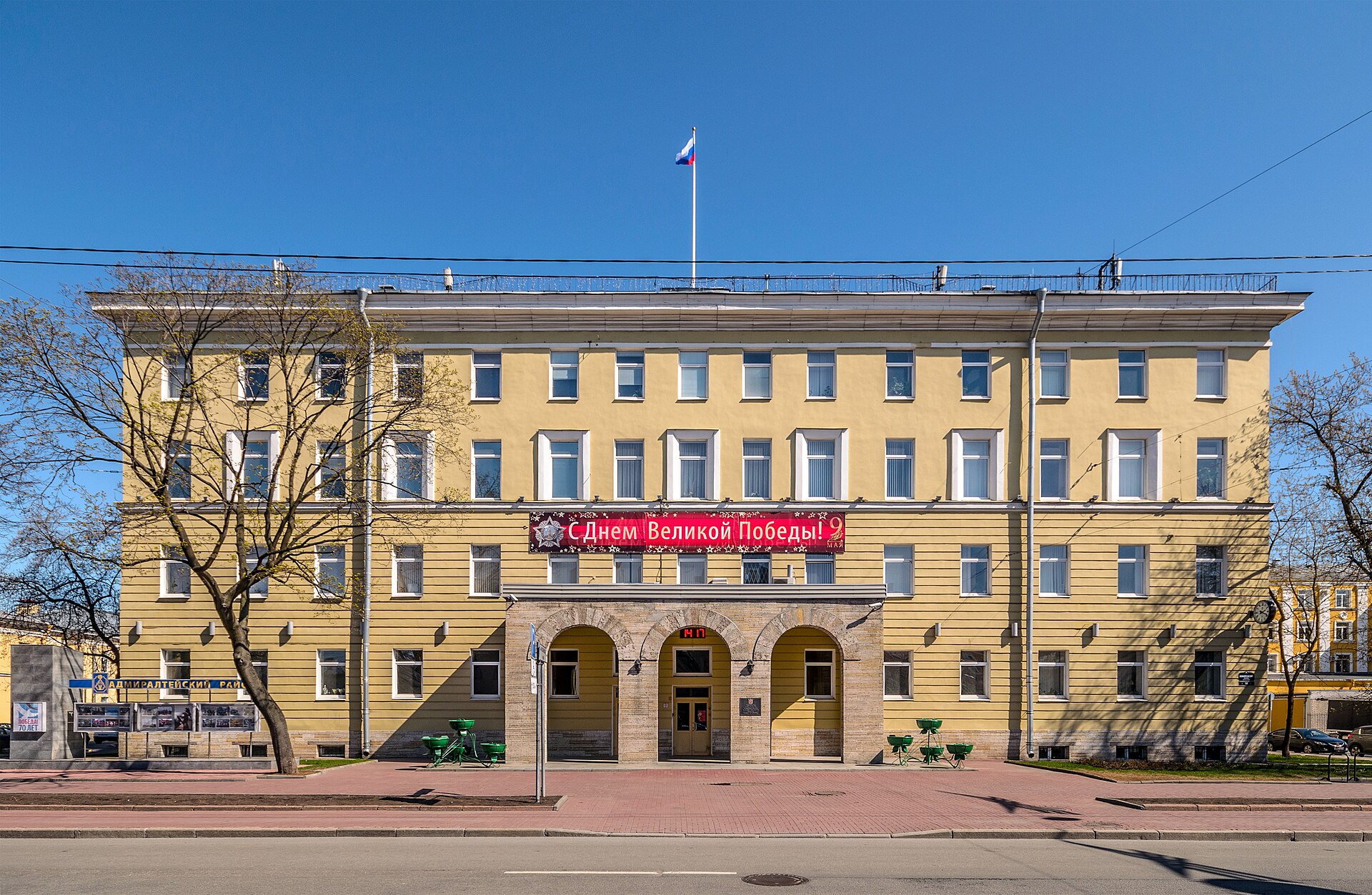

Where to Stay in Admiralteysky: the Golden Triangle on the Ground
The Streets That Radiate From the Square
The Saint Petersburg Golden Triangle is not an official designation. It is a travel shorthand for the wedge between the Neva, the Moika, and the Fontanka, and it describes exactly the block of streets where the district's best hotels sit. At its heart is the vast cobbled space of St. Isaac's Square, facing the cathedral's south facade. The routes that radiate from it, Malaya Morskaya, Bolshaya Morskaya, and the riverside stretches of the Moika and Admiralteysky Prospekt, carry nearly every upscale hotel in this part of the city.
If you want a canal view room, the address matters down to the block. Rooms on the Moika side between the Blue Bridge and the Red Bridge face water on one side and the cathedral dome on the other. Daytime noise here runs 55 to 65 dBA, the sound of foot traffic and a few tour boats, not engines. Rooms on Nevsky Prospekt at the same hour hit 65 to 75 dBA. That is loud enough to make afternoon rest difficult. A courtyard room in the same building drops to 40 to 50 dBA, quieter than most suburban bedrooms. The practical instruction: if you book a Nevsky frontage, specifically request a courtyard side or a top-floor room with the window shut.
Admiralteysky Hotels: What You Pay and What You Get
The Price of Proximity
The nightly rate for a four-star hotel here in the 2024 season ran from 8,000 to 18,000 roubles. Five-star properties ranged from 18,000 to 45,000. Those figures come from the Saint Petersburg Hotel Association and are revised annually. What the range does not tell you is that proximity to the square and Nevsky Prospekt, plus a river view, plus high season from May through September, can double the low-season rate on the same block. The Astoria Hotel on Malaya Morskaya still commands a premium over newer luxury arrivals because of its position: it faces the cathedral directly, its bar overlooks the colonnade, and you can leave your room, cross the street, and climb the steps to the viewing platform before the first tour bus arrives at 09:00. No five-star property built since 2015 on the Fontanka side can match that geography.
White Nights and the Booking Window
Book months ahead if you are coming during White Nights. June and July bring nineteen hours of daylight, the Scarlet Sails festival, and peak ballet season at the Mariinsky. The premium on central rooms is steep. A four-star property that rents for 9,000 roubles in March will ask 16,000 in July, and sell out by May. Budget for the increase and confirm the cancellation policy in writing. Some hotels switch to non-refundable rates during the high season without flagging it in the initial booking email.
St. Isaac’s Square Accommodation: Malaya Morskaya Versus Bolshaya Morskaya
Two Parallel Streets, Two Different Nights
Malaya Morskaya runs parallel to Bolshaya Morskaya one block south, and the difference between them matters more than the map suggests. Bolshaya Morskaya is wider, carries more tourist traffic, and has ground-floor souvenir shops and chain cafés that open to the pavement. Malaya Morskaya is narrower, quieter, and lined with pre-revolutionary apartment buildings that house smaller hotels and serviced apartments. The Astoria sits on Malaya Morskaya, and so does the W St Petersburg, but between them the smaller properties, the Angleterre, the Hotel Indigo, the boutique options around number 10, offer the same walking access for 30 to 40 percent less than the branded hotels charge in July.
The Fontanka Alternative
If you are willing to walk an extra five minutes, the streets between the Moika and the Fontanka deliver a quieter night at a lower rate. The Fontanka riverside walking route within the district runs about 3.2 kilometres of continuous granite paving on both banks. The stretch between the Lomonosov Bridge and the Anichkov Bridge has several four-star hotels with canal-view rooms that face water on one side and a courtyard on the other. Daytime noise here is 55 to 65 dBA, comparable to the Moika, and the walk to the square is ten minutes across the footbridge at the Blue Bridge.
What the Admiralteysky District is Bad at
Nightlife and the Southern Edge
The district is the wrong base for anyone who wants a fast-paced nightlife scene. Bars close early here, and the streets around Sennaya Ploshchad, the district's southern edge, still carry the residue of their 1990s reputation as a pickpocketing hub, even after the 2016 pedestrianisation. Sennaya Ploshchad is the three-line metro interchange where Sennaya (Line 2, blue), Sadovaya (Line 5, purple), and Spasskaya (Line 4, orange) share a single surface vestibule. It is the most crowded station in the district at rush hour. The area around it has chain cafés and shopping pavilions, not charm. If you need late-night restaurants and live music past midnight, the Liteyny district or Petrogradsky Island serves that purpose better.
Budget Realities
Budget travellers should also look elsewhere. A shoestring traveller paying 8,000 roubles a night for a four-star room on Malaya Morskaya is spending roughly 85 euros. That money buys more in Vasileostrovsky or near Moskovsky Station. The Admiralteysky has no hostel clusters and no budget canteens that are not a twenty-minute walk from the hotel zone. The Soviet-era doughnut shop Pyshki on Bolshaya Konyushennaya charges 20 roubles per doughnut. It is a twenty-five-minute walk from the square, and that is the cheapest meal in the district by a wide margin.

Getting Around Without a Metro Crutch
Your Feet Versus the Escalator
The district is compact enough that you do not need the metro for most days. The Admiralteyskaya station, which opened in 2011 at 86 metres below the surface, is the closest stop to the Hermitage, but the walk to the museum entrance from the surface exit is longer than the walk from your hotel on Malaya Morskaya. Admiralteyskaya sits on Line 5, purple, and its depth means the escalator ride takes about three minutes. Use it to reach Petrogradsky Island for the Peter and Paul Fortress. For the Hermitage, the cathedral, the Mariinsky, and the Church on the Spilled Blood, your feet are faster than the round trip down and up.
The Bridge Problem
The one catch is the bridges. If you are out on Petrogradsky Island or Vasileostrovsky after midnight and the Neva bridges are drawn from 01:00 to 05:00, you cannot walk back. The metro closes around 00:30, and a taxi via Yandex Go will detour through the long route over the northern bridges, costing 1,200 to 1,800 roubles off peak. Check the bridge schedule before you commit to a late ballet curtain at the Mariinsky. The theatre's performances finish by 22:30, which gives you time to cross the Neva on foot before the draw begins. But the post-performance applause and curtain calls can push your exit past 23:00, and the walk to the Troitsky Bridge is twenty minutes from the theatre. Allow the time.
| Street or Position | Noise Level in dBA | What It Means |
|---|---|---|
| Nevsky Prospekt facing room | 65 to 75 | Traffic and pedestrian flow, loud enough to require earplugs for a nap |
| Courtyard room, same building | 40 to 50 | Quieter than most residential streets, usable for afternoon rest |
| Moika riverfront room | 55 to 65 | Foot traffic and tour boats, moderate, no earplugs needed |
| Fontanka riverfront room | 55 to 65 | Comparable to Moika, slightly quieter on the south bank |
One Practical Thing to Do Before You Book
Open the booking site, set the map to street view, and look at the exact building on Malaya Morskaya or Bolshaya Morskaya that you are considering. If the street view shows a ground-floor souvenir shop or a currency exchange kiosk, the room above it faces the pavement noise. If the building sits on a corner with a pedestrian crossing, the room on that side will hear people waiting at the traffic light from 06:00 to midnight. The Astoria Hotel on Malaya Morskaya 39 is the exception: it occupies an entire block front and its courtyard rooms face an internal garden that absorbs sound. Every other hotel on these streets has at least one side that sacrifices quiet for location. The map will tell you which one it is before you hand over the deposit.
Other areas in Saint Petersburg
Common Questions
Is the Admiralteysky District safe at night?
Yes, the streets around St. Isaac's Square and the Moika riverfront are well lit and patrolled, and the hotel zone is safe at any hour. Sennaya Ploshchad has a higher density of pickpockets, especially around the metro vestibule and the Sadovaya interchange, but violent crime is rare. Carry your wallet in a front pocket or a neck pouch after dark.
How do I pay for a hotel if my Visa or Mastercard does not work in Russia?
Foreign-issued Visa and Mastercard cards are not functional in Russia as of 2024. Bring roubles in cash from an exchange office in your home country or withdraw from an ATM using a UnionPay card if your bank issues one. Larger hotels accept locally issued Mir system cards. The Russia level page on payment covers this in detail.
Can I walk from the Astoria Hotel to the Mariinsky Theatre?
Yes. The walk is 1.4 kilometres along the Moika riverfront and takes about 15 minutes at a normal pace. It is a straight line with no bridges to cross. Allow an extra 5 minutes if the embankment is icy in winter.
What is the cheapest way to get from Pulkovo Airport to Admiralteysky hotels?
Bus 39 or 39Ex from the airport to Moskovskaya metro station costs 65 roubles. Then take the metro to Nevsky Prospekt station, change to Sennaya Ploshchad if needed, and walk to your hotel. Total cost about 95 roubles. A fixed-fare taxi from the official desk inside the terminal costs 1,500 to 2,500 roubles and takes 40 to 70 minutes depending on traffic.
Which block actually delivers a canal view from the hotel window?
The Moika riverfront between the Blue Bridge and the Red Bridge on the south side. Hotels on this stretch face water and the cathedral dome. The Fontanka side between the Lomonosov Bridge and the Anichkov Bridge also works, but the view is of the river and the opposite bank, not a landmark. Nevsky Prospekt rooms do not have a canal view.
When is the worst time to visit the Admiralteysky District?
November and March. November is dark, wet, and cold with no snow. March brings thawing slush and dirty snowbanks. The first week of January is also difficult because Russian holidays shut many smaller museums and restaurants. White Nights in June and July are crowded and expensive, but the daylight makes up for it.
Do I need to book the Mariinsky months ahead to stay in this district?
Yes. The Mariinsky Theatre is a 15-minute walk from St. Isaac's Square, and tickets for ballet performances during White Nights sell out by February. Book online as soon as the schedule releases, typically three months before the performance date. The proximity of your hotel does not help if there are no tickets left.
Read next
-
 Mid-Range Hotels: Comfortable Stays Without Breaking the Bank
Discover the best mid-range hotels in Saint Petersburg, offering a balance of comfort, location, and value. From boutique hotels on Nevsky Prospekt to modern apartments, find affordable stays that don't skimp on quality.
Mid-Range Hotels: Comfortable Stays Without Breaking the Bank
Discover the best mid-range hotels in Saint Petersburg, offering a balance of comfort, location, and value. From boutique hotels on Nevsky Prospekt to modern apartments, find affordable stays that don't skimp on quality.
-
 Best Areas to Stay in Saint Petersburg: A District Guide
Discover the best areas to stay in Saint Petersburg, from the historic centre around Nevsky Prospekt to the artsy streets of Petrograd Side. This guide covers neighborhoods, hotels, transport links, and local tips for every budget.
Best Areas to Stay in Saint Petersburg: A District Guide
Discover the best areas to stay in Saint Petersburg, from the historic centre around Nevsky Prospekt to the artsy streets of Petrograd Side. This guide covers neighborhoods, hotels, transport links, and local tips for every budget.
-
 Current Flight Routes to Saint Petersburg from Europe and Asia
A comprehensive guide to current flight routes connecting Saint Petersburg with major European and Asian hubs. Includes airline details, estimated prices, booking tips, and entry requirements.
Current Flight Routes to Saint Petersburg from Europe and Asia
A comprehensive guide to current flight routes connecting Saint Petersburg with major European and Asian hubs. Includes airline details, estimated prices, booking tips, and entry requirements.
-
 Saint Petersburg Things to Do Beyond the Hermitage and the Main Sights
Saint Petersburg rewards slowing down. Discover canal-side walks, local food halls, rooftop views, and quiet neighbourhoods beyond the Hermitage crowds.
Saint Petersburg Things to Do Beyond the Hermitage and the Main Sights
Saint Petersburg rewards slowing down. Discover canal-side walks, local food halls, rooftop views, and quiet neighbourhoods beyond the Hermitage crowds.
-
 White Nights in Saint Petersburg: What Actually Happens
Discover the reality of the White Nights in Saint Petersburg, from astronomical twilight and bridge schedules to midnight boat trips and street-level logistics. A factual guide to what actually happens during this iconic season.
White Nights in Saint Petersburg: What Actually Happens
Discover the reality of the White Nights in Saint Petersburg, from astronomical twilight and bridge schedules to midnight boat trips and street-level logistics. A factual guide to what actually happens during this iconic season.
-
 Saint Petersburg Metro: Lines, Stops, and Tips
A comprehensive guide to the Saint Petersburg Metro: history, line-by-line overview, key stations, practical tips, fares, and connection to city attractions.
Saint Petersburg Metro: Lines, Stops, and Tips
A comprehensive guide to the Saint Petersburg Metro: history, line-by-line overview, key stations, practical tips, fares, and connection to city attractions.
-
 Vasileostrovsky District
-
 Tsentralny District
-
 Petrogradsky District
Explore Petrogradskaya Side, Saint Petersburg’s historic district of czarist mansions, Soviet-era landmarks, and vibrant modern life. Guide to Peter & Paul Fortress, parks, museums, dining, and transport tips.
Petrogradsky District
Explore Petrogradskaya Side, Saint Petersburg’s historic district of czarist mansions, Soviet-era landmarks, and vibrant modern life. Guide to Peter & Paul Fortress, parks, museums, dining, and transport tips.