Tsentralny Is Eastern Nevsky, Moscow Station, and the District You Arrive Through
- Flag
-

- ISO code
- RU
- Currency
- RUB
- Timezone
- Europe/Moscow
On prices: figures on this page were researched in September 2026 and are given as bands, not quotes. Russian admission and transport prices move often. Note also that foreign Visa and Mastercard do not work in Russia: what you actually pay with is cash or a locally issued card.
Tsentralny District Saint Petersburg: Eastern Nevsky and the Arrival Hub
The Sapsan doors open at Moskovsky Vokzal and you step onto a platform beneath a vaulted ceiling that has barely changed since Konstantin Thon designed it in 1847. Tsentralny District begins right here, on Ploshchad Vosstaniya, where the Hero City Obelisk lifts 36 metres of grey granite above the metro entrance. This is the arrival quarter. The functional threshold most visitors see only from a taxi window on the way to a palace-side hotel. That is a mistake. Tsentralny delivers lower hotel rates, a more Soviet cityscape than the palace core, and transport links that save you an hour a day.
Emerging from Moskovsky Station Onto Ploshchad Vosstaniya: the Sensory Arrival
Walk out the main doors of the rail terminal and you land on Ploshchad Vosstaniya, a square Soviet planners remade in the 1950s. The 36-metre granite obelisk stands dead centre, installed in 1985 to mark the Hero City designation. Behind it, the white facade of the Oktyabrskaya Hotel, a Soviet-era rebuild, anchors the northern edge. To your right, the Galeria shopping mall, opened in 2010, fills the block where freight yards once sat.
What Hits You First
The noise. Traffic on Ligovsky Prospekt and Nevsky Prospekt meets here in a five-way junction that never stops. The air smells of diesel from the marshrutka minibuses queuing at the curb and pirozhki from the street kiosk on the forecourt. Buy a cabbage hand pie for about 70 RUB and watch the queue for the 39Ex bus to Pulkovo Airport, a route that costs 65 RUB and runs every ten minutes.
The Soviet Feel Is Real Not Retro
The eastern end of Nevsky is not the Nevsky of the Singer House cafe and the Kazan Cathedral. This is the Nevsky of department stores with Cyrillic signage, of wide pavements where commuters walk fast, and of a skyline punctuated by four-to-six-storey tenement blocks from the late 19th century. The metro stop Ploshchad Vosstaniya, opened in 1955, has no chandeliers; its marble and granite are workmanlike. You are in the functional city, not the museum city.

Nevsky Prospekt Eastern End: What the Shopping Mall Stretch is Good for
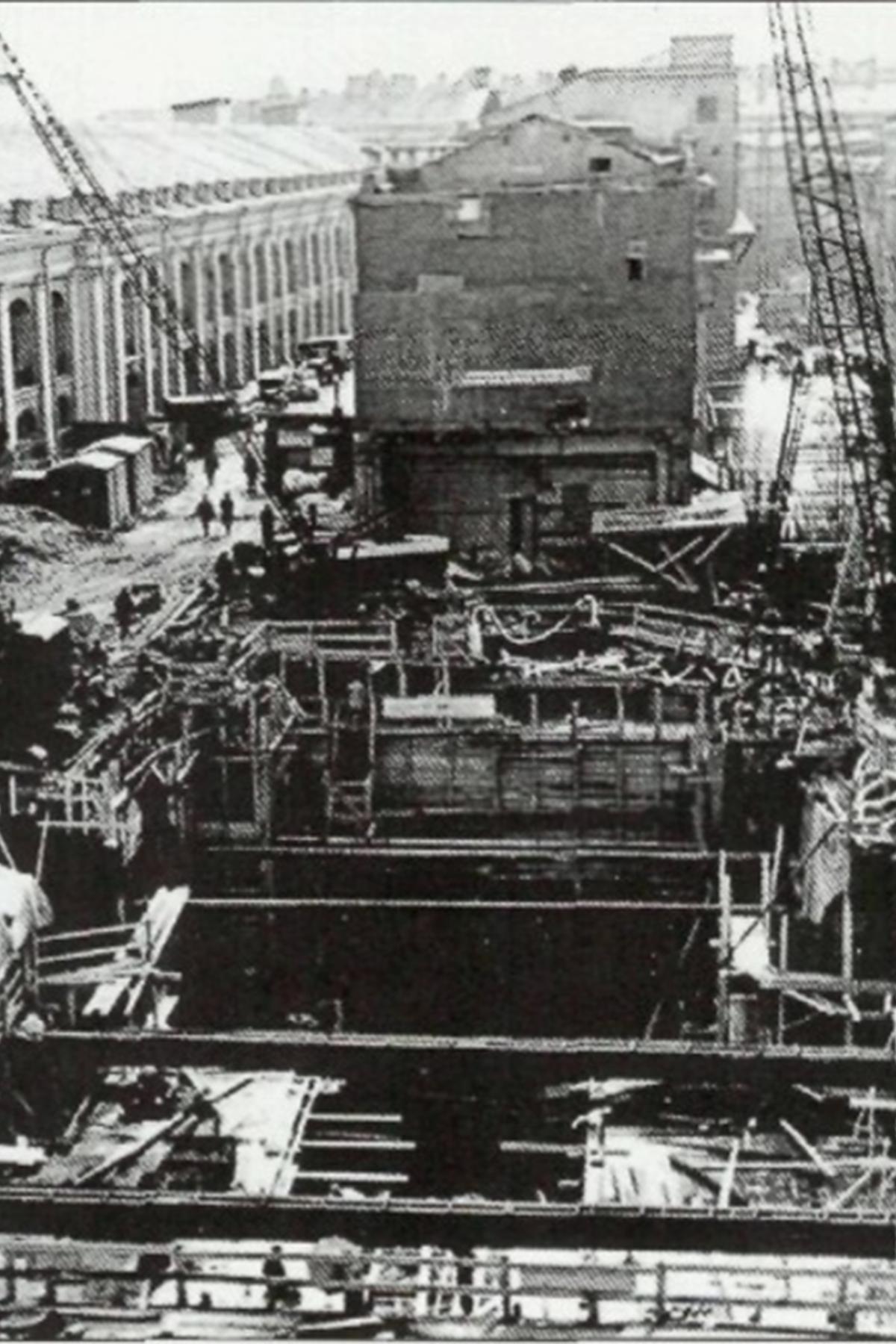
The segment of Nevsky Prospekt that runs from the square west to Gostiny Dvor is the shopping mall stretch. It is less touristy than the palace core, and that is the point. Galeria mall on Ligovsky Prospekt 30A occupies five floors with an O'Key hypermarket, a KinoStar cinema, and the mid-range retail that serves the city's residents. Come here for practical things: a Podorozhnik smart card top-up, a metro token at 70 RUB, a warm coat from a chain store. The mall is also where you find the toilet you will not find on the street.
Anichkov Most: The One Sights Crossing
Walk west from the square and you cross the Fontanka River at Anichkov Most, a 54.6-metre bridge that carries the only landmark on this stretch. Four bronze horse groups, cast by Baron Peter Clodt von Jürgensburg and installed in 1851, show a man restraining a rearing horse. Two replicas were sent to Naples in 1852 and to Berlin in 1845, then returned after the war. The bridge is the visual cue that you are leaving the arrival zone and entering the historical city. The border is real: east of the bridge is Tsentralny's practical spine; west of it begins the palace corridor.
Moskovsky Station Area: the Transport Hub That Justifies Staying Here
The rail terminal area is Saint Petersburg's real intercity hub. The Sapsan high-speed train to Moscow runs from this building, taking 3 hours 45 minutes to 4 hours, with one-way economy tickets in 2024 priced at 2,500 to 6,000 RUB. Suburban elektrichka services depart from a separate pavilion east of the main building. The metro stop Ploshchad Vosstaniya on Line 1 and its transfer station Mayakovskaya on Line 3 give you access to the entire network. For arriving by train in Saint Petersburg, this is your point of entry, and the practical advantage of staying within a five-minute walk of it is hard to overstate.
Why Hotel Rates Drop Here
Tsentralny hotels near the square run 3,500 to 7,000 RUB per night in 2024 for a mid-range room in a Soviet-era renovated hotel. Hostel dormitory beds on the side streets off Ligovsky Prospekt, especially along Goncharnaya Street, cost 600 to 1,500 RUB per night. Compare that to the 8,000 to 18,000 RUB you pay for a 4-star hotel on the Nevsky corridor west of Anichkov Most. The trade-off is honest: you save money and gain transport connections, but you sleep in a district where the street noise starts before dawn and the view from your window is a courtyard with communal wells, laundry lines, and graffiti.
Rubinshteina Street: The Nightlife in the Arrival District
Rubinshteina Street runs about 600 metres through the Vladimirsky municipal okrug, accessible from Dostoevskaya or Vladimirskaya metro stops. It is the main bar and restaurant strip in Tsentralny, lined with Georgian feasting spots like Khachapuri i Vino, craft beer bars, and the loud, late-night venues that make this block busy until the metro closes around 00:30. If you stay near the terminal, Rubinshteina is a 15-minute walk or a short metro ride, which means you can eat well without the hotel restaurant mark-up.
Ligovsky Prospekt and the Budget Accommodation Cluster
Ligovsky Prospekt runs parallel to Nevsky on the south side, a major artery with heavy traffic and a commercial character that feels more Soviet than the main boulevard. The budget accommodation cluster sits here, along Ligovsky itself and the side streets like Goncharnaya Street, where 19th-century tenement buildings have been converted into mini-hotels and hostels. The Galeria mall anchors the retail side, but the street's real value is its proximity to the rail hub and the metro. You pay for location, not for charm. The Soviet feel is literal: the Oktyabrsky Concert Hall at Ligovsky 6, built in 1967 by architect Alexander Zhuk, seats 3,727 people and still hosts touring acts. The building looks like a concrete box from the outside, and that is the honest face of this part of the city.
Where the Courtyards Reveal the Real Tsentralny
Behind the Nevsky Prospekt facades, between the main street and Kolokolnaya Street, archways called prokhodnye dvory lead into courtyard clusters that are unlocked during daytime. Here you find communal wells in older blocks, laundry lines, small parking lots, and graffiti that has built up in layers since the 1990s. Kolokolnaya Street itself, where the poet Alexander Blok lived from 1892 to 1898 at what is now a museum outside the district, is a quiet residential strip that shows the side of Tsentralny that has nothing to do with tourism. Walk through these courtyards at 10:00 on a weekday and you see the real city: pensioners sitting on benches, cats on the stairwell steps, a woman hanging sheets in a shaft of White Nights light.
Tsentralny Hotels Saint Petersburg: What You Get for the Lower Rate
The Tsentralny hotels Saint Petersburg market splits into three bands. The Nevsky corridor west of Anichkov Bridge runs international chains and 4- and 5-star properties at 8,000 to 18,000 RUB per night in 2024. The side streets off Ligovsky Prospekt host hostels at 600 to 1,500 RUB and budget hotels on Goncharnaya Street that charge 3,500 to 7,000 RUB. The difference is not just price: the Nevsky corridor hotels offer views of the Fontanka and concierges who arrange Yandex Go pickups. The Ligovsky hotels offer proximity to the terminal, a staircase that may not have a lift, and a breakfast of pelmeni at the nearest Stolovaya No. 1. If you are travelling on a budget that does not stretch to the palace core, or if you arrive late by train and leave early the next morning, the cluster around the station makes sense. If you want canal views and a quiet street, it does not.
Stolovaya No. 1 and the Chain Cafeteria Advantage
Stolovaya No. 1 and Marketplace are the modern cafeteria chains that fill the gap between street kiosk and full restaurant. Find them in Tsentralny on the main drags and in the Galeria mall food court. A plate of vinigret salad, a bowl of pelmeni, and a compote cost about 350 RUB. The food is solid, the queue moves fast, and the seating is functional. These are not destinations; they are the practical eating option for a district that does not cater to tourists with long lunch hours. Budget for them if you stay here, because the Georgian restaurants on Rubinshteina and the single-focus places like Pyshki on Bolshaya Konyushennaya are a metro ride away.

Vladimirskaya Square and Dostoevsky’s District
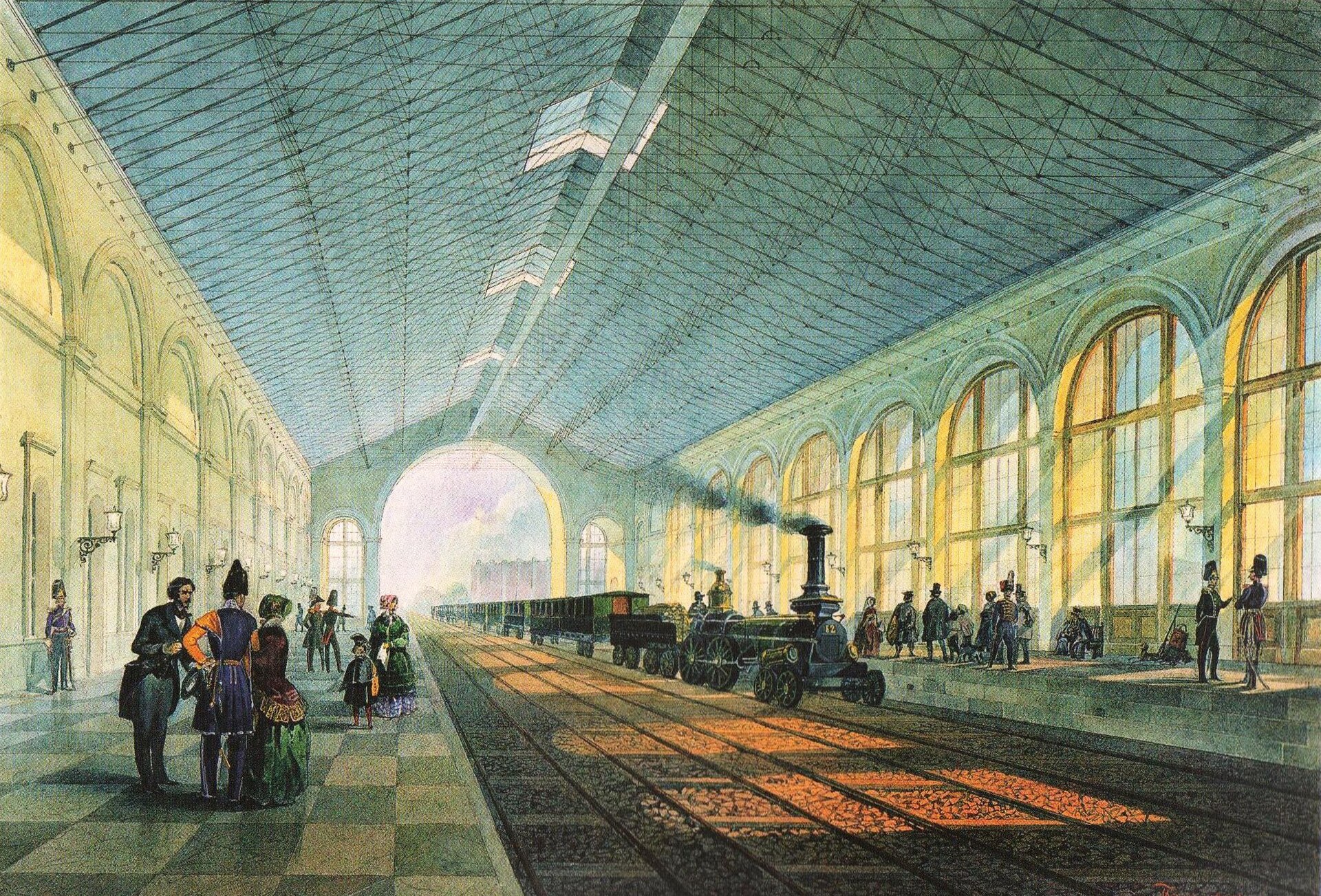
Vladimirskaya Square sits at the intersection of Nevsky, Vladimirsky, and Zagorodny prospects, anchored by the Church of the Vladimir Icon of the Mother of God, designed by Giacomo Quarenghi and completed in 1783. The bell tower, added in 1831 by Avraam Melnikov, marks the square from a distance. This is the Vladimirsky municipal okrug, the area where Fyodor Dostoevsky died in 1881 at his apartment on Kuznechny Pereulok 5/2, now the Dostoevsky Museum. The square is a metro hub: Vladimirskaya on Line 1 and Dostoevskaya on Line 4 connect you to the rest of the city. The area is less touristy than the palace core, grittier than the Nevsky corridor, and home to the dive bars and kiosks that serve a local clientele. If the arrival district feels too commercial, Vladimirskaya is where Tsentralny relaxes into something closer to the residential city.
What Tsentralny Is Bad At
Tsentralny lacks the canal charm that defines the Admiralteysky and Sennaya districts. The Fontanka embankments are granite-clad and functional, not lined with cafe terraces. The streets east of Anichkov Bridge are wider, traffic-heavier, and less photogenic. There is no postcard view from a Tsentralny courtyard because the courtyards are working spaces, not stage sets. The district is bad at quiet. The Nevsky traffic runs late into the night, and the metro rumble under Ploshchad Vosstaniya is audible in hotel rooms on the lower floors. If you pay for a room on Goncharnaya Street, you pay in sleep quality. Acknowledge that before you book.
Arriving by Train in Saint Petersburg: Why Tsentralny is Your Natural Base for One Night
Arriving by train in Saint Petersburg at Moskovsky Vokzal, you step off the Sapsan or the overnight service from Moscow into a building where the metro entrance is inside. Buy a Podorozhnik card from the kiosk for a 60 RUB deposit, top it up, and take Line 1 or Line 3 anywhere. If your onward travel leaves the next day, or if you are connecting to a suburban elektrichka to Peterhof or Pushkin, staying in Tsentralny removes the taxi transfer. The Yandex Go pickup from a hotel near the terminal costs 800 to 1,200 RUB to the airport, off-peak, and the bus 39Ex costs 65 RUB. The trade-off is that you wake up to the sound of the city's functional core, not its palace core. For one night, it is the correct choice. For three nights, consider the quieter districts on the other side of the Neva.
Other areas in Saint Petersburg
Frequently Asked Questions About Tsentralny District
Is Tsentralny district safe for tourists?
Yes, Tsentralny is safe in the same way central Saint Petersburg is safe: watch for pickpockets on the metro and at Ploshchad Vosstaniya, and avoid the dark courtyards late at night. The main streets are well lit and busy until the metro closes.
Which metro station serves Moskovsky Vokzal?
Ploshchad Vosstaniya on Line 1 is inside the station building. Mayakovskaya on Line 3 is a 3-minute walk through the underpass. You can transfer between them without exiting to the street.
How much does a Podorozhnik card cost?
The card itself costs 60 RUB deposit in 2024. Single metro trips are 70 RUB with a token or the same with the card. Top up at station kiosks with cash or a locally-issued Mir card.
Should I stay in Tsentralny or the palace core?
Stay in Tsentralny for one night before a train departure or to save on accommodation. Stay in Dvortsovy or Admiralteysky for canal charm, quiet streets, and walkability to the Hermitage and the Church on Spilled Blood.
Read next
-
 Mid-Range Hotels: Comfortable Stays Without Breaking the Bank
Discover the best mid-range hotels in Saint Petersburg, offering a balance of comfort, location, and value. From boutique hotels on Nevsky Prospekt to modern apartments, find affordable stays that don't skimp on quality.
Mid-Range Hotels: Comfortable Stays Without Breaking the Bank
Discover the best mid-range hotels in Saint Petersburg, offering a balance of comfort, location, and value. From boutique hotels on Nevsky Prospekt to modern apartments, find affordable stays that don't skimp on quality.
-
 Best Areas to Stay in Saint Petersburg: A District Guide
Discover the best areas to stay in Saint Petersburg, from the historic centre around Nevsky Prospekt to the artsy streets of Petrograd Side. This guide covers neighborhoods, hotels, transport links, and local tips for every budget.
Best Areas to Stay in Saint Petersburg: A District Guide
Discover the best areas to stay in Saint Petersburg, from the historic centre around Nevsky Prospekt to the artsy streets of Petrograd Side. This guide covers neighborhoods, hotels, transport links, and local tips for every budget.
-
 Current Flight Routes to Saint Petersburg from Europe and Asia
A comprehensive guide to current flight routes connecting Saint Petersburg with major European and Asian hubs. Includes airline details, estimated prices, booking tips, and entry requirements.
Current Flight Routes to Saint Petersburg from Europe and Asia
A comprehensive guide to current flight routes connecting Saint Petersburg with major European and Asian hubs. Includes airline details, estimated prices, booking tips, and entry requirements.
-
 Saint Petersburg Things to Do Beyond the Hermitage and the Main Sights
Saint Petersburg rewards slowing down. Discover canal-side walks, local food halls, rooftop views, and quiet neighbourhoods beyond the Hermitage crowds.
Saint Petersburg Things to Do Beyond the Hermitage and the Main Sights
Saint Petersburg rewards slowing down. Discover canal-side walks, local food halls, rooftop views, and quiet neighbourhoods beyond the Hermitage crowds.
-
 White Nights in Saint Petersburg: What Actually Happens
Discover the reality of the White Nights in Saint Petersburg, from astronomical twilight and bridge schedules to midnight boat trips and street-level logistics. A factual guide to what actually happens during this iconic season.
White Nights in Saint Petersburg: What Actually Happens
Discover the reality of the White Nights in Saint Petersburg, from astronomical twilight and bridge schedules to midnight boat trips and street-level logistics. A factual guide to what actually happens during this iconic season.
-
 Saint Petersburg Metro: Lines, Stops, and Tips
A comprehensive guide to the Saint Petersburg Metro: history, line-by-line overview, key stations, practical tips, fares, and connection to city attractions.
Saint Petersburg Metro: Lines, Stops, and Tips
A comprehensive guide to the Saint Petersburg Metro: history, line-by-line overview, key stations, practical tips, fares, and connection to city attractions.
-
 Vasileostrovsky District
-
 Admiralteysky District
The Admiralteysky District is Saint Petersburg's imperial Golden Triangle, where grand hotels and quiet embankments put the Hermitage and Mariinsky within a short walk.
Admiralteysky District
The Admiralteysky District is Saint Petersburg's imperial Golden Triangle, where grand hotels and quiet embankments put the Hermitage and Mariinsky within a short walk.
-
 Petrogradsky District
Explore Petrogradskaya Side, Saint Petersburg’s historic district of czarist mansions, Soviet-era landmarks, and vibrant modern life. Guide to Peter & Paul Fortress, parks, museums, dining, and transport tips.
Petrogradsky District
Explore Petrogradskaya Side, Saint Petersburg’s historic district of czarist mansions, Soviet-era landmarks, and vibrant modern life. Guide to Peter & Paul Fortress, parks, museums, dining, and transport tips.