Inside Kazan Cathedral on Nevsky Prospekt in Saint Petersburg
Kazan Cathedral on Nevsky Prospekt is a working Orthodox church with a vast colonnade, the revered Our Lady of Kazan icon, and Kutuzov's tomb.

On prices: figures on this page were researched in September 2026 and are given as bands, not quotes. Russian admission and transport prices move often. Note also that foreign Visa and Mastercard do not work in Russia: what you actually pay with is cash or a locally issued card.
Inside Kazan Cathedral on Nevsky Prospekt in Saint Petersburg
You have already taken the photograph. You stood on Kazanskaya Square, framed the semicircular colonnade against the grey sky, and moved on to the next sight on Nevsky Prospekt. That is what most visitors do. But the real reason to stop here is not the exterior at all. It is what happens inside: an active cathedral where the faithful queue for the Our Lady of Kazan icon, where Field Marshal Kutuzov lies buried in a bronze and marble enclosure, and where the service in Church Slavonic runs every morning and evening. Here is what to expect when you walk through the north doors, how to behave, and what you will actually see once you are past the candle stand.
- Address: Kazanskaya ploshchad, 2 (Казанская площадь, 2)
- Nearest Metro: Nevsky Prospekt (Невский проспект)
- Architect: Andrey Voronikhin (1801-1811)
- Style: Russian Empire (Neoclassical)
- Dome Height: 71.6 m
- Colonnade Columns: 96, made of Pudost stone
- Current Status: Working Russian Orthodox cathedral, daily services
- Entry Fee: Free, this is a working church, not a museum
- Dress Code: Headscarves for women, covered shoulders, no shorts for men or women
- Photography Inside: Permitted without flash and without tripod, but prohibited during services
- Card Payments: Only Russian-issued bank cards or cash (rubles). Visa/Mastercard issued outside Russia do not work.
- Candle Prices: 10-500 RUB depending on size (2024 price band, set by the cathedral shop)
Kazan Cathedral Nevsky Prospekt: the Colonnade That Tricks You
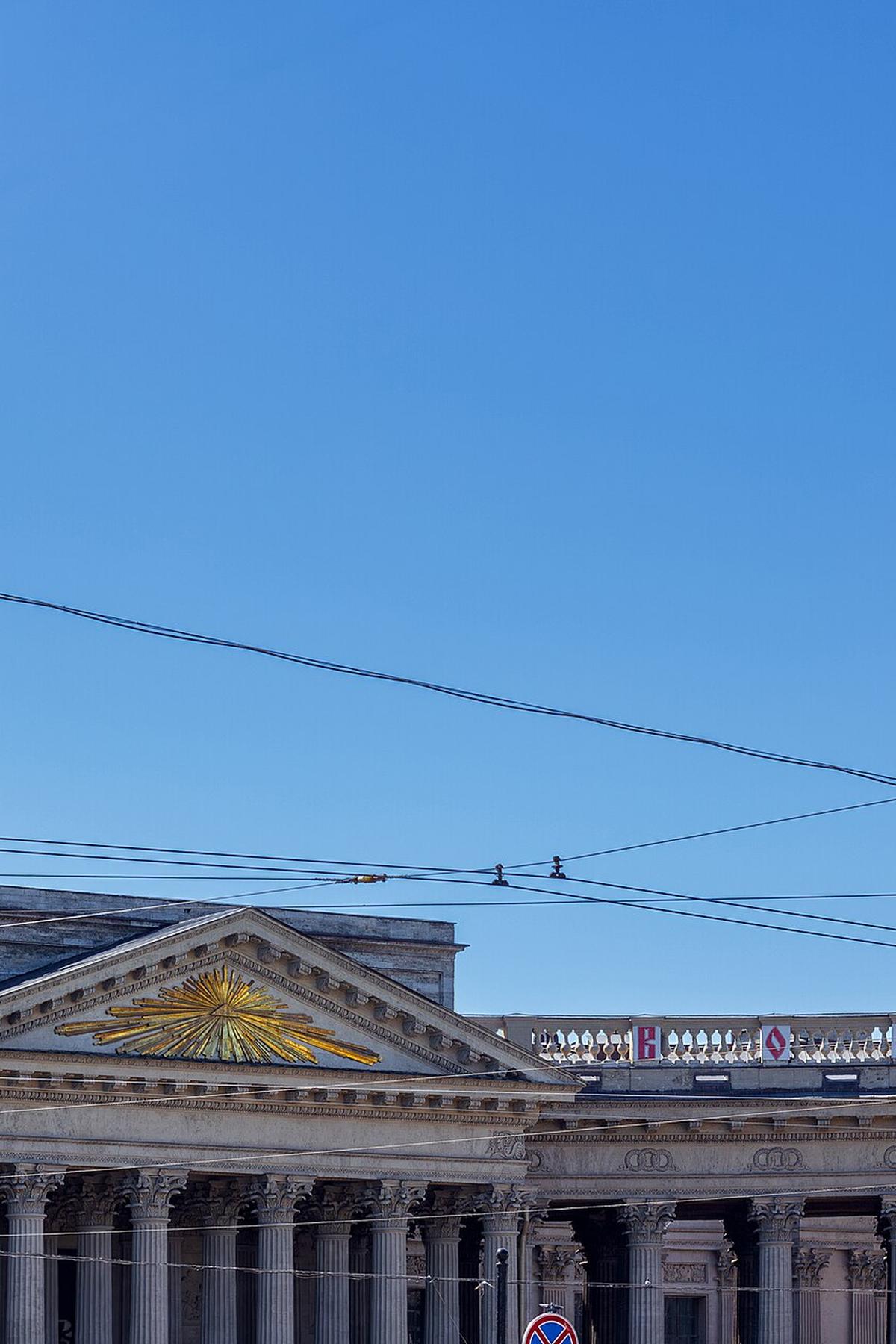
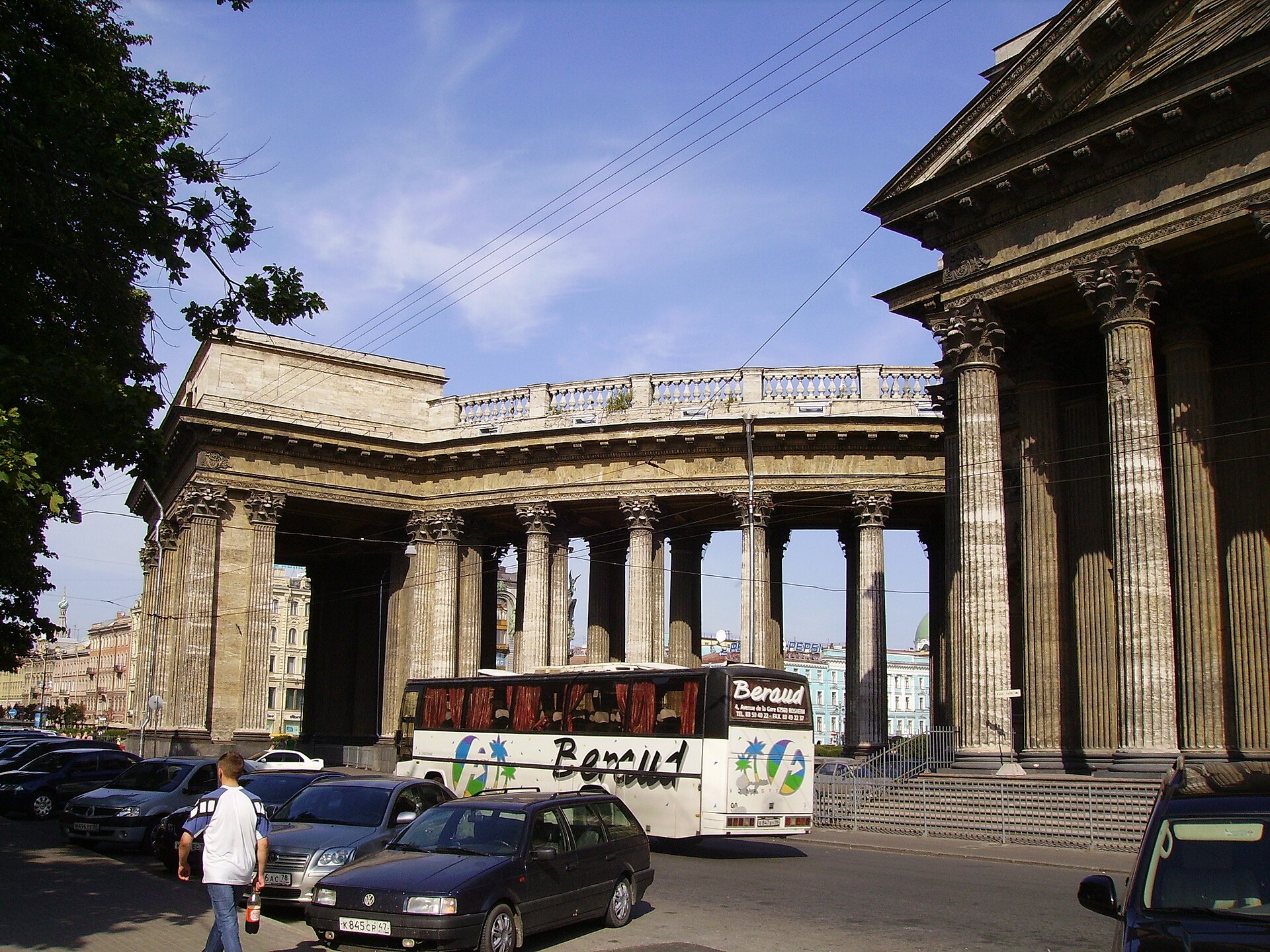
Approach from the Singer House café across the square and you will see the colonnade first. It curves toward Nevsky Prospekt in a 96-column sweep of Pudost stone, a local travertine-like tuff. The resemblance to St Peter's Basilica in Rome is deliberate: Tsar Paul I wanted a northern rival to the Vatican, and Andrey Voronikhin designed the building to have its facade on a side street while the colonnade did the work of framing the main boulevard. Walk past the bronze statues of Kutuzov and Barclay de Tolly, unveiled in 1837 and sculpted by Boris Orlovsky, and you are standing on the spot where the cathedral greets the city. Most people stop here. Do not.
The Our Lady of Kazan Icon: the Reason Pilgrims Come
The icon of Our Lady of Kazan is the reason this cathedral exists. The original is a 16th-century wonderworking image that the Church credits with saving Moscow from Polish invaders in 1612. The copy inside is the one the faithful venerate today. It sits inside a monumental silver screen that dominates the main nave. That screen was stripped by Soviet authorities after the building was closed as a place of worship in 1932 and reopened as the Museum of the History of Religion and Atheism, but the current restoration, completed in 2023, has returned the interior to its original appearance.
You will see the line for the icon before you see the icon itself. The queue moves slowly and reverently. Women tie headscarves before joining it. Men take off their hats. Everyone crosses themselves at the approach. This is not a photo opportunity. If you want to venerate the icon, join the line, wait your turn, and kiss the glass case when you reach it. If you only want to observe, stand to the side near the front row of pews and watch how an active church operates on Nevsky Prospekt.
Kazan Cathedral Free Entry: No Ticket, No Timed Slot
Entry is free. There is no ticket office, no timed entry window, and no queue for a turnstile. You walk through the north doors directly from Kazanskaya Square and you are inside. This is a functioning church, not a museum, and the Church does not charge admission. The only cost you will incur is for candles from the church shop, which range from 10 RUB for a thin taper to 500 RUB for a large votive pillar. Payment must be in cash, as foreign-issued Visa and Mastercard will not work in Russia. Bring small bills. The cathedral accepts Russian bank cards only.
There is no dress check at the door, but the rules are serious. Women must wear a headscarf and cover their shoulders. Men may not wear shorts. Arrive in a tank top or with uncovered knees, and you may be gently but firmly directed to leave. Carry a scarf in your bag even in July.
Inside a Working Orthodox Church on Nevsky: What to Do and What to Skip
How the Interior Works
This is a living church, not a museum with roped-off exhibits. You will see the faithful lighting candles at the central stand, kissing icons, and crossing themselves before the screen. The interior is divided by 56 pink Finnish granite Corinthian columns that march down the main nave. The dome rises 71.6 m overhead, and the east-to-west axis of the building stretches 56.7 m. The space feels wider than it is long, because Voronikhin designed it as a basilica.
If a service is underway, stop moving and stand quietly at the back. The choir sings a cappella from a balcony near the dome. The rite is in Church Slavonic and lasts roughly two hours. Photography is prohibited during services. Mobile phones must be on silent mode. Do not walk across the central aisle during the Eucharistic prayer. If you need to leave, exit during a hymn or a reading, not during the sermon.
What To Skip
The Museum of the History of Religion and Atheism that occupied the building from 1932 to 2000 is gone. There are no exhibits on Soviet atheism, no displays about the history of the building as a museum. That content has moved to the former St Isaac's Cathedral. Do not waste time searching for it here.
What Not To Skip
The tomb of Field Marshal Kutuzov sits in the northern chapel to the left of the icon screen. The bronze and marble enclosure is unmissable. Look for the captured keys of the French towns that surrendered to Russian forces during the Napoleonic Wars, which hang on the wall above the tomb. The war-memorial quality of this corner contrasts sharply with the candlelit worship on the other side of the nave. Kutuzov was buried here in 1813, and his tomb is one of the few physical reminders in central Saint Petersburg of the 1812 campaign. The bronze statues of Kutuzov and Barclay de Tolly outside on the square were added in 1837, completing the memorial complex.
The Kutuzov Tomb in Saint Petersburg: What You Are Looking at
The tomb of Field Marshal Mikhail Kutuzov sits in semi-darkness in the northern aisle. The bronze railings and marble sarcophagus were installed in 1813, immediately after his death in the Prussian town of Bunzlau. Above the tomb hang the keys to captured fortresses: Danzig, Modlin, and several others that Russian forces took in 1813-14. The keys are arranged in a fan pattern behind glass. Each is labelled in Cyrillic. The effect is a military trophy display embedded inside an active church.
Most visitors photograph the colonnade from across Nevsky and never see this. The contrast is the point. One corner of the building holds a war memorial for a general who defeated Napoleon, while the nave holds a congregation venerating an icon of the Virgin. The architecture does not separate the two. The walk to the icon passes directly by Kutuzov's tomb. This layering of military and religious meaning is unique among the churches on Nevsky Prospekt.
The Silver Iconostasis and the Interior Restoration
The silver screen is the most striking object inside. The original was removed in the 1920s by the Soviet state, but the restoration that finished in 2023 recreated it from archival records and photographs. The silver is not polished to a mirror finish. It has a matte tone that catches the low winter light coming through the high windows. The screen holds the Our Lady of Kazan icon at its centre, flanked by icons of Saints Peter and Paul and of Nicholas the Wonderworker.
Look at the columns that frame it. They are pink Finnish granite, same as the 56 in the main nave. Voronikhin specified a polished finish that reflects the candlelight. The floor is a mix of grey and pink stone, worn smooth by two centuries of feet. When the choir sings, the sound fills the stone space without the amplification that modern churches rely on.

Etiquette: Headscarf, Candles, and When Not to Photograph
This is not a tourist attraction that happens to be a church. It is a functioning cathedral with a daily service schedule. The weekday Divine Liturgy starts at 10:00. Sundays and feast days add an earlier service at 07:00. Evening services begin at 18:00. Confession is available before and during the morning services.
Dress Code
Headscarves for women are required. The cathedral does not loan them out. Carry your own. Shoulders must be covered for both men and women. Men must wear long trousers. The rule is enforced during services and relaxed only slightly during non-service hours when the cathedral receives tourists.
Candles
Buy candles at the church shop near the entrance. Price depends on size: thin tapers for 10 RUB, thick pillars for up to 500 RUB. Place your candle on the central stand near the screen, not on the floor or on the tomb. Light it from another candle, not from a lighter or match. Make the sign of the cross before and after. Cash only.
Photography
Permitted without flash and without a tripod when no service is underway. The moment the choir begins to sing, put the camera away. Attendants will remind you if you miss the transition. During the rite you may not take any photographs at all. If you need reference images for personal use, arrive thirty minutes before the first morning service and take them quickly.
When to Visit and When to Stay Outside
Arrive at 09:30 on a weekday, twenty minutes before the first service. The morning light comes through the high windows at an angle that catches the silver screen. The queue for the Our Lady of Kazan icon will be short. Attendants will not have started enforcing the no-photography rule yet. You will have thirty minutes to see the interior before the rite begins.
Do not visit between 12:00 and 15:00 in high season. That is when the tour groups from cruise ships arrive. The colonnade outside fills with selfie sticks, and the interior becomes a shuffle of people who did not read the dress code and are being turned away at the door. If you must enter during those hours, stay against the north wall and avoid the central aisle near the candle stand.
Skip the cathedral entirely if you are short on time and the colonnade photograph was your only goal. You saw it. You captured it. The interior is worth a separate visit on a morning when you can give it an hour, not ten minutes squeezed between the Church on Spilled Blood and the Hermitage. If you have three days in Saint Petersburg, budget this hour for your first morning before the city wakes up.
The honest caveat: this is not the most visually impressive church in Saint Petersburg. The Church on Spilled Blood has more mosaics. St Isaac's has a better colonnade view. But this is the only one where the building is still used exactly as it was intended, where the faithful outnumber the tourists at every morning service, and where the scent of beeswax candles mixes with the smell of a stone interior that has been in continuous use since 1811. That is the case for going inside.
What is Nearby After You Exit
You exit onto Kazanskaya Square. The Singer House with its bookshop and cafe is directly ahead, offering a view of the colonnade from the second-floor windows. The Griboyedov Canal embankment runs behind the cathedral to the south. Walk down it for five minutes and you reach the Church on the Spilled Blood. Nevsky Prospekt runs north past Gostiny Dvor and toward the Admiralty. The metro station Nevsky Prospekt is two minutes from the cathedral entrance. If you have time for a single short walk, take the canal embankment west toward the Mariinsky Palace. The view of the cathedral from that direction shows the dome above the colonnade, which the frontal approach from the square hides.
Common Questions
Is Kazan Cathedral free to enter?
Yes. There is no admission fee. The cathedral is a working church, not a museum. You walk in directly from Kazanskaya Square.
What time are the daily services at Kazan Cathedral?
Weekday Divine Liturgy begins at 10:00. Sunday and feast day services are at 07:00 and 10:00. Evening services (Vespers and Matins) start at 18:00. These times are set annually by the cathedral administration and may shift slightly for feast days.
Can I take photographs inside?
You may photograph without flash and without a tripod when no service is underway. Photography is prohibited during the liturgy. Attendants will enforce this.
Where is Kutuzov's tomb located inside the cathedral?
In the northern chapel, to the left of the icon screen. The bronze and marble enclosure is visible from the main nave. Captured keys hang on the wall above the tomb.
What is the dress code for visitors?
Women must wear a headscarf and cover their shoulders. Men must wear long trousers and covered shoulders. Shorts and tank tops are not permitted.
Can I use a credit card to buy candles?
Only if the card was issued by a Russian bank. Visa and Mastercard issued outside Russia do not work in the country. Bring cash in rubles. Small denominations are best.
Does the cathedral still have the Museum of the History of Religion and Atheism?
No. The museum vacated the building in 2000. It has moved to a different location in Saint Petersburg. Kazan Cathedral is now fully a functioning church.
Read next
-

 Mid-Range Hotels: Comfortable Stays Without Breaking the Bank
Discover the best mid-range hotels in Saint Petersburg, offering a balance of comfort, location, and value. From boutique hotels on Nevsky Prospekt to modern apartments, find affordable stays that don't skimp on quality.
Mid-Range Hotels: Comfortable Stays Without Breaking the Bank
Discover the best mid-range hotels in Saint Petersburg, offering a balance of comfort, location, and value. From boutique hotels on Nevsky Prospekt to modern apartments, find affordable stays that don't skimp on quality.
-
 Best Areas to Stay in Saint Petersburg: A District Guide
Discover the best areas to stay in Saint Petersburg, from the historic centre around Nevsky Prospekt to the artsy streets of Petrograd Side. This guide covers neighborhoods, hotels, transport links, and local tips for every budget.
Best Areas to Stay in Saint Petersburg: A District Guide
Discover the best areas to stay in Saint Petersburg, from the historic centre around Nevsky Prospekt to the artsy streets of Petrograd Side. This guide covers neighborhoods, hotels, transport links, and local tips for every budget.
-
 Current Flight Routes to Saint Petersburg from Europe and Asia
A comprehensive guide to current flight routes connecting Saint Petersburg with major European and Asian hubs. Includes airline details, estimated prices, booking tips, and entry requirements.
Current Flight Routes to Saint Petersburg from Europe and Asia
A comprehensive guide to current flight routes connecting Saint Petersburg with major European and Asian hubs. Includes airline details, estimated prices, booking tips, and entry requirements.
-
 Saint Petersburg Things to Do Beyond the Hermitage and the Main Sights
Saint Petersburg rewards slowing down. Discover canal-side walks, local food halls, rooftop views, and quiet neighbourhoods beyond the Hermitage crowds.
Saint Petersburg Things to Do Beyond the Hermitage and the Main Sights
Saint Petersburg rewards slowing down. Discover canal-side walks, local food halls, rooftop views, and quiet neighbourhoods beyond the Hermitage crowds.
-
 White Nights in Saint Petersburg: What Actually Happens
Discover the reality of the White Nights in Saint Petersburg, from astronomical twilight and bridge schedules to midnight boat trips and street-level logistics. A factual guide to what actually happens during this iconic season.
White Nights in Saint Petersburg: What Actually Happens
Discover the reality of the White Nights in Saint Petersburg, from astronomical twilight and bridge schedules to midnight boat trips and street-level logistics. A factual guide to what actually happens during this iconic season.
-
 Saint Petersburg Metro: Lines, Stops, and Tips
A comprehensive guide to the Saint Petersburg Metro: history, line-by-line overview, key stations, practical tips, fares, and connection to city attractions.
Saint Petersburg Metro: Lines, Stops, and Tips
A comprehensive guide to the Saint Petersburg Metro: history, line-by-line overview, key stations, practical tips, fares, and connection to city attractions.
-
 The Hermitage and Winter Palace
A detailed guide to the State Hermitage Museum and the Winter Palace in Saint Petersburg, covering must-see collections, ticket prices, practical visiting tips, and how to navigate the complex.
The Hermitage and Winter Palace
A detailed guide to the State Hermitage Museum and the Winter Palace in Saint Petersburg, covering must-see collections, ticket prices, practical visiting tips, and how to navigate the complex.
-
 St. Isaac's Cathedral
A detailed guide to St. Isaac's Cathedral in Saint Petersburg, covering its history, architecture, the colonnade observation deck, and the lavish interior. Includes practical visitor information.
St. Isaac's Cathedral
A detailed guide to St. Isaac's Cathedral in Saint Petersburg, covering its history, architecture, the colonnade observation deck, and the lavish interior. Includes practical visitor information.
-
 Mariinsky Theatre
A practical guide to booking tickets and attending performances at the Mariinsky Theatre in St Petersburg, covering its three stages, typical repertoire, pricing, and tips for visitors.
Mariinsky Theatre
A practical guide to booking tickets and attending performances at the Mariinsky Theatre in St Petersburg, covering its three stages, typical repertoire, pricing, and tips for visitors.