The Russian Museum in Saint Petersburg: The Collection the Hermitage Is Not
The Russian Museum in Saint Petersburg holds the world's finest collection of Russian art, from medieval icons to Malevich, in the Mikhailovsky Palace.

On prices: figures on this page were researched in September 2026 and are given as bands, not quotes. Russian admission and transport prices move often. Note also that foreign Visa and Mastercard do not work in Russia: what you actually pay with is cash or a locally issued card.
The Russian Museum in Saint Petersburg: the Collection the Hermitage is Not
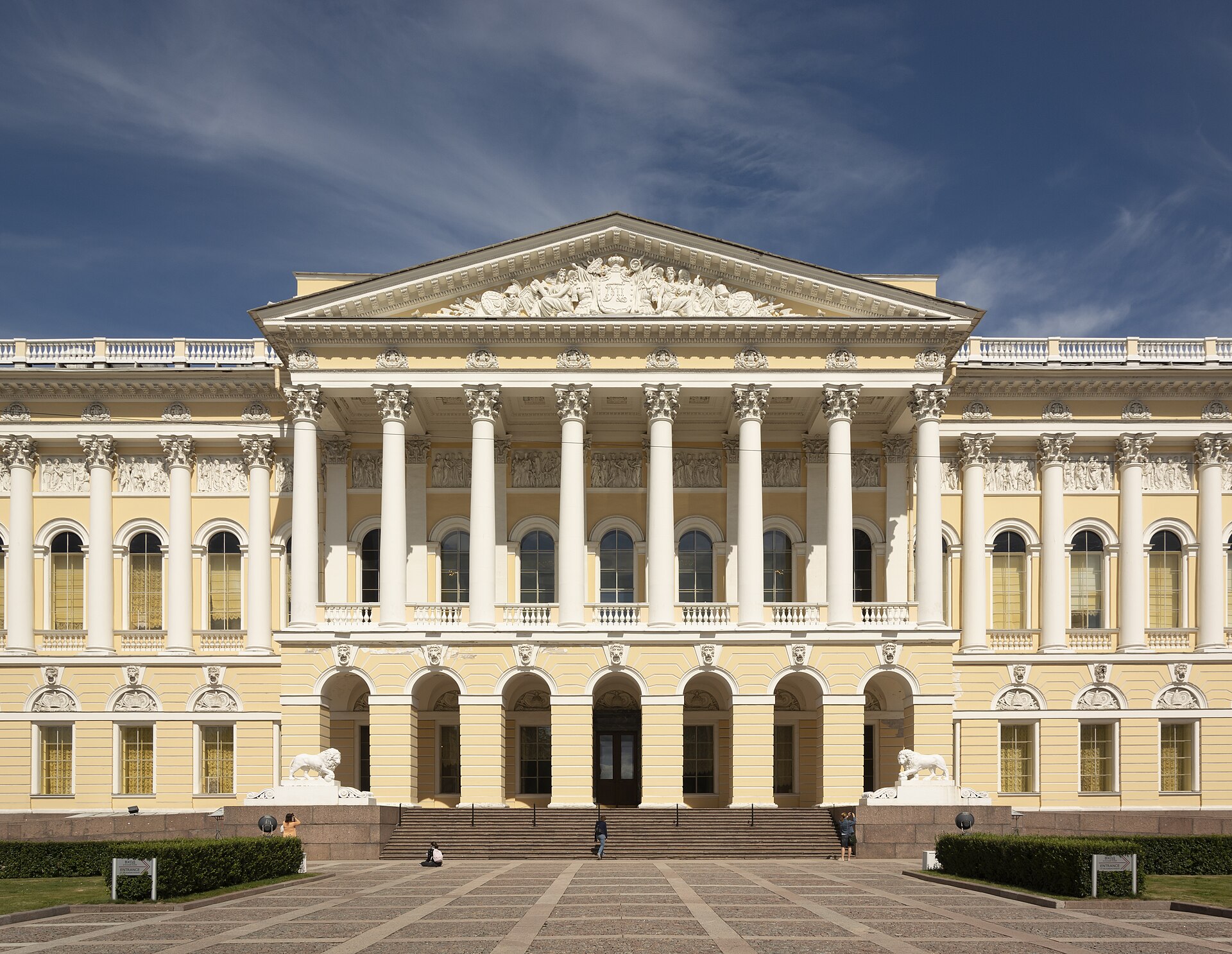
You just spent three hours in the Winter Palace, walked eleven kilometres, saw Rembrandt, da Vinci, and a room full of peacocks, and you still have not seen a single work of Russian art made by a Russian. That is the Hermitage's blind spot and the Russian Museum Saint Petersburg exists to fill it. This institution holds exclusively Russian fine art from the 10th century to the present: medieval icons, the Peredvizhniki realists, the Russian avant-garde, and the Socialist Realist sculpture that defined a century. It lives in a Carlo Rossi palace on Inzhenernaya Street, a ten-minute walk from the Church on the Spilled Blood, and it is the place you choose when you want Russian art without the palace fatigue.
- Full Name: The State Russian Museum (Государственный Русский музей)
- Main Building: Mikhailovsky Palace, built 1825 by Carlo Rossi as an imperial residence for Grand Duke Mikhail Pavlovich
- Core Collection: Exclusively Russian fine art, 10th, 21st centuries, ~400,000 items (2023 museum-published figure)
- Oldest Work: 12th-century 'Angel with Golden Hair' icon
- Key Avant-garde Work: Malevich 'Black Square' (1915 version) and 'Red Cavalry Riding'
- Total Buildings: 10, including Mikhailovsky Palace, Benois Wing, Stroganov Palace, St Michael's Castle, Marble Palace, Summer Garden, and Cabin of Peter the Great
- Admission (2024 Band): Adult ticket for Mikhailovsky Palace and Benois Wing combined: 500-1,000 RUB; separate-building tickets lower; pay in cash, foreign-issued Visa and Mastercard do not work
- Closed: Tuesday. All buildings close Tuesday.
Mikhailovsky Palace Art Collection: the Core Halls
Enter through the main doors of the Mikhailovsky, pay at the ticket desk, and walk the State staircase. The interior matters: the White Column Hall alone, with its full-height Corinthian columns and painted ceiling, demands a pause before you look at a single canvas. But the collection is why you came.
Icons and the 12th Century
The oldest icon in the collection, the 12th-century Angel with Golden Hair, lives in a dimmed room on the ground floor. It predates Andrei Rublev, whose work also hangs here, by two centuries. Rublev's icons are the foundation of Russian religious art, and the museum holds several. Spend ten minutes in this room: the gold leaf against the dark background is the visual language of medieval Russia, and you will see its echoes in the avant-garde five hundred years later.
18th-Century Portraits
Dmitry Levitsky and Vladimir Borovikovsky defined Russian portraiture under Catherine the Great. Levitsky's Smolyanka series, six full-length portraits of girls from the Smolny Institute, is a masterclass in fabric, pose, and the polite fiction of imperial benevolence. Borovikovsky's Portrait of M. I. Lopukhina is the one that draws crowds: the sitter died young, and the canvas carries a legend about bad luck for anyone who stares too long. Stand in front of it. Decide for yourself.
The Aivazovsky Hall
Ivan Aivazovsky gets a single room of large-scale seascapes. The one you know is The Ninth Wave, survivors clinging to a mast as dawn breaks over a colossal wave. It is the most reproduced Russian canvas after Black Square, and in person it is enormous, roughly two by three metres. The trick: stand far back. The foam, the light on the water, the tiny figures. Aivazovsky painted the sea from memory, never from sketches, and the hall shows why he could.
Repin Paintings Saint Petersburg: the Wanderers You Cannot Miss
The Peredvizhniki, or Wanderers movement, was a rebellion against the Academy's grip on Russian art. Ilya Repin was its most ferocious talent, and the Russian Museum holds his two career-defining works on permanent display. Barge Haulers on the Volga is a horizontal frieze of eleven men dragging a boat upstream. Repin produced it in 1873 after travelling the Volga, and the detail, the leather harnesses, the bare feet, the resigned exhaustion on the lead hauler's face, turned it into a national conscience. Across the same gallery is Zaporozhian Cossacks Writing a Letter to the Turkish Sultan, the exact opposite in mood: a crowd of Cossacks laughing, smoking, and dictating an insult letter, every face a different kind of grin.
Nearby, Vasily Surikov's The Morning of the Streltsy Execution covers the other end of the emotional spectrum: the aftermath of the 1698 Streltsy rebellion, executed by Peter the Great. Surikov packs a dozen individual tragedies, a wife wailing, a soldier lighting a candle, the condemned men staring at the Tsar, into a single canvas. It is a history piece that buries you in its specific grief.
Russian Art Saint Petersburg: from Landscape to Fairy Tale
The late 19th-century rooms hold Isaac Levitan's quiet landscapes, Above Eternal Peace is a river, a church, and a cemetery under a sky that takes up two-thirds of the canvas, and Ivan Shishkin's Morning in a Pine Forest, the one with the bears. Viktor Vasnetsov's Knight at the Crossroads is the Russian fairy-tale version of a canvas: a knight on horseback, a stone with an ambiguous inscription, a skull at his feet. Vasnetsov pulled his imagery from folk epics, not history. The result is a distinctly Russian visual mythology that nothing in the Hermitage's European galleries can match.
Russian Museum vs Hermitage: the Avant-Garde Difference
Here is the argument in one sentence: the Hermitage owns the Western canon; the Russian Museum owns the Russian one. The avant-garde collection proves it. Kazimir Malevich's Black Square (1915 version) hangs in the Benois Wing, and it is the icon of 20th-century Russian art. Next to it, Red Cavalry Riding shows Malevich after the revolution, painting horses that look like tin toys against a stripe of red. Wassily Kandinsky's Composition VI is elsewhere, the Hermitage's General Staff Building holds it, but the Russian Museum has a deep Kandinsky representation from his early, figurative Munich period. Pavel Filonov's hallucinatory Formula of Spring crowds every centimetre of canvas with tiny faces and limbs; Marc Chagall's Above the Town floats a bride and groom over a Vitebsk winter. The Benois Wing, completed in 1919 and named for architect Leon Benois, was built specifically to hold this material. Walk through its permanent collection of late 19th- and 20th-century work after you finish the palace, then check what temporary exhibition is running, the Benois Wing is also the museum's exhibition space, and the shows rotate.
Bryullov Last Day of Pompeii: the One Painting That Draws the Crowd
Karl Bryullov's The Last Day of Pompeii occupies its own wall in the Mikhailovsky. It is a three-by-five-metre spectacle of the Vesuvius eruption in 79 AD: structures topple, horses rear, a woman falls from a chariot, and a son carries his father while lightning splits a black sky. Bryullov spent three years on it, travelled to the excavation site, and when it was exhibited in Rome in 1833, it made him the first Russian painter with an international reputation. Pushkin translated the canvas into a poem. Gogol called it a universal creation. In the gallery, visitors stand in front of it the same way they stand in front of The Ninth Wave: silent, trying to take in the whole thing at once. Arrive before 11:00 to see it without a crowd.

Malevich Black Square: How to See it Properly
Black Square hangs in the Benois Wing, and it is smaller than you expect: about 80 centimetres square. The paint has cracked, the surface is uneven, and the black is not pure black, you can see brushstrokes and a faint brown undertone. Malevich called it the zero point of painting, the end of representation. Stand too close and you miss the point. Stand at the back of the room and let it function as an object, not a picture. The museum does not allow photography in this room without a photography fee, but the fee is small and the guards enforce it strictly. Pay at the ticket desk before you enter the Benois Wing, or accept that you cannot take a photo. Either way, budget five minutes for this work and another ten for the other Malevich pieces in the same room.
How to Navigate the Corpus: the Buildings You Should Actually Enter
The Russian Museum complex includes ten buildings across central Saint Petersburg. You do not need to see all of them. Your first visit should cover exactly two: the Mikhailovsky and the Benois Wing. That is the main corpus, the two structures connected by a passage, and it holds the entire chronological sweep from icons to the avant-garde. Budget two to three hours for the palace and another ninety minutes for the Benois Wing.
The Buildings Worth a Separate Trip
St Michael's Castle (also called Engineer's Castle) on the Griboyedov Canal is the site where Emperor Paul I was assassinated in 1801, a decade after he built it as an impregnable fortress. The permanent portrait gallery is strong, and the structure itself, pink, moated, topped with a spire, is the most architecturally singular in the complex. The Marble Palace, clad in 32 types of marble by architect Antonio Rinaldi, houses the Ludwig Museum of Russian Art collection. The Stroganov Palace on Nevsky Prospekt at number 17 is Francesco Bartolomeo Rastrelli's Baroque masterpiece, with a Grand Hall ceiling painted by Giuseppe Valeriani. The Summer Garden is a formal park with marble statues, fountains, and parterres, plus the Summer Palace of Peter I, built by Domenico Trezzini in 1714. The Cabin of Peter the Great, built in 1703, is the first residential structure in the city. Each of these charges a separate, lower admission. If you have more than one day, pick the one that matches your interest: assassination history (St Michael's Castle), Baroque interiors (Stroganov Palace), or early Petrine construction (Summer Palace).
Practicalities: Getting In, Getting Out, and the Mistake to Avoid
The museum is closed Tuesday. Every building in the complex closes Tuesday. Plan your week around that. The main entrance to the Mikhailovsky is at 4 Inzhenernaya Street, a two-minute walk from the Church on the Spilled Blood. Arrive by 09:30, fifteen minutes before opening, to buy your ticket at the counter with cash. The 2024 adult rate for the combined Mikhailovsky and Benois Wing ticket was in the 500-1,000 RUB band; the museum administration publishes the current figure on its site. Coat check is mandatory for outerwear between October and April, and the queues back up fast after 11:00. Audio guides are available at the cloakroom desk.
The mistake most visitors make: trying to see everything in one building and then running through the Benois Wing in the last thirty minutes before closing. Reverse the order. Start in the Benois Wing, where the avant-garde rooms empty out after lunch, then cross to the palace for the icons and 19th-century works. You will have the Malevich room to yourself at 10:00, and the Aivazovsky hall will still be quiet at 14:00.
One honest caveat: the Russian Museum is not a replacement for the Hermitage. It does not have the Hermitage's Old Masters or its architectural grandeur. If you only want Western European art, skip this institution entirely. But if you came to Saint Petersburg to see Russian art, the icons, the Wanderers, the avant-garde, and you want to leave without your feet aching and your attention frayed, the Russian Museum is the place you are looking for.
Common Questions
How much time should I budget for the Russian Museum?
Two hours for Mikhailovsky Palace and ninety minutes for the Benois Wing. That covers the permanent collection from icons to the avant-garde. Add another hour if you want to see a temporary exhibition.
Can I pay with a foreign credit card?
No. Foreign-issued Visa and Mastercard do not function in Russia. Bring cash in roubles or use a locally-issued card. The museum ticket desk, coat check, and audio guide counter all take cash only.
Which buildings of the Russian Museum should I skip on a first visit?
Skip Stroganov Palace, St Michael's Castle, Marble Palace, Summer Garden, and the Cabin of Peter the Great unless you have a second day. The main collection lives in Mikhailovsky Palace and the Benois Wing.
Is the Russian Museum less crowded than the Hermitage?
Yes, significantly. The Hermitage handles cruise-ship crowds daily; the Russian Museum sees a fraction of that traffic. Weekday mornings in low season (October, April, excluding holidays) are nearly empty.
Read next
-

 Mid-Range Hotels: Comfortable Stays Without Breaking the Bank
Discover the best mid-range hotels in Saint Petersburg, offering a balance of comfort, location, and value. From boutique hotels on Nevsky Prospekt to modern apartments, find affordable stays that don't skimp on quality.
Mid-Range Hotels: Comfortable Stays Without Breaking the Bank
Discover the best mid-range hotels in Saint Petersburg, offering a balance of comfort, location, and value. From boutique hotels on Nevsky Prospekt to modern apartments, find affordable stays that don't skimp on quality.
-
 Best Areas to Stay in Saint Petersburg: A District Guide
Discover the best areas to stay in Saint Petersburg, from the historic centre around Nevsky Prospekt to the artsy streets of Petrograd Side. This guide covers neighborhoods, hotels, transport links, and local tips for every budget.
Best Areas to Stay in Saint Petersburg: A District Guide
Discover the best areas to stay in Saint Petersburg, from the historic centre around Nevsky Prospekt to the artsy streets of Petrograd Side. This guide covers neighborhoods, hotels, transport links, and local tips for every budget.
-
 Current Flight Routes to Saint Petersburg from Europe and Asia
A comprehensive guide to current flight routes connecting Saint Petersburg with major European and Asian hubs. Includes airline details, estimated prices, booking tips, and entry requirements.
Current Flight Routes to Saint Petersburg from Europe and Asia
A comprehensive guide to current flight routes connecting Saint Petersburg with major European and Asian hubs. Includes airline details, estimated prices, booking tips, and entry requirements.
-
 Saint Petersburg Things to Do Beyond the Hermitage and the Main Sights
Saint Petersburg rewards slowing down. Discover canal-side walks, local food halls, rooftop views, and quiet neighbourhoods beyond the Hermitage crowds.
Saint Petersburg Things to Do Beyond the Hermitage and the Main Sights
Saint Petersburg rewards slowing down. Discover canal-side walks, local food halls, rooftop views, and quiet neighbourhoods beyond the Hermitage crowds.
-
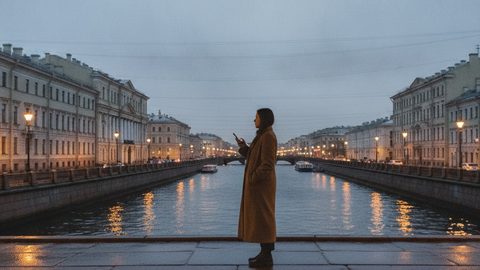 White Nights in Saint Petersburg: What Actually Happens
Discover the reality of the White Nights in Saint Petersburg, from astronomical twilight and bridge schedules to midnight boat trips and street-level logistics. A factual guide to what actually happens during this iconic season.
White Nights in Saint Petersburg: What Actually Happens
Discover the reality of the White Nights in Saint Petersburg, from astronomical twilight and bridge schedules to midnight boat trips and street-level logistics. A factual guide to what actually happens during this iconic season.
-
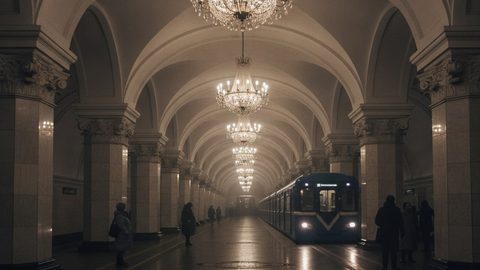 Saint Petersburg Metro: Lines, Stops, and Tips
A comprehensive guide to the Saint Petersburg Metro: history, line-by-line overview, key stations, practical tips, fares, and connection to city attractions.
Saint Petersburg Metro: Lines, Stops, and Tips
A comprehensive guide to the Saint Petersburg Metro: history, line-by-line overview, key stations, practical tips, fares, and connection to city attractions.
-
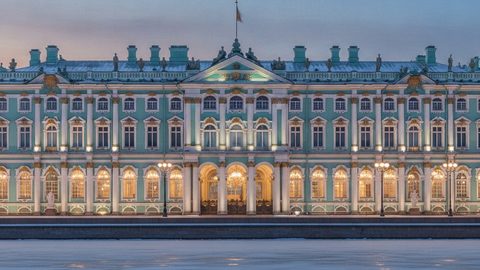 The Hermitage and Winter Palace
A detailed guide to the State Hermitage Museum and the Winter Palace in Saint Petersburg, covering must-see collections, ticket prices, practical visiting tips, and how to navigate the complex.
The Hermitage and Winter Palace
A detailed guide to the State Hermitage Museum and the Winter Palace in Saint Petersburg, covering must-see collections, ticket prices, practical visiting tips, and how to navigate the complex.
-
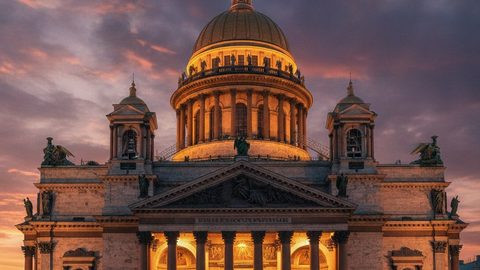 St. Isaac's Cathedral
A detailed guide to St. Isaac's Cathedral in Saint Petersburg, covering its history, architecture, the colonnade observation deck, and the lavish interior. Includes practical visitor information.
St. Isaac's Cathedral
A detailed guide to St. Isaac's Cathedral in Saint Petersburg, covering its history, architecture, the colonnade observation deck, and the lavish interior. Includes practical visitor information.
-
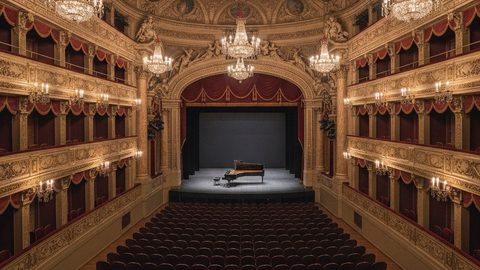 Mariinsky Theatre
A practical guide to booking tickets and attending performances at the Mariinsky Theatre in St Petersburg, covering its three stages, typical repertoire, pricing, and tips for visitors.
Mariinsky Theatre
A practical guide to booking tickets and attending performances at the Mariinsky Theatre in St Petersburg, covering its three stages, typical repertoire, pricing, and tips for visitors.